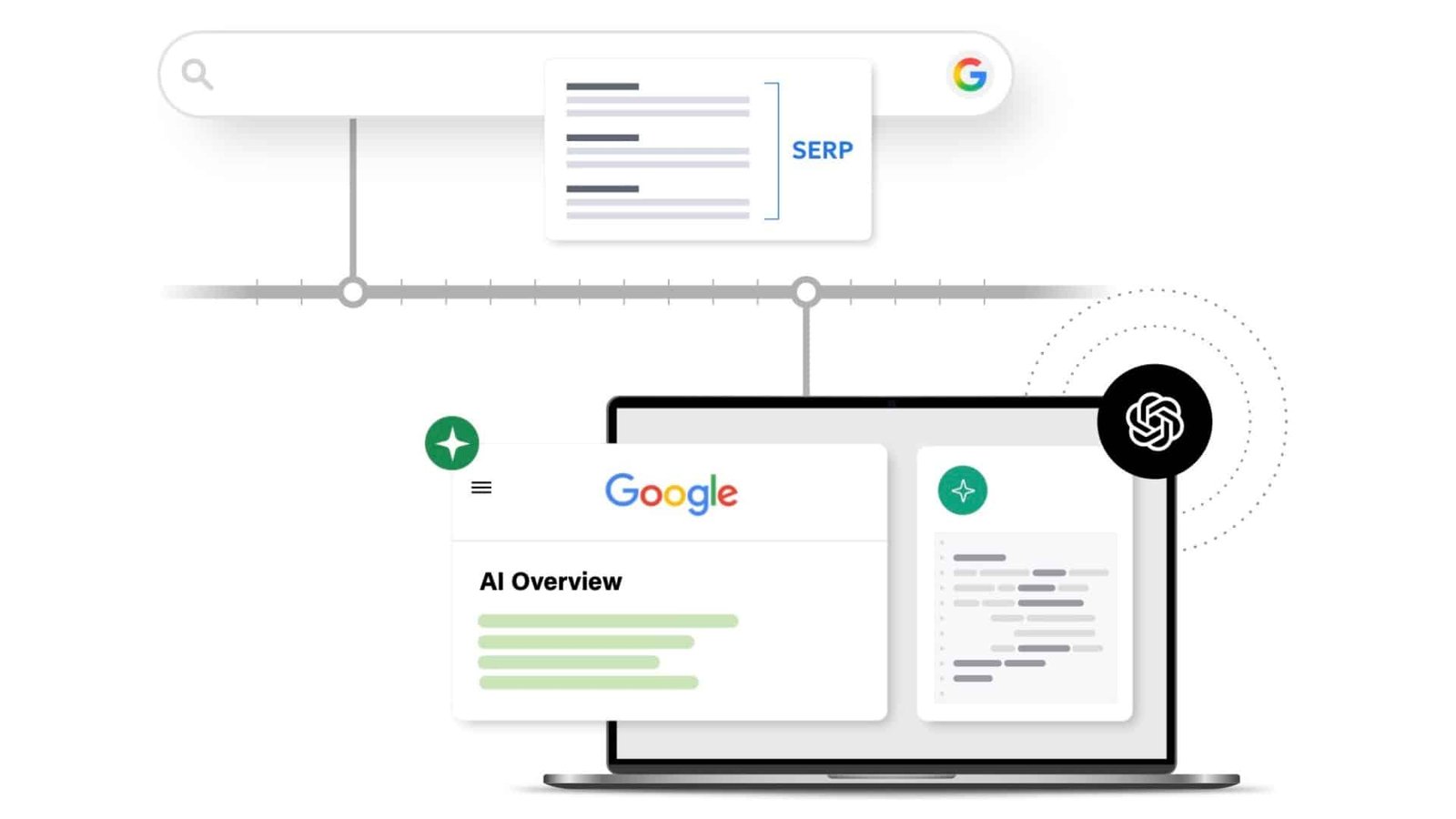

If your organic traffic is down but impressions are up, AI is likely citing your content without sending clicks. If both are down, you’re being ignored. Either way, the search behavior your marketing strategy was built on has changed, and waiting for traffic to rebound isn’t a strategy.
This is the reality you’re facing in 2026. According to KEO Marketing:
- 73% of B2B websites saw significant traffic losses between 2024 and 2025, with an average 34% year-over-year decline.
- The impact isn’t evenly distributed. If your content is primarily informational, you’ve likely been hit harder, with some sectors seeing organic traffic drop 15% to 64% since AI Overviews launched.
- News publishers are especially exposed, with Google referrals down 33% globally in the 12 months ending November 2025.
These aren’t normal fluctuations. They reflect a structural shift in how people find information online, disrupting business models built on website traffic at the foundation.
What is driving the shift in organic discovery?
Organic clicks are declining for two overlapping reasons. You need to understand both because each requires a different response:
- Google has engineered zero-click behavior for years through featured snippets and knowledge panels. These SERP features answer queries directly on the results page, so you don’t need to click through to get an answer. Ten years ago, about 25% of searches ended without a click. Today, it’s more than 65%. AI Overviews — now appearing in ~16% of desktop searches and ~41% of mobile searches — have dramatically accelerated this trend.
- A growing share of users is bypassing traditional search entirely. Nearly 52% of U.S. adults now use AI tools regularly, and about 28% of employed Americans use AI at work. When someone asks ChatGPT or another LLM a question, they usually get an answer without visiting any website. Your content may inform that answer, but you get no traffic and no attribution.
What metrics should I consider when measuring AEO?
Traditional content marketing KPIs (impressions, clicks, CTR, sessions, bounce rate, and page views) no longer show you how discoverable your brand is. They measure behavior on your site, not how you perform in AI answers that now intercept much of your traffic upstream.
Five metrics matter most for AI visibility:
- Citations in AI responses measure how often your owned content is directly cited when an LLM answers a query. A citation signals three things: your content is relevant, it’s structured so LLMs can parse and retrieve it efficiently, and your domain has enough authority to be trusted.
- Brand mentions are different from citations. LLMs often mention brands without citing owned content, pulling from review sites, forums, third-party articles, and competitor content. A mention without a citation means the broader web is talking about you, but your content isn’t the source. That distinction helps you decide where to invest.
- Share of voice compares your citation and mention frequency against competitors across a defined set of category-relevant prompts.
- Brand sentiment tracks whether AI responses frame you favorably, neutrally, or negatively.
- AI-influenced traffic measures how much of your traffic comes from LLM referrals. Early data suggests this traffic converts three to five times higher than other sources, making it worth tracking even at low volume.
Several tools now let you track these metrics at scale without manually prompting LLMs. They’re worth exploring.
But even a simple benchmark — prompting major LLMs with your target queries and tracking where and how you appear — is better than not measuring at all.
How should I optimize my content for AEO?
Winning visibility in AI search doesn’t require an entirely new content playbook. But it requires retiring practices that no longer work and doubling down on principles that matter more than ever.
E-E-A-T remains the foundation
Experience, Expertise, Authoritativeness, and Trustworthiness were dominant signals in Google SEO before AI Overviews, and they remain dominant in AEO. LLMs prioritize sources that show real expertise and are trusted by other authoritative sources.
If you earn citations from credible sites, publish content written by clear subject matter experts, and cover topics with depth and specificity, you’ll consistently outperform content that doesn’t — regardless of how well it’s optimized for other factors.
Structure and clarity have become non-negotiable
LLMs retrieve content by identifying passages that directly answer questions. If you organize content around clear questions and direct answers, use structured bullet summaries, and avoid dense paragraphs, you’re more retrievable than if you bury answers in narrative prose.
This means making your information architecture legible to both human readers and LLM retrieval systems. Adding a Q&A section to existing content — or restructuring posts around clear question-and-answer pairs — is one of the highest-leverage updates you can make right now.
Human-written, human-led content has a measurable advantage
After Google’s latest core update, mass-produced AI content saw an 87% drop in rankings and citation frequency, and keyword-optimized content fell 63%. LLMs are getting better at detecting AI writing patterns and deprioritizing that content.
The pressure you felt in 2025 to produce volume with AI created a quality problem that’s now visible in performance data. The strongest strategy is quality over quantity. If you use AI, use it to draft and edit—not to generate final content. Add a review step to flag generic phrasing or a synthetic tone, whether through AI-detection tools or human editors.
Recency matters for AI citation
Answer engines look at publication and update dates when choosing sources. A well-structured, authoritative piece from 2022 can be overlooked in favor of an updated version from 2025.
Audit your high-traffic pages and hero assets for outdated content, and refresh them with current data and examples. It’s a quick win many teams miss.
Pitchy language will not get cited
If your content reads as promotional — leading with product claims and brand-forward language — answer engines will often deprioritize it in favor of more objective sources.
That doesn’t mean you can’t mention your product or brand. It means you should write about it the way a neutral third party would: acknowledge tradeoffs, provide context, and let the facts make the case. Listicles and comparison articles work especially well here.
AI systems respond to structured, objective comparisons—even when one option is clearly favored.
Outside of my owned channels, what content performs well in AEO?
One clear pattern in how LLMs decide which brands to mention: they look for consensus across multiple sources, not just your content. If you appear only on your own blog, you’ll lose to a brand with fewer owned assets but stronger third-party coverage.
That makes your external content ecosystem a strategic priority. Reviews on G2, Capterra, Google, and similar platforms are often used in AI training. User-generated content on Reddit and other forums is heavily indexed. Third-party articles, tutorials, YouTube videos, and newsletter mentions all build the multi-source consensus that gets you cited in AI answers.
Content partnerships deserve focused attention. When you sponsor articles or newsletter placements with relevant publications, you do two things: drive referral traffic outside search and earn trusted external citations that boost AI visibility. Newsletter readership is growing as audiences seek curated, human-authored content. YouTube citations are especially strong and increasing, and ChatGPT shows a documented preference for citing authoritative video creators.
The goal isn’t to manufacture mentions. It’s to tell a consistent story about your brand across credible external sources so LLMs encounter that story repeatedly. Consistency across partners, review platforms, and third-party content compounds your AI share of voice.
How do I build landing pages that convert traffic better?
With organic traffic down 30% or more, the visitors who reach your site are more valuable and more intentional than in past years. That makes conversion optimization on key landing pages more important.
The principle is simple: one offer, one message, minimal copy.
Each landing page should have a single call to action and a single argument. If you have multiple conversion goals, create multiple landing pages — not one page trying to do everything.
Your header should capture the full value proposition. Supporting points should be brief. A visitor should understand the offer and act without scrolling.
This differs from blog and thought leadership content, which should be detailed, well sourced, and structured for LLM retrieval. The two serve different purposes and require different standards. Conversion-focused landing pages aren’t the place for nuance or extended prose.
The takeaway
The traffic decline isn’t a temporary setback that will correct itself. Users are getting answers from AI instead of clicking through to websites, and that behavior will intensify. A content strategy built only around ranking for clicks is no longer enough.
What replaces it is a dual mandate: optimize to be cited by answer engines and build the external brand presence that gives LLMs reason to mention you consistently. These goals align with what you should’ve been doing all along — publishing clear, authoritative, well-structured content grounded in real expertise.
The brands that will win in AI-driven discovery are the ones doing the fundamentals well: building real credibility, earning trusted external mentions, and writing for readers instead of algorithms.
That was always the right approach. AI search has simply made it mandatory.
Written by Tim Burke and Lauren Yanez
Opinions expressed in this article are those of the sponsor. Search Engine Land neither confirms nor disputes any of the conclusions presented above.