What to remember:
- The drop in publisher traffic cannot be explained solely by AI: changes in behavior (video, social networks) play an important role according to Google.
- To exist in AI search, the number one priority remains technical: letting Google access your content.
- Google values unique content, carrying real expertise, and implicitly penalizes “copies of copies” without added value.
- The logic remains the same as in classic SEO: if users click and read, Google notices.
Traffic drop isn’t just AI’s fault
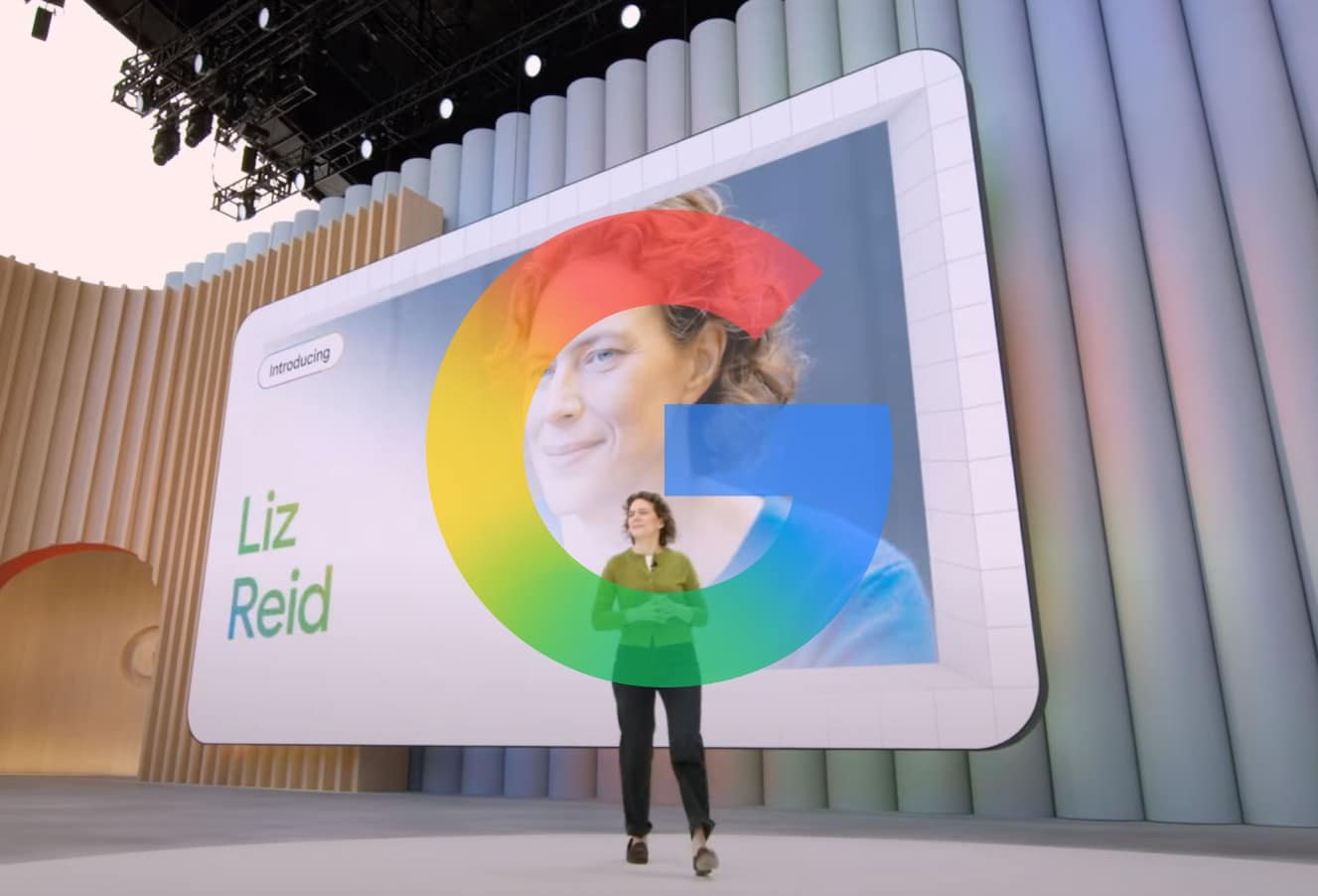
In a recent interview, Liz Reid, VP Search at Google, addressed the question that agitates publishers head-on: why are they losing traffic, and what to do?
His first response is surprising in its frankness; AI would not be the only factor to blame. Liz Reid underlines that the behavior of Internet users is changing in a broader way. Users are turning more to video and social networks to consume information. She cites in support a study by the Reuters Institute, which documents this shift towards other formats and other platforms.
This point deserves to be taken seriously. Attributing the entire decline in visits to generative AI means missing out on a more profound transformation of uses. For publishers, this raises a fundamental question: is the text format alone still enough to capture an audience?
Letting Google crawl is the first imperative
On the concrete question of visibility in AI research, Liz Reid structures her response in two parts. The first is purely technical : make content accessible to Google robots.
If a site blocks crawling, the game is lost in advance. She recalls that Google provides tools in Search Console so that publishers maintain control over what they authorize or not. But blocking access means cutting yourself off from any chance of appearing in the responses generated by the AI.
It is a reminder that may seem basic to many, but which takes on a new dimension in a context where some publishers have chosen to block AI crawlers. According to Google, this choice has a direct cost on visibility.
I would say you can probably put things into two categories. The first is to make sure we can access your content. If you block content, it won’t work; if it is difficult to discover, it is a problem. We offer various tools in the Webmaster Console that give you control options, allowing publishers to make their choices. But making it easier for us to access content is definitely the first step. -Liz Reid
Content “for the engine” no longer works
The second part of Reid’s response is more demanding. It clearly states what Google expects: content that people want to read, not content designed to please an algorithm.
She mentions the problem of articles which are only “ the thousandth copy of the same story »: texts without any particular angle, without real expertise, produced en masse to occupy positions. This type of content, according to her, will be less and less rewarded, whether in classic results or in AI responses.
Conversely, it describes what works. Content that carries real expertise, which provides an original look at a subject, which is anchored in what the audience is really looking for, and which offers a sufficient level of detail and richness to justify a click and a complete reading.
The logic behind it is this: if users click on a result and stay to read, Google interprets it as a positive signal. If the content interests no one, no technical optimization will be able to make up for this deficit.
We’ve also released updated guidelines to help site owners and publishers think about how to create quality content today. The central idea remains the same: if you want people to click, that necessarily implies that you want them to read your content.
That means producing content that people want to read, right? The more content you create that appeals to your audience, the more effective it will be. Conversely, if you produce content designed only for search engines and not for your audience, people will eventually notice. -Liz Reid
Google has updated its guidelines for publishers
Liz Reid also mentions that Google has published an updated version of its recommendations for content creators and webmasters. These guidelines integrate the new realities of AI research, and their guiding principle remains consistent with what she expressed in the interview: building for the audience, not for the engine.
She emphasizes several expected qualities:
- The freshness of the content,
- Its relevance to what Internet users are looking for at a given moment,
- The provision of experience and a level of detail that cannot be found anywhere else.
What this actually changes for publishers
Liz Reid’s message does not overturn the fundamentals of SEO, but it places them in another perspective. With generative AI that synthesizes answers directly into results, generic content no longer has a reason to be clicked. Only what brings something more, a perspective, a piece of data, a context that the AI does not render alone, justifies the click.
For publishers who publish guides, product tests, in-depth articles or niche analyses, this is a direction that may seem reassuring. But it assumes a real editorial discipline. In other words, each article must have a reason to exist beyond the volume of targeted keywords.
The real question which remains unanswered, and which the interview does not address, is that of large media sites and small independent publishers which, despite quality content, see their organic traffic reduce. Google’s speech on quality is coherent in its logic, but it does not respond to the concerns of those who see a decline despite real editorial efforts.
Join our 20,000 subscribers and receive all our articles in your inbox every week!
The data transmitted through this form is intended only for Abondance. They will under no circumstances be transferred to third parties. You can unsubscribe at any time by clicking on the unsubscribe links in each of our emails. For more information, you can view the full our policy for processing your personal data.