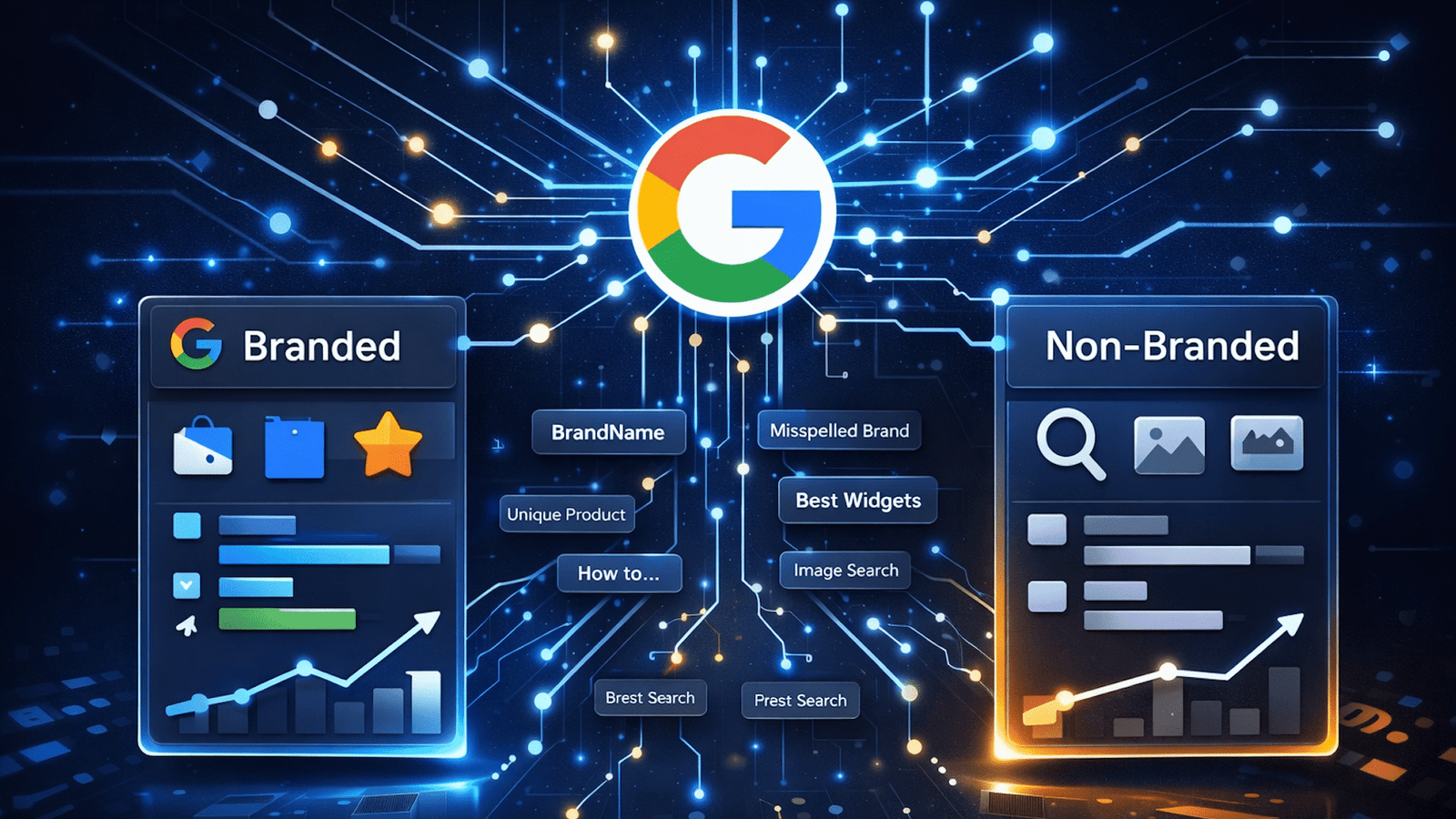
Google’s branded queries filter in Search Console is now available to all eligible sites. Google’s new branded queries filter, announced Nov. 20, lets you separate branded and non-branded search traffic in the Performance report.
Why we care. Separating branded and non-branded queries has long required manual regex filters or keyword lists. This update gives you native segmentation in Search Console, making it easier to measure brand demand versus discovery traffic.
Google’s announcement. Google confirmed the broader availability in a LinkedIn post today:
- “The branded queries filter in Search Console is now available to all eligible sites! This feature helps you analyze the queries driving traffic to your site by automatically differentiating between branded and non-branded queries.”
The details. The branded queries filter appears in the Search results Performance report. It lets you segment queries into two groups:
- Branded: Queries containing your brand name, variations, misspellings, or brand-related products and services.
- Non-branded: All other queries.
When applied, Search Console limits metrics — impressions, clicks, CTR, and average position — to the selected group. The filter works across all search types (Web, Image, Video, News) in the report.
Insights report. Google also added a new card to the Search Console Insights report that shows a click breakdown between branded and non-branded traffic.
- The card helps you measure brand recognition by comparing traffic from users already familiar with your brand versus those discovering your site for the first time, Google said.
Google’s brand classification. Google uses an internal AI-assisted system to determine whether queries are branded. The system can recognize:
- Brand names in multiple languages
- Misspellings and variations
- Queries referring to unique brand products or services
Some queries may be misclassified due to the contextual nature of brand detection, Google said. The filter is strictly a reporting feature and doesn’t affect search rankings.
What to watch. Today’s announcement indicates it has reached all eligible sites, though some properties may still not qualify due to query and impression volume requirements.
Search Engine Land is owned by Semrush. We remain committed to providing high-quality coverage of marketing topics. Unless otherwise noted, this page’s content was written by either an employee or a paid contractor of Semrush Inc.