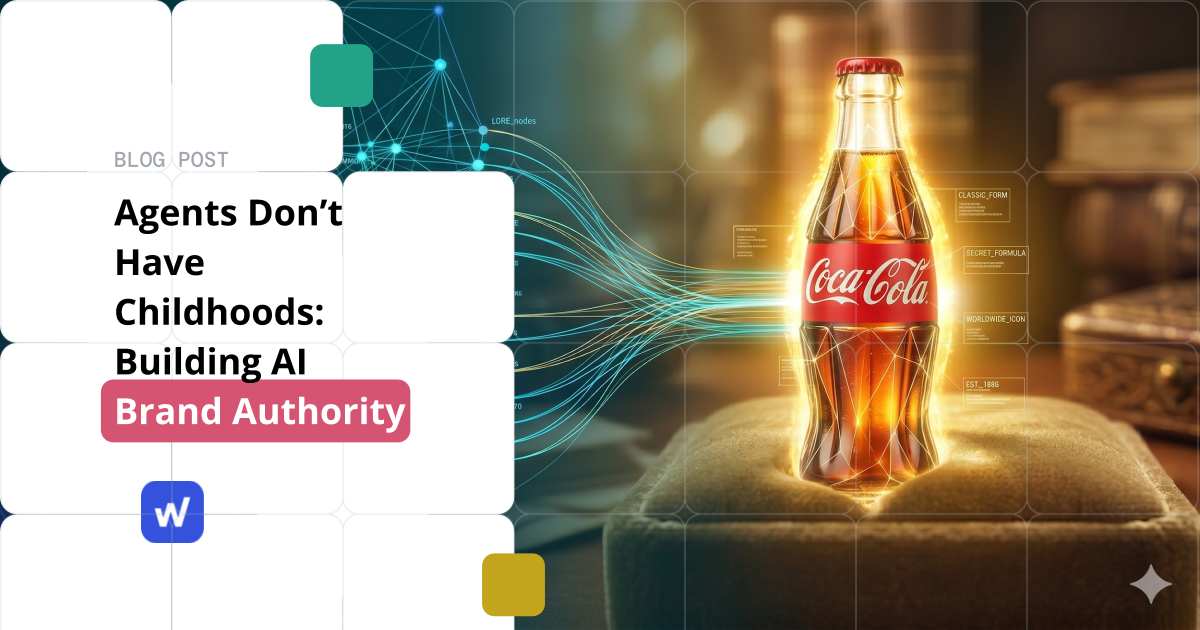
Every December, a fat man in a red suit comes to sell you sugar water. You’ve probably never thought about why it’s red and white. Coca-Cola does.
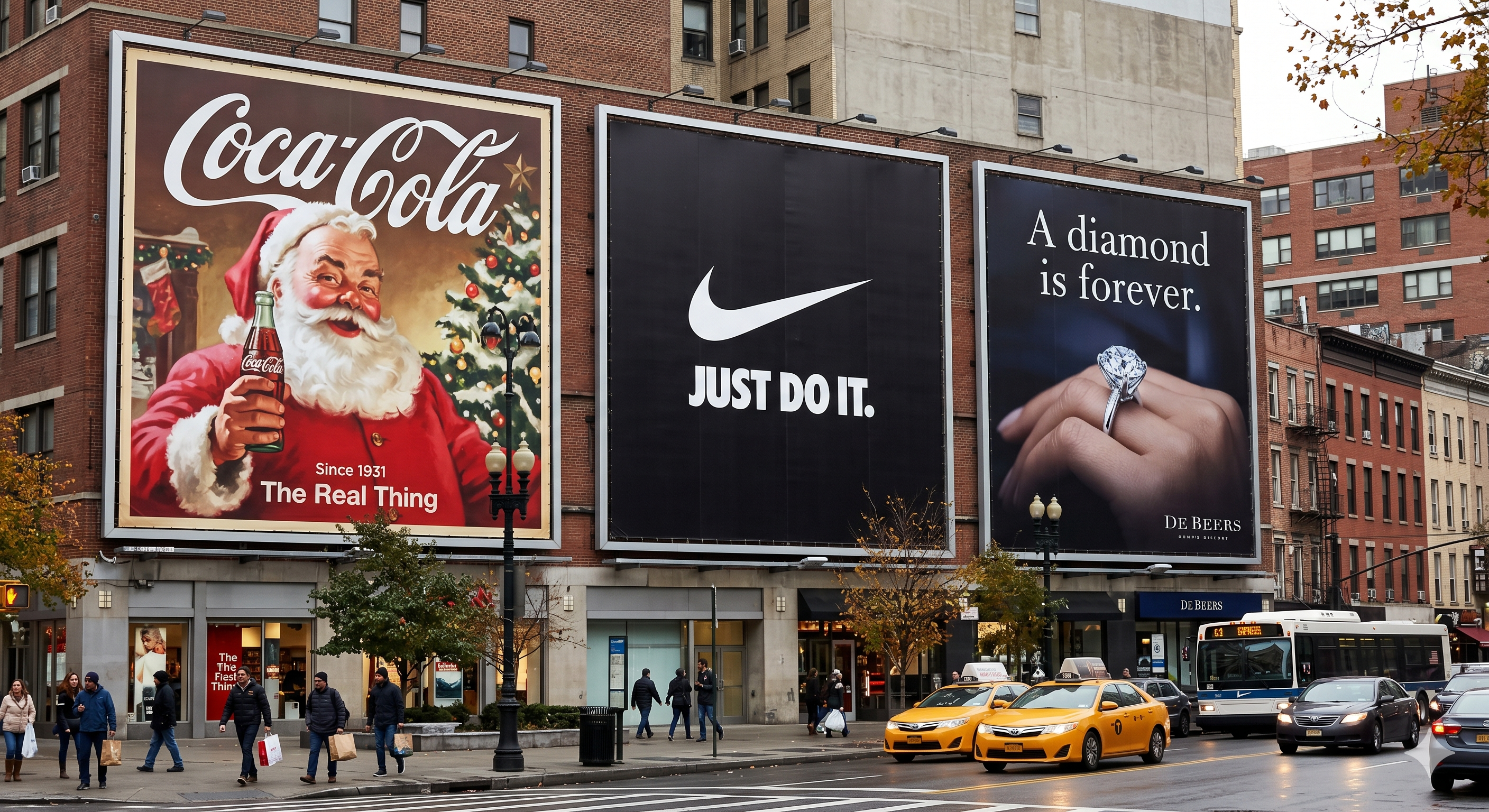
Coke didn’t invent Santa Claus. The cheerful, round, red-suited version existed before him. But starting in 1931, Coca-Cola spent several decades and a lot of money running Santa in its advertising, until that version became version. red and white. Hot. Generous. Same red and white on the can. By the time you were old enough to read, the association was already established. You didn’t choose it. It was paid for long before you arrived.
Brands always buy this. No product. The feelings, quickly contained, became stronger forever.
The Nike Swoosh retails for $35. A design student named Caroline Davidson created it in 1971. In itself it is a check mark, a curve, nothing. This means that Nike has since spent billions of dollars linking it to Jordan, to winning, to the idea that you can be great if you wear it. Swoop is an empty container. The cost of decades is what’s inside.
De Beers did something even more impressive. In 1947 a copywriter wrote four words, “A Diamond Is Forever,” and convinced most of the Western world that love requires a rock, and you should spend two months’ salary on it. There is no natural law that says so. It was produced, it stuck, and it stuck because it reached young people and never let them go.
Here’s the part that should worry every marketing leader who has spent thirty years and billions of dollars of advertising budgets creating these associations.
An AI agent has no childhood
When someone asks an assistant best running shoes for flat feetOr Most Trusted Insurer for Small BusinessThe agent doesn’t feel anything about the pounce. There was no kid watching an ad in 1996. It has no fond memories of polar bears. It has nothing to do with red and white. The shepherd does nothing in this. Not every emotional shortcut that a brand has spent a century carving into the human brain exists to trigger.
The agent reads. This text reads, structured dataCitations, and relationships between entities. It depends on what other sources say about you and how consistently they say it. It argues on information, not impressions. The entire emotional layer that brands have adapted to since the 1920s is close to invisible to this new reader.
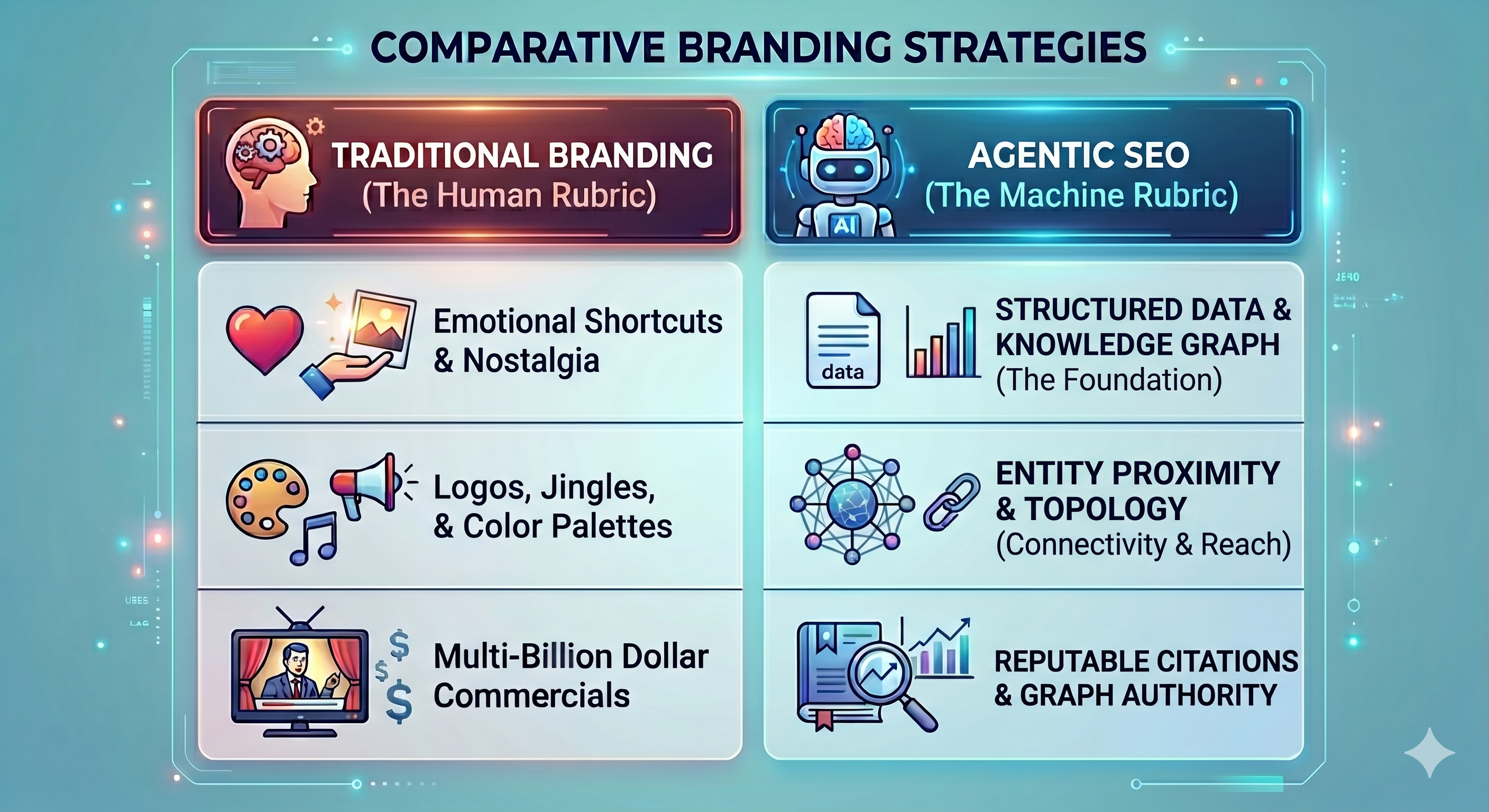
Agentic Rubric: Facts, Institutions, and Properties
So what exactly does an agent respond to? The facts can verify this. The entities it can recognize. Features are stated clearly and consistently on the web. Sources that cite you.
Logos is an asset for humans. To a machine, it is a small image file with no inherent meaning. A jingle is useless for something that doesn’t hum. to win in the era of agent seoBrands must change From brand awareness entity identification.
Instead of “feeling” the differences between you and a competitor, an agent uses a structured rubric to evaluate your brand:
- Citationability (Who trusts you?): Does the “global brain” of the Internet recognize your brand as the primary source of truth? An agent doesn’t believe your claims because they’re “bold” – he believes them because other reliable sources cite you as the authority.
- Schema Consistency (How Clear Are You?): Are the details of your brand – like prices, ingredients, or values – so precisely defined that an agent can distinguish you from everyone else without “feeling” the difference? This is your digital ID card.
- Entity Proximity (How Relevant Are You?): How closely is your brand connected to the problems it solves? When an agent searches for “carbon-neutral logistics,” he or she is not looking for a “vibe”; It is looking for the brand that is mathematically closest to that concept in the digital world.
Machine’s “Memory”: Knowledge Graph
None of this means that the emotional brand is dead. Humans still buy. Humans still feel. But more and more often, a machine sits between the human and the decision. To bridge this gap, brands must move beyond temporary impressions and create what is called wordlift. semantic memory layer.
As Andrea Volpini explainsAI agents are evolving to use memory structures that mimic the human brain – moving from simple pattern matching to a deeper understanding of facts and relationships.
This is how an AI agent actually “remembers” you:
- Training Data (Parametric Memory): Think of it as the machine’s “parentage” – a huge, stable library of information that was provided during its construction. If your brand is not a clearly defined, verified entity here, you are a stranger to the model from the moment it “awakens”.
- Reference Windows (short-term memory): This is the “active attention” of the machine or episodic memory. This is the limited amount of information an agent can reason about in a single conversation. It is unstable; Once the conversation is over, the memory is purged.
- Knowledge Graph (Semantic Memory Layer): It is continuous, long term semantic memory Which remains outside the model. It acts as a continuous bridge, Feeding your brand’s specific facts, values and relationships directly into the agent’s context window.
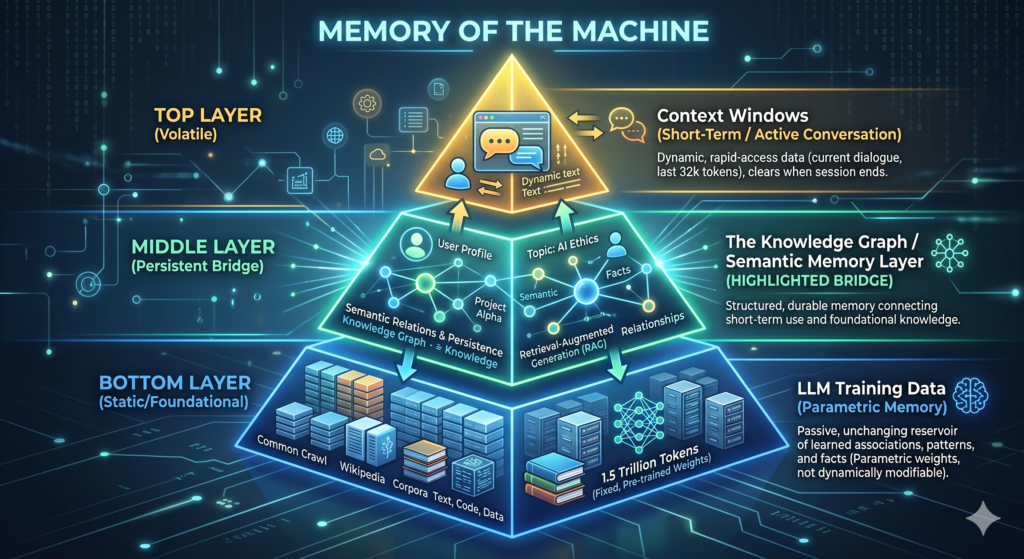
By externalizing your brand story knowledge graphyou make one semantic memory layer This ensures that the agent doesn’t just “read” your data. understands Who you are, what you make, and why you are the primary source of truth for your category.
The trust that a brand has earned through emotions now has to be earned again through structure. The companies that figure it out won’t be the ones with the most beloved logos. They will be the ones who have successfully “programmed” the AI’s memory with a clear, machine-readable identity.
Strategic Roadmap: Regaining Confidence in the Structure
To take your brand across this gap, you need to treat your data as your most valuable creative asset:
- Build your knowledge graph: Create a private memory layer that defines your products, people, and values as entities. This allows agents to “know” you even without “feelings”.
- Target AI-mediated web: Go beyond keywords. “Adapt for”agent advertisingScenarios where agents interact on behalf of users.
- Quotes on Advertisements: Invest in digital PR and structured quotes that build your authority in the eyes of LLMs. If LLM cannot find three reputable sources corroborating your “Forever” claim, the claim does not exist.
Swoop is still everything to us. It has nothing to do with something that is increasingly dictating what we see. The future of branding doesn’t depend on how you look; It’s about how you are perceived.
Is your brand ready for the agentic web?
The shift from emotional similarity to machine authority is not just a technological update – it is a strategic imperative. If you’re ready to build your knowledge graph and ensure your identities reach machine insights, we can help.