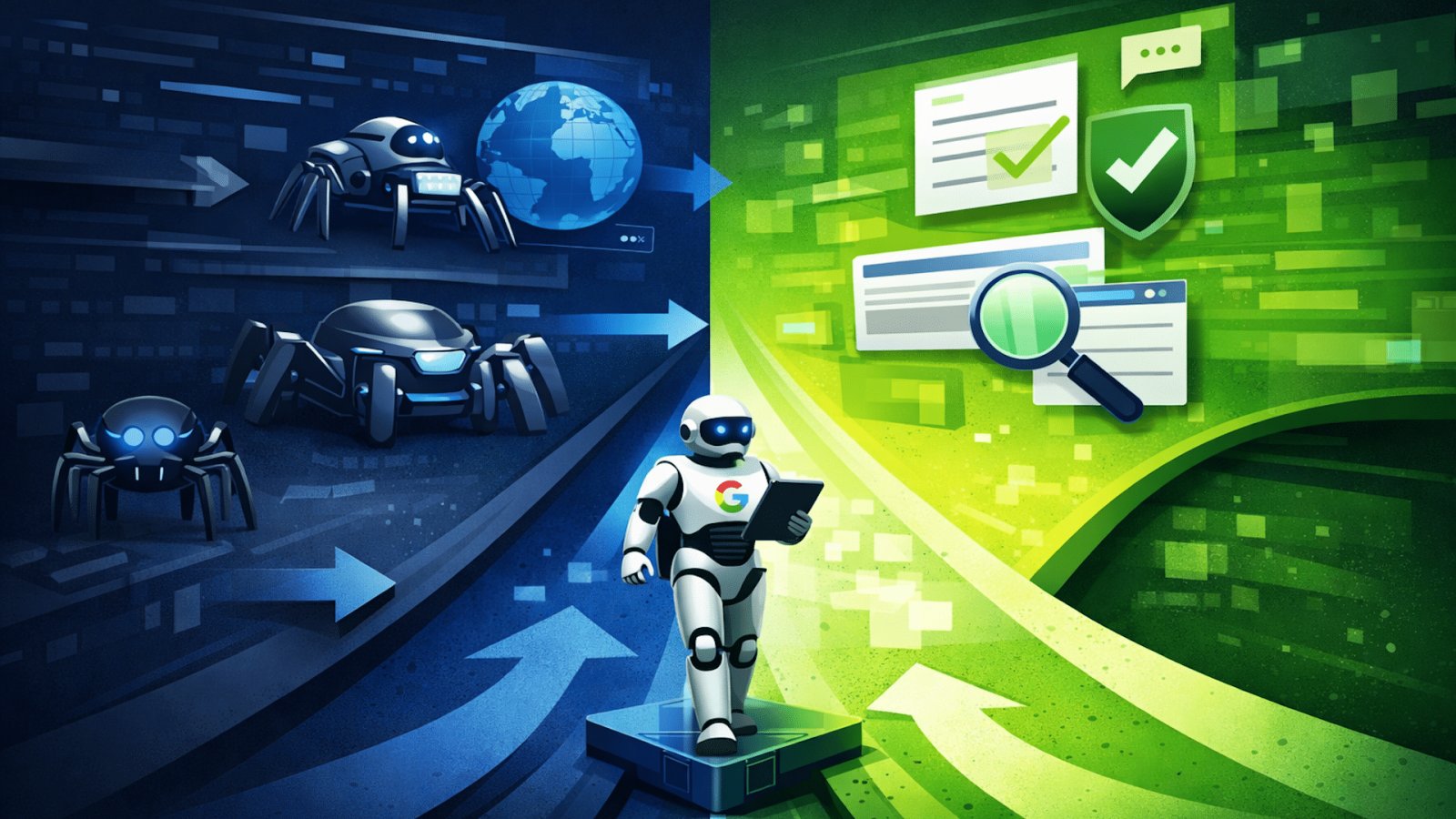
Google introduced a new user agent, called Google-Agent, that signals when AI agents act on users’ behalf, marking an early shift toward agent-driven web interactions.
What happened. Google added Google-Agent to its list of user-triggered fetchers on March 20 and has begun a gradual rollout.
- The Google-Agent user agent identifies requests made by AI agents running on Google infrastructure, including experimental tools like Project Mariner.
How it works. Google-Agent appears in HTTP requests when an AI agent visits a site to complete a user-initiated task.
- Example use cases include browsing pages, evaluating content, or taking actions such as submitting forms.
- This differs from Googlebot and other crawlers, which run continuously in the background without direct user prompts.
IP ranges. Google shared the IP ranges for its desktop agent:
Mozilla/5.0 AppleWebKit/537.36 (KHTML, like Gecko; compatible; Google-Agent; + Chrome/W.X.Y.Z Safari/537.36
And the IP ranges for its mobile agent:
Mozilla/5.0 (Linux; Android 6.0.1; Nexus 5X Build/MMB29P) AppleWebKit/537.36 (KHTML, like Gecko) Chrome/W.X.Y.Z Mobile Safari/537.36 (compatible; Google-Agent; +
Why we care. This lets you identify agent-driven traffic in server logs. You can now distinguish traditional crawl activity from visits triggered by real users through AI agents. That should help you track agent-assisted conversions, understand emerging user behavior, and prepare for agentic search.
What they’re saying. According to Google’s announcement:
- “The Google-Agent user agent is rolling out over the next few weeks, and will be used by Google agents hosted on Google infrastructure to navigate the web and perform actions upon user request.”
What to watch. Early volumes will be low as the rollout continues, but now is the time to establish a baseline. What to do:
- Monitor logs for Google-Agent activity.
- Make sure CDNs and WAFs aren’t blocking the published IP ranges.
- Validate that key site actions, including forms and flows, work for automated agents.
Dig deeper. Google’s releasing Google-Agent: Here’s what to know
Search Engine Land is owned by Semrush. We remain committed to providing high-quality coverage of marketing topics. Unless otherwise noted, this page’s content was written by either an employee or a paid contractor of Semrush Inc.