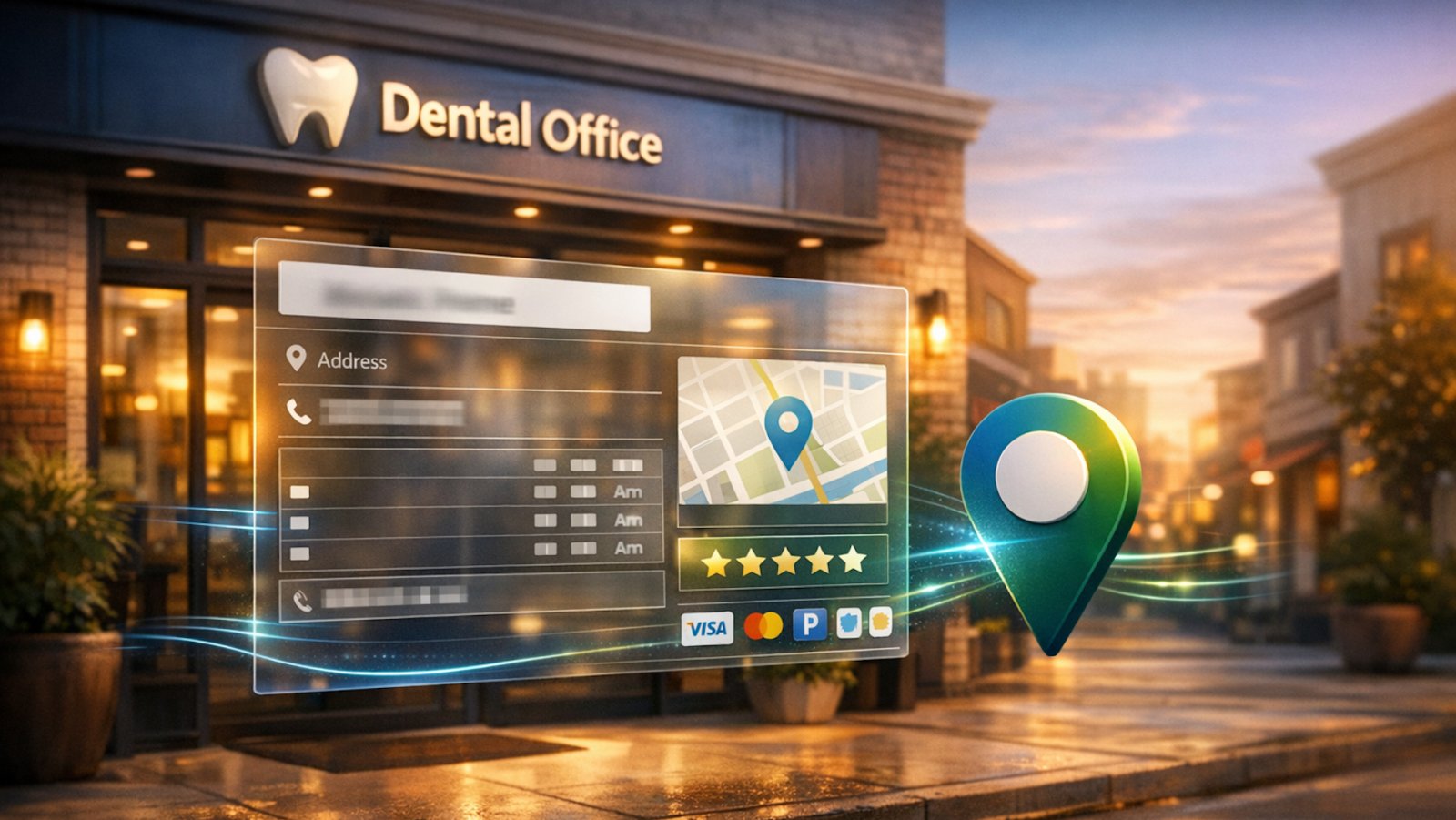
When you hear the term “contact page,” you probably think of a simple page containing contact info and maybe a form.
I’m here to tell you why that’s a big miss from a local SEO perspective and show you how to build a contact page that builds your prominence with Google and helps you convert more leads.
Google pays special attention to your contact page
The former head of Google Business Profile Support, Joel Headley, once told me that Google specifically crawls and parses your contact page to gather information about your business.
This led me to realize that most businesses have awful contact pages. They list their name, address, and phone number (NAP), embed a contact form, and call it a day.
Google is saying, “Give me data about your business,” and you’re saying, “No data for you.”
What you need to do instead is give your contact page the same level of care and attention as a multi-location landing page.
Here are the must-haves for a contact page that converts site visitors into paying customers:
- Business identity.
- Contact information.
- Trust factors and social proof.
- Location-specific content.
- Amenities.
- Call to action.
1. Business identity
Just like every other page on your site, your contact page should reflect your brand. This means you should include:
- Your business logo (that matches all your other marketing materials and real-world signage).
- Your slogan (bonus points if you can work some keywords into it for added SEO value).
- A short introduction that explains what your business does, where it’s located, and what your unique value proposition (UVP) is.
Dig deeper: The local SEO gatekeeper: How Google defines your entity
You won’t believe how many businesses forget to include their contact information on their contact page. Here’s what you absolutely have to include:
- Full business name.
- Contact form and an email address people can write to (I recommend both).
- Complete address.
- Phone and text numbers.
- Social media links.
- Hours of operation (including any holiday, seasonal, or special hours).
- Shopping options (e.g., in-store pickup, curbside pickup, delivery, appointment only).
- Embedded Google Map to your business (not your address).
- A common mistake businesses make is embedding a map of their business address on Google Maps instead of their actual Google Business Profile.
- Make sure you embed a map in your business listing on Maps so that whenever someone clicks it, they send engagement signals to your profile. Practically, this means:
- Search for your business name on Google Maps.
- Bring up your profile.
- Click the Share button.
- Click the Embed a map tab.
- Copy and paste the code into your contact page.
- A link to your Google Maps listing.
- A few years ago, Holly Starks conducted a case study to test whether driving directions affected local rankings. She set up Google Maps driving directions on 100 cell phones, put them in her car, and drove to the business. The results were dramatic. The business’s rankings jumped from the 20s to number 1.
- In the past, I recommended writing driving and walking directions on your contact page. Now, with Starks’ findings in mind, adding a link to your Google Maps listing with anchor text like “Get driving directions” is even better. It encourages people to use Google Maps driving directions and can increase engagement signals to your Business Profile.
- Accepted payments.
- Parking details.

Including detailed business information helps customers contact and visit you and signals to traditional search engines and AI search tools that your business is legitimate and credible.
Bonus tips for your contact form:
- Add a compelling call to action (you can use the same CTA throughout your page).
- Set up form conversion tracking.
- Avoid spam by including reCAPTCHA, using a plugin, requiring double opt-in, and formatting your email address so bots can’t read it (e.g., hello (at) domain (dot) com).
- Make sure your contact section matches your Google Business Profile as a signal of legitimacy.
Your customers search everywhere. Make sure your brand shows up.
The SEO toolkit you know, plus the AI visibility data you need.
Start Free Trial
Get started with

3. Trust factors and social proof
Your contact page shouldn’t just tell people how to reach you. It should prove they’re making the right decision before they ever click or call.
Clear expectations

Be clear about what a customer can expect once they reach out to you and confirm they’ve made the right choice in contacting you:
- How long are response times? 24 hours? 2 business days?
- What are the next steps? What can they expect from your team?
- Is there any useful information you can give them about your team, your location, or anything else that sets you apart from your competitors?
Experience and credentials

Reinforce trust and increase your page’s conversion rate by listing any:
- Industry associations you’re a member of (locally and nationally).
- Local chamber of commerce groups.
- Professional groups and associations.
- Meetup groups.
- Neighborhood associations.
- Better Business Bureau rating.
Tip: Link each association name to your business’s profile on its website.
Dig deeper: Local SEO sprints: A 90-day plan for service businesses in 2026
Awards and accomplishments

Include any awards your business has received or mentions in the press, and link each one to the relevant article or website. If you’ve been mentioned frequently in the press, you can create a dedicated media section on the page.
Reviews and testimonials

Embed reviews from other sites and include testimonials on your contact page to build trust. You can increase reviewers’ credibility by including their photos, names, cities, and a link to their websites or directly to the review platform they used.
Be sure to include your overall review rating and total number of reviews.
Remember, customers don’t expect your business to have a perfect 5-star rating. A rating around 4.7-4.9 signals you’re a real business, not one that’s purchased all its reviews.
Customer reviews not only build trust and increase conversions, they also add unique, locally relevant content to the page, which is great for traditional and AI search performance.
Tip: This section is also great for requesting reviews, since repeat customers might visit your contact page. Add a Google review request link with a call to action to generate more reviews for your Google Business Profile.
Dig deeper: 7 local SEO wins you get from keyword-rich Google reviews
Get the newsletter search marketers rely on.
4. Location-specific content

Create content that references local information and explains exactly what your business does, where it’s located, and why prospects should choose you.
Here are some ideas for local content:
- Include photos and descriptions of your team members.
- Tell visitors about the customers you serve and your areas of expertise.
- If you’re located in a popular neighborhood or area, mention that in your content.
- Highlight any customer satisfaction guarantees or price-match policies.
- Mention any upcoming events, volunteer efforts, or relevant partnerships.
Dig deeper: Top SEO tips for location-specific websites
5. Amenities

Start by reviewing your Google Business Profile’s attributes section and consider listing those attributes on your contact page, such as whether the business is family- or women-owned, neurodivergent-friendly, or offers outdoor seating or home delivery.
Then list any other attributes your business has that Google doesn’t provide as options. Detailed business attributes help search engines, LLMs, and customers understand that you meet specific needs.
This can be especially useful for AI search, where people use more conversational queries, such as “Give me a list of cafes in Seattle that are wheelchair accessible and have free WiFi.”
6. A clear CTA button

If you’re going to do all this work to make a killer contact page, don’t forget to put the cherry on top. Sprinkle strategically placed calls to action throughout the page to encourage visitors to contact you. Make them bright, animated, eye-catching, and convincing.
Treat your contact page like a local SEO asset
If you want a contact page that helps people reach out to you, informs search engines and LLMs about your business, and converts visitors into customers, treat it like a multi-location landing page. Save this list so you remember every section your contact page needs.

Do this, and your contact page will outperform 99% of your competitors’ contact pages, because most businesses do a terrible job with them.
Contributing authors are invited to create content for Search Engine Land and are chosen for their expertise and contribution to the search community. Our contributors work under the oversight of the editorial staff and contributions are checked for quality and relevance to our readers. Search Engine Land is owned by Semrush. Contributor was not asked to make any direct or indirect mentions of Semrush. The opinions they express are their own.