A recent survey revealed that the average American spends an average of 10 hours online, of which approximately five hours are spent watching videos. So, it’s no surprise that more and more brands are looking to establish and scale their online presence.
But the truth is, simply posting on social media is not enough. Brands need a clear direction – a well-laid-out strategy that’s focused, time-bound, and goal-driven.
And this strategy starts with creating impactful social media marketing campaigns that combine organic storytelling with paid amplification.
In this guide, we will break down how businesses can plan and execute high-performing social media campaigns. We will also talk about the core components of a successful campaign and provide you with some real-world examples that have raised the bar.
A social media campaign is a coordinated marketing effort designed to achieve a specific business goal using one or more social platforms, within a defined time period.
A well-laid-out campaign provides structure to your everyday posting by setting clear plans, key milestones, and a timeline.
Simply put, social media campaigns are omnichannel for social media marketing strategies that are goal-oriented, time-bound, and measurable. These campaigns combine different elements like:
- Organic marketing
- Paid promotions
- User-generated content
- Contests and giveaways
- Influencer partnerships
Businesses can have different purposes behind running a social media campaign, such as:
- To launch a new product
- Generate leads for their business
- Drive traffic to a landing page
- Increase brand awareness
- Promote a seasonal sale
- Grow followers in a new market
Let us now talk about each of these different types of social media campaigns:
1. Brand Awareness Campaigns
If you are a new brand just starting out on social media or if you are looking to introduce a new product/service in the market, then building brand awareness campaigns is what you need.
These campaigns work best when:
- You’re entering a new market
- Launching a new brand
- Repositioning your messaging
- Trying to grow your follower base
The aim here is to create awareness among social media users by getting more reach, views, impressions, engagements, and mentions.
2. Product Launch Campaigns
These campaigns combine storytelling, countdowns, early access offers, influencer collaborations, and paid amplification.
Product launch campaigns on social media usually follow the following phases:
- Teaser phase (build anticipation)
- Reveal phase (introduce the product)
- Launch phase (open for purchase)
- Post-launch sustain phase (social proof + testimonials)
3. Lead Generation Campaigns
Here, the focus shifts from creating awareness to actually collecting user information through emails, sign-ups, demo bookings, or downloads.
These campaigns are common for:
- Webinars
- Free trials
- eBooks
- Consultation bookings
- Event registrations
Lead generation campaigns usually combine organic and paid marketing strategies, so that viewers don’t just understand the benefits, but also buy from you.
4. User-Generated Content (UGC) Campaigns
Instead of the brand speaking about itself, user-generated campaigns make customers do the talking. These campaigns are powerful in building trust and credibility, increasing engagement, and strengthening the community on social media channels.
Here, brands encourage their followers to:
- Share photos or videos using a product
- Use a branded hashtag
- Participate in a challenge
- Submit testimonials or reviews
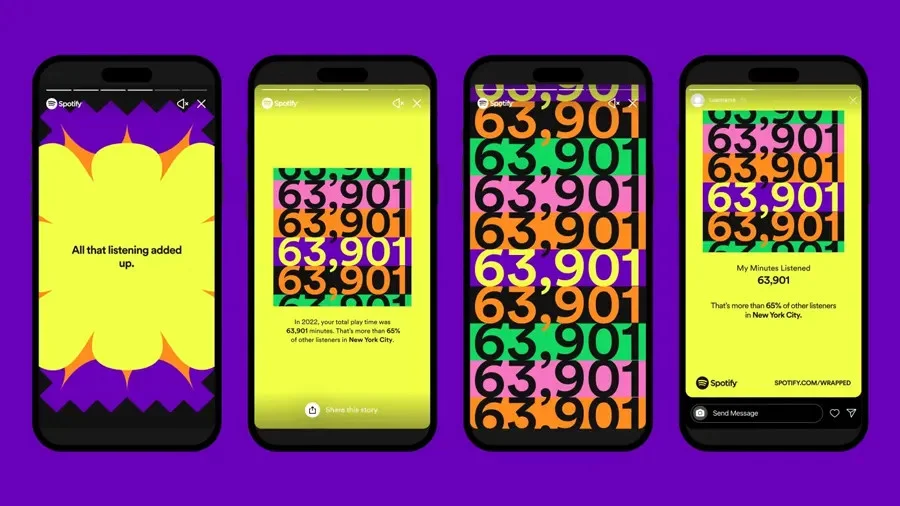
A perfect example of this was Spotify’s UGC campaign, ‘Wrapped,’ which was accessed by 30 million Spotify users. They encouraged their users to post their year-end Wrapped on social media platforms and compare it with that of their friends. A whopping 120 million users participated in this campaign.
5. Seasonal & Event-Based Campaigns
These are time-sensitive campaigns that leverage specific moments like festivals, holidays, sales periods, or industry events. Campaigns that run on social media channels during New Year’s, Christmas, Black Friday, etc., are seasonal and target customers when they are already in buying mode.
These campaigns lure customers with
- Limited-time offers
- Countdown posts
- Flash sales
- Themed creatives
- Event-based hashtags
If you are looking to plan holiday campaigns in 2026, this social media holiday calendar by SocialPilot has all the national and international holidays and events that you can plan your campaigns around.
Behind every viral campaign, there is a structured system and clarity of fundamentals. Here are some core components to create a high-performing campaign:
1. Clear Objective & Defined KPIs
Not every engagement is meaningful, and not all clicks convert. As a business, you must always know the right social media metrics to track based on your marketing objectives and long-term goals.
To begin with, have a clear primary goal for your social media marketing campaign. Determine the key outcomes you are looking for. Now map it to measurable key performance indicators or benchmarks so you can track your performance during the execution phase.
2. Target Audience Segmentation
When you lack a clear sense of target audience for your next social media campaign, you risk posting content that’s not quite right. Understanding and segmenting your audience ensures your messaging resonates with the right people instead of getting lost in the noise. This will help you with your content tone, platform selection, and ad targeting.
3. Platform-Specific Strategy
Every social media platform has its own user behavior, language, and algorithm. You must pick and choose the platforms where your audience is and then adopt a messaging tone and format that matches the platform’s strengths.
Every social media campaign needs a narrative backbone. You must understand what the campaign is about, what emotion you are tapping into, and what bigger story you are telling. Based on the theme, you will need focused hashtag marketing strategies to support your discoverability and help you tap into relevant conversations.
5. Content Strategy & Planning
Next, you would need your social media content strategy mapped out for different phases and different social media platforms – like the teaser, launch, promotion, and retarget phases. Use a mix of different formats like reels, carousels, static, stories, etc.
6. Budget & Resource Allocation
Lastly, you must do some resource planning and allocate a portion of the social media marketing budget for the following:
- Internal resources – design, copy, and analytics
- Paid ads
- Ad testing
- Influencer and creator collaborations
Successful social media campaigns usually pass through three phases
Planning → Execution → Analysis
Each of these three phases is equally important for the overall success of a campaign, and even skipping one of these can weaken your entire strategy.
To begin with, let’s understand how to plan social media campaigns
This is the stage where you start building a strategy for a smoother execution in the latter phase.
1. Set Clear Goals and Map Them to Metrics
Always begin by discerning the social media campaign goals for your brand.
- Is it creating brand awareness for a newly launched product?
- Do you want to increase traffic to an e-commerce store?
- Or do you want to promote an upcoming offline event for more registrations?
A great example is how Slack promoted an online event with crisp copies and pleasing colors.

Depending on the goal of the campaign, here are some metrics that you should examine:
- For awareness campaigns → Track reach, impressions, engagement rate
- For lead generation campaigns → Track click-through rate (CTR), conversions, sign-ups
- For sales → Track CPA (cost per acquisition), ROAS (return on ad spend), revenue
If your marketing goals are vague or unclear, the results will also look confusing.
2. Identify and Understand Your Target Audience
Chasing the wrong audience often results in wasted time, money, and effort. Use data-driven audience insights to understand who your audience is, their interests, preferences, demographics, and online behaviors.
Start by asking:
- Who is most likely to benefit from this campaign?
- What problem are we solving?
- What multiple social media platforms do your audience spend their time on?
Targeting the right audience is crucial as it helps you select the right social media channels and the right influencers to collaborate with.
Here’s what you should do next:
- Identify the accounts that regularly and actively engage with your content.
- Go through your past sales records to track the commonalities in people who buy from you.
- Do a thorough competitive analysis to identify their target audience.
- Use social media analytics tools to track insights from your active platforms.
3. Do Competitor Analysis to Set Yourself Apart
Doing social media competitor analysis will help you understand where you are lacking and what strategies you can use to outperform your competitors.
Use social media listening tools to look at:
- Their recent campaigns
- Track their brand reputation
- Understand their social media strategy
- Uncover their customer insights
- Analyze their customer experience
Also see the content formats they’re using and their engagement levels.
Competitive analysis is not about copying and pasting their strategies but spotting gaps and differentiating your brand from that of your competitors.
4. Choose the Right Social Media Platforms & Build a Structured Content Calendar
There is an old saying that says “fish where the fish are,” and the same holds true when it comes to selecting the right channels for your campaign success. Every social media platform has its own set of audiences and serves a different purpose.
Here are some major social networks to choose from:
- LinkedIn → Best for B2B campaigns, especially if you are targeting professionals and decision-makers.
- Instagram → Works well for engagement-driven campaigns. Ideal for posting UGC and influencer collaboration content.
- Facebook → Works well for local businesses that need to build a strong community and target a local audience.
- TikTok → Perfect for targeting young and trend-focused audiences. Works well for short-form video storytelling formats.
- Twitter (X) → Use X to indulge in real-time conversations from your industry and to establish yourself as a trusted industry leader.
- YouTube → Best to run awareness campaigns, businesses can post long-form content like video tutorials, product demos, etc.
This is where your campaign moves from strategy decks to content creation.
5. Brainstorm campaign themes & Build a Content Calendar
One of the cornerstones of a successful social media campaign is a well-planned content calendar
It serves as a strategic roadmap, guiding brands in curating content that aligns with their overarching goals, seasonal trends, and audience preferences. Without it, brands risk sporadic posting, missed opportunities, and content that may not resonate with their audience.
Start by asking questions like:
- What’s the central idea?
- What emotion are we triggering?
- What action do we want users to take?
Come up with a consistent visual identity, tone, and CTA across all posts. Then decide the posting frequency and content formats (reels, carousels, stories, static posts) that you will use.
Once you are done with the ideation, create a content calendar to simplify the execution process.
To further simplify this process, use SocialPilot’s social media content calendar – a tool that helps you plan your campaign across different social platforms.
With SocialPilot, you cannot just create a comprehensive content calendar but also collaborate with your team for reviews and approvals. Its complete calendar access makes it very easy to keep track of all your social media endeavors.
You can use its drag and drop functionality to organize your content, and its ‘week view’ and ‘day view’ features allow you to see the posts scheduled for a particular week or day.

Try SocialPilot Today!
6. Create Your Content and Creative
Once your goals, audience, platforms, and content calendar are in place, it’s time to bring the campaign to life by creating social media posts and creatives.
To begin with, come up with a campaign message, determine:
- What’s your core campaign theme?
- What emotion are we triggering? Urgency? Curiosity? Trust?
- What is the primary CTA?
Next, come up with clickbait captions, headlines, and customized graphics that support your narrative. SocialPilot’s social media post generator is a free tool that lets you create scroll-stopping captions for platforms like Facebook, Instagram, LinkedIn, TikTok, and Twitter – that is too in a matter of seconds.
Once you have generated the caption, create a design that stops the scroll.
Come with a static post with a clean design or create videos with bold opening lines. Use consistent fonts, colors, and tone of voice to make your posts feel cohesive across all platforms.
Initially, you might have to create different variations to A/B test your marketing campaign.
Create post variations for social media with
- Different headlines
- Different visuals
- Different CTA styles
- Short vs long captions
If you are already using SocialPilot, then its AI Pilot feature can help you ideate and generate posts for multiple social platforms.
Just type in your idea and let the tool create an entire post for you. With AI Pilot, you can also
- Shorten and expand the post length
- Translate it into 10 different languages
- Generate hashtags
- Change the tone to meet your brand voice
Here’s how it works:
Try SocialPilot Today!
7. Align Paid & Organic Strategies (When It Makes Sense)
Organic and paid marketing are not two different worlds. While organic marketing helps you build trust, paid marketing helps you with better reach. When used together, they build momentum.
Start by creating organic posts and see:
- Which posts are getting a strong engagement?
- Which hook drives the most saves or shares?
- Which CTA generates more website traffic or clicks?
Once you have identified your top-performing posts on social media, you can
- Boost those posts on social channels
- Run targeted ads using the same messaging
- Create lookalike audiences from engaged users
- Retarget the same people in future campaigns
But the question is, when should businesses use paid ads? Paid ads make most sense when:
- You need faster results
- You’re launching a new product
- You’re entering a competitive market
- You’re running a time-sensitive campaign
- Organic reach alone isn’t sufficient
If your campaign is purely directed towards building a community or creating awareness, and you are already gaining organic traction with relevant content, paid may not be necessary.
When using paid ads, make sure that your organic and paid content feels connected, keep their visual identity consistent, tone aligned, and use a cohesive CTA.
Phase 3: How to Measure & Optimize Your Campaigns
This is where we move from assumptions to insights and decode data to understand patterns, opportunities, and weaknesses.
8. Use Social Media Tools to Analyze Campaigns
Creating a campaign and posting on social media is one thing, but if you are not tracking analytics, you will never know what’s working and what’s not. In such cases, the whole marketing campaign becomes just guesswork.
You can use native platform analytics (like Instagram Insights, LinkedIn Analytics, Facebook Insights, etc.) to track your data, export spreadsheets, and create reports manually.
But if you are an agency managing multiple clients or a business running multiple campaigns, using third-party social media analytics tool and social listening can make things far more manageable.
A centralized analytics tool gives you:
- Unified tracking of key performance indicators
- Cross-platform comparisons
- Campaign-level insights
- Automated reporting
- Real-time performance monitoring
For organic campaigns, check social media analytics such as engagement rate, reach, impressions, follower growth, and content performance across different formats. For paid campaigns, look out for your click-through rate (CTR), conversion rates, and return on ad spend (ROAS).
Connect these insights/metrics to your original goal to understand:
- If you are actually driving leads?
- Are conversions improving?
- Is engagement translating into growth?
Tools like SocialPilot also help you with cross-platform analytics, post-level and campaign-level insights, and also recommend the best times to post on social media, depending on when your existing customers are most active.
9. Track Your Results and Optimize
Even the best social media campaigns are not perfect from day one. It would need several rounds of adjustments to figure out what exactly is working for your audience.
Start by reviewing:
- Which social media posts have the highest engagement rate?
- Which format is working best?
- Which creatives are driving the most clicks?
- Which audience segments are converting best?
- Which platform is outperforming the others?
Fix the underperforming content pieces by changing their headlines, captions, thumbnails, or CTAs. Optimizing the marketing campaigns is all about refinement, not recreation. Run A/B tests to check different creatives, hooks, CTA buttons, and audience segments.
You can also experiment with different posting times, frequency of posting, or reorder the campaign phases to see what’s working.
Once you have your high-performing content pieces, repurpose them on other social media platforms. This will help reduce production time and increase ROI on your best ideas.
Remember, these small, consistent adjustments in your campaign will help you prevent big, late corrections and campaign failures.
Even the most creative ideas fail because they lack a strong execution discipline. Let us now talk about some of the best practices for a campaign success on social media.
- Stick to One Clear Goal Per Campaign: If you attempt to increase awareness, generate leads, and drive sales – all from one campaign, your messaging will become diluted. Set one clear goal and one direction for better results.
- Keep Your Branding Consistent Across Posts: Your visuals, fonts, tone of voice, messaging style, and CTA should remain aligned throughout the campaign timeline.
- Use Simple Tools to Stay Organized: Use tools to create engaging content and schedule it in advance, so there are no missed posts or last-minute creative rushes.
- Stay Flexible: Pre-scheduling is good, but don’t always keep things on autopilot. Monitor real-time performance of your marketing goals and adjust your content accordingly.
- Engage with your audience: Run campaigns that ask questions, invite opinions, run polls, or encourage user-generated content from existing customers. Engagement increases algorithm visibility and builds stronger brand relationships.
The best social media campaigns are the ones that captivate, engage, and leave a lasting impact on users.
The most effective campaigns recently weren’t just creative – they were structured, community-driven, and platform-native.
Here are some popular campaigns from the last year:
1. Spotify — “Daylist Diaries” Campaign
Spotify’s recent campaign tapped into the success of its “Daylist” feature – the dynamic playlist that changes throughout the day based on people’s listening habits. Spotify turned this into a shareable social movement, encouraging its users to share screenshots of their evolving playlist names.
This campaign helped them with community building and soon gained popularity on different social media platforms, where users were sharing their quirky playlist titles. The image below shows one such quirky playlist title, “Housey 2-Step Tuesday Afternoon,” from one of the Spotify users.

With this campaign, Spotify turned its “Daylist” feature into a social conversation.
The Takeaway:
The smartest campaigns around user-generated content don’t always launch something new; they just repackage the existing features in a more shareable way to gain more eyeballs on social media.
2. Dove — “Turn Your Back” AI Beauty Filter Campaign
In response to the rise of AI-powered beauty filters and hyper-realistic face-editing tools, Dove launched the “Turn Your Back” campaign – a powerful social-first movement encouraging users to literally turn their backs on unrealistic beauty standards.
The campaign started in 2023, but continued to gain momentum even in 2025. Many creators filmed themselves turning away from the camera while using AI beauty filters. The movement spread quickly on multiple platforms as influencers, everyday users, and body positivity advocates joined in.
This beauty brand reinforced the message with its long-standing Real Beauty positioning, making it clear that its brand values oppose the use of AI to alter real women in its advertising.
This campaign was not about improving success metrics, but about strengthening trust.

The Takeaway:
If your brand stands for something, build campaign content that reinforces that belief. Aligning campaigns with business objectives and cultural moments and being authentic drives deeper engagement and more sales than transactional messaging.
“Spring Sip Story 2025” featured vibrant visuals, limited-time beverages, AR filters on Instagram, and countdown Stories. Influencers previewed the drinks before launch day, while Starbucks used short-form video content to showcase the aesthetic appeal of pastel cups and spring-themed designs.
They also leaned into social listening, reacting to trending memes and customer reviews in real time to extend campaign momentum.

The Takeaway:
Seasonal campaigns work best when they create urgency and aesthetic appeal. The key here is coordinated timing – teasing early, launching strong, and sustaining with engagement-driven content.
It’s Now Time to Create Successful Social Media Campaigns
Great campaign results are not just built on great ideas – they require insights, creativity, coordination, and measurement. Brands that combine creativity, platform data, and performance analytics in their social media campaigns often capture attention faster and deliver measurable results.
This is where SocialPilot can help – from planning your content calendar to managing your posting schedule and analyzing campaign performance; it ensures that your campaigns stay organized and data-driven.
Explore SocialPilot’s plans today to level up your social media campaigns.