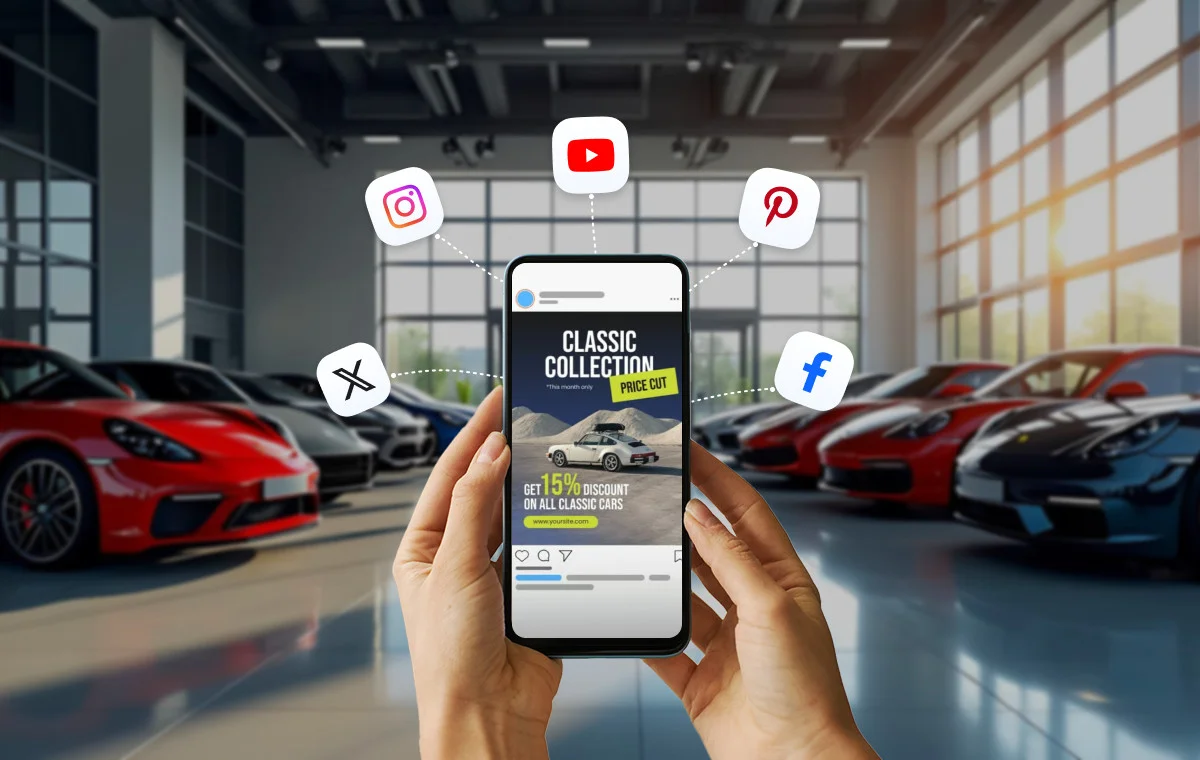
Today, most people start their car-buying journey online. Before visiting a showroom, they scroll through social media, watch vehicle videos, compare models, and check reviews to decide which cars and businesses they trust.
This is where social media becomes a powerful marketing channel for car dealer businesses. It allows you to showcase your vehicles, share real customer experiences, and stay visible while potential buyers are researching their options.
When used strategically, social media can help attract local buyers, build trust, and turn online interest into real inquiries, test drives, and sales.
So, let’s look at practical ways car dealers can use social media to grow their business and generate more leads.
Key Highlights:
- Social media helps car businesses reach local buyers before they visit a showroom. Many people research vehicles on social platforms first.
- Choosing the right platforms like Facebook, Instagram, YouTube, TikTok, and Google Business Profile helps you connect with local customers and generate more inquiries.
- A clear content strategy with different content pillars (vehicle showcases, customer stories, educational tips, behind-the-scenes, and local content) keeps your audience engaged.
- Posting the type of content buyers actually want to see, such as walkaround videos, delivery moments, comparisons, and car tips, can drive more leads and sales.
- Managing multiple accounts and locations becomes easier with a centralized social media management tool.
Most local car businesses and independent dealers rely heavily on visibility and trust. Social platforms make it easier to stay in front of potential buyers, show car features, your offers, and build credibility through real customer interactions.
When you used strategically, social media can help your car dealership:
- Strengthen business trust: You can show the people behind your car dealership such as highlighting customer success stories and sharing real experiences that make your business more relatable and trustworthy.
- Connect with online car buyers: Most buyers spend significant time on platforms like Facebook, Instagram, YouTube, and TikTok. Social media allows automative businesses to reach these buyers where they already spend their time.
- Show vehicles in a more engaging way: Photos, reels, and walkaround videos allow car dealers to present vehicles dynamically, helping buyers explore features and design details before visiting the showroom.
- Generate interest and qualified leads: Engaging posts and geo-targeted ads can guide potential buyers to inventory pages, contact forms, test drive or showroom visit bookings.
- Monitor and improve online reputation: Social platforms give car dealerships the opportunity to respond to feedback, resolve issues quickly, and highlight positive customer experiences. Learn more about boosting your online reputation for your local business.
- Build a local automotive community: By sharing driving tips, hosting events, and providing DIY useful car tips, automobile showrooms can position themselves as a trusted resource for car lovers and drivers in their area.
Let’s now discuss how to build a social media marketing strategy for your car dealership business from scratch.
Before posting photos of cars or running ads, car dealerships should define what they want to achieve from their social media marketing. Setting clear goals helps them focus on content strategy and measure results more effectively.
Many successful car dealers set goals around generating test drive bookings, increasing website traffic, or building brand awareness.
1. Set Clear Goals and Track Real Business Results
Before posting content, define what success looks like. Your social media goals should be Specific, Measurable, Achievable, Relevant, and Time-bound (SMART), so your efforts support real dealership outcomes.
Examples of social media goals for car dealerships:
- Increase traffic to new and used vehicle inventory pages
- Generate a certain number of test drive inquiries each month
- Grow local brand awareness among nearby buyers
- Improve response times to customer questions on social media
- Increase qualified leads coming from social platforms
How can car dealerships measure social media success?
To understand whether your strategy is working, focus on metrics that reflect real customer actions rather than vanity metrics like likes or shares.
- Referral traffic: How many users visit your website from social media?
- Conversions: How many visitors submit a form, request details, or call your dealership?
- Engagement rate: Are people commenting, asking questions, or interacting with posts?
- Lead generation: Are you capturing potential buyer information through social channels?
- Cost per lead (CPL): For paid campaigns, how efficiently is your ad spend generating leads?
Using a social media tool like SocialPilot makes it easier to track performance across all your social accounts. Auto dealership businesses can monitor engagement, analyze campaign results, and generate clear reports to understand how social media contributes to traffic, leads, and overall social marketing ROI.
2. Build a Content Strategy that Fuels Engagement
Social media content is how potential car buyers discover and connect with your dealership. To stand out, your posts should feel authentic, reflect your brand personality, and provide real value to your audience, not just promote vehicle deals.
To achieve this consistently, it helps to follow a structured social media content strategy that defines the type of content you post, the platforms you focus on, and how often you engage with your audience.
Today, social platforms are increasingly used like search engines. Many buyers now search directly on Instagram, YouTube, or TikTok to explore vehicles, watch reviews, and compare models. That’s why it’s important to optimize your posts with relevant keywords, hashtags, and descriptive captions so people can easily find your content.
7 social media content pillar ideas for car sellers/showrooms:
- Vehicle showcases: Go beyond static photos. Share walkaround videos, highlight standout features, and demonstrate performance or technology.
- Customer testimonials: Share delivery photos, short interviews, or video reviews from happy buyers to build trust and credibility.
- Behind-the-scenes content: Introduce your team, show the service department at work, or share moments from car dealership events.
- Educational content: Post maintenance tips, financing guidance, EV information, or buying advice to help customers make informed decisions.
- Local and community posts: Highlight local events, partnerships, or community initiatives to strengthen your local presence.
- Interactive content: Use polls, quizzes, or Q&A sessions to encourage followers to engage with your posts.
- Service-related content: Promote maintenance offers, share service tips, and showcase the expertise of your technicians.
How can SocialPilot help with social media content for car dealers?
Managing consistent content across multiple social profiles can be challenging, especially when you don’t have a separate team for it. A platform like SocialPilot helps car dealers streamline their workflow.
- Consistent posting: Schedule posts in advance and automate publishing, so your profiles stay active without daily manual effort.
- Centralized content management: Store and organize approved visuals, captions, and campaigns so teams can easily publish on-brand content.
- Team collaboration: Use approval workflows and role-based access to ensure the right people manage and publish content across your business accounts.
3. Manage Multiple Locations with Ease
For an automobile dealership business that operates multiple locations or represents different car brands, managing social media can quickly become complex. Each car dealership needs its own local identity, while the overall brand still needs to stay consistent across platforms.
Without a clear system in place, handling multiple accounts, teams, and campaigns can become overwhelming.
Common challenges when managing multi-location business:
- Maintaining unique branding for different manufacturers or dealership locations
- Keeping local details accurate, such as contact information, offers, and events
- Managing multiple logins, access permissions, and social profiles
- Coordinating content calendars across different locations
- Onboarding newly acquired car dealerships and integrating their social media accounts smoothly
A social media management platform like SocialPilot makes it easier for auto dealer groups to organize and scale their social media operations.
- Centralized account management: You can manage different car dealership profiles and their multi social accounts from a single dashboard.
- Location-based content control: Maintain consistent brand messaging while allowing local teams to customize posts.
- Team permissions: Assign roles and control access for different team members or car showroom locations.
- Simplified content scheduling: It allows you to plan and publish posts across multiple accounts without switching between platforms.
This centralized approach helps car dealer groups stay organized while maintaining both brand consistency and local relevance.
While organic content helps build brand awareness and engagement, paid social media campaigns allow car dealerships to reach buyers who are actively considering a vehicle purchase. With the right targeting, social ads can put your inventory and offers in front of people who are most likely to convert.
Platforms like Facebook and Instagram allow car dealerships to target audiences based on location, interests, demographics, and online behavior, making it easier to reach potential car buyers in your local market.
Examples of effective social media ad campaigns for auto dealers:
- Promoting new vehicle launches or limited time offers
- Advertising special financing or trade-in deals
- Encouraging users to book a test drive
- Retargeting people who visited your website or viewed vehicle pages
- Promoting service offers or seasonal maintenance packages
Targeted campaigns help car dealerships focus their budget on high-intent audiences rather than broad, untargeted promotion. This often leads to better engagement, more inquiries, and a higher number of qualified leads.
5. Stay Consistent and Engage with Your Audience
Consistency is one of the most important factors in building a strong social media presence. Posting regularly keeps your car dealer showroom visible in feeds and helps social media algorithms recognize your content as active and relevant.
But consistency alone isn’t enough; your automobile business also needs to actively engage with the audience.
When potential buyers comment on posts, ask questions, or send direct messages, quick and helpful responses can make a strong first impression. In many cases, these interactions are the first step in turning online interest into a showroom visit.
Best practices for auto dealer social media engagement
- Maintain a consistent posting schedule across your main platforms
- Respond quickly to comments, messages, and inquiries
- Encourage conversations by asking questions in your posts
- Engage with followers through polls, Q&A sessions, or live videos
- Highlight customer comments and feedback when appropriate
Regular engagement helps car dealerships build stronger relationships with their audience and creates a more active, trustworthy brand presence online. Additionally, you can explore social media marketing for small businesses in a broader perspective.
Create Content That Car Buyers Actually Want to See
Content is the core of any successful social media strategy for an auto dealer. Car dealerships account that consistently publish valuable and engaging content are more likely to attract potential buyers and build trust with their audience.
A good strategy is to focus on different content pillars that keep your social media feeds interesting and informative.
1. Inventory Showcase Posts
Your car inventory is your biggest advantage on social media, so make sure you present vehicles in a way that grabs audience attention. Rather than simply posting a car photo with a price or model, highlight the experience and benefits of the vehicle.
You can also create similar posts like:
- Quick walkaround videos
- “Car of the week” posts
- Short reels highlighting key features
- New arrivals
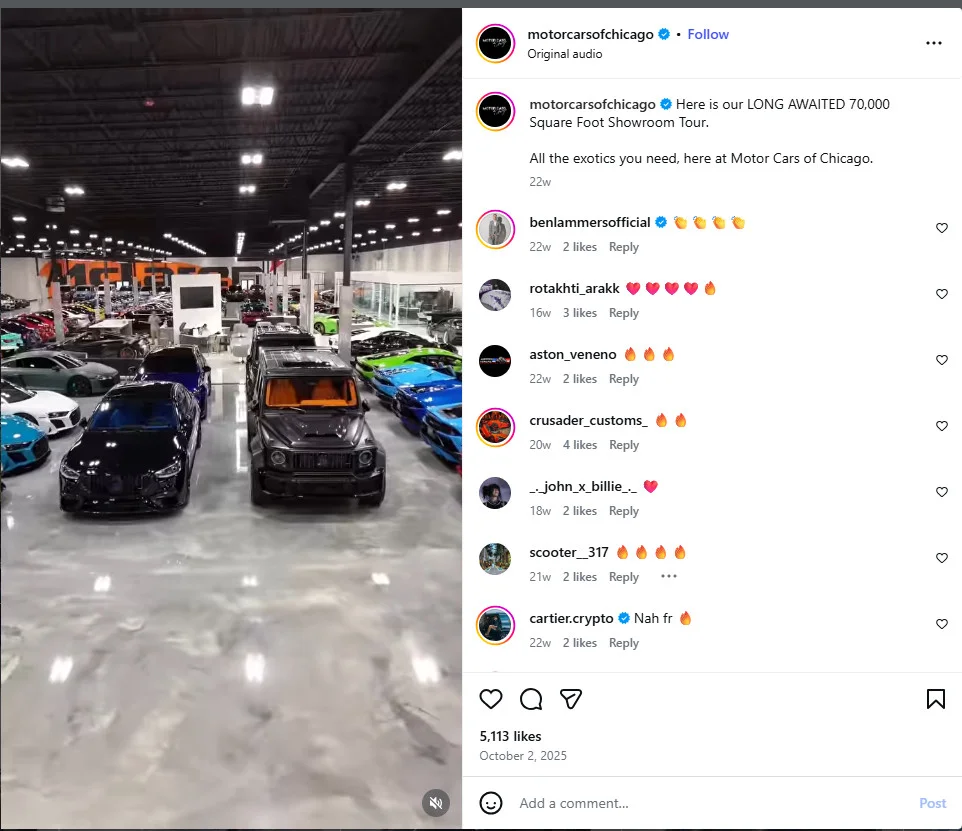
Data shows that video content tends to perform much better than static posts because buyers can actually see the vehicle in action.
2. Customer Delivery Stories
Nothing builds trust faster than seeing real customers driving away happy with their new cars.
Sharing delivery photos or short videos not only celebrates the moment but also acts as powerful social proof.
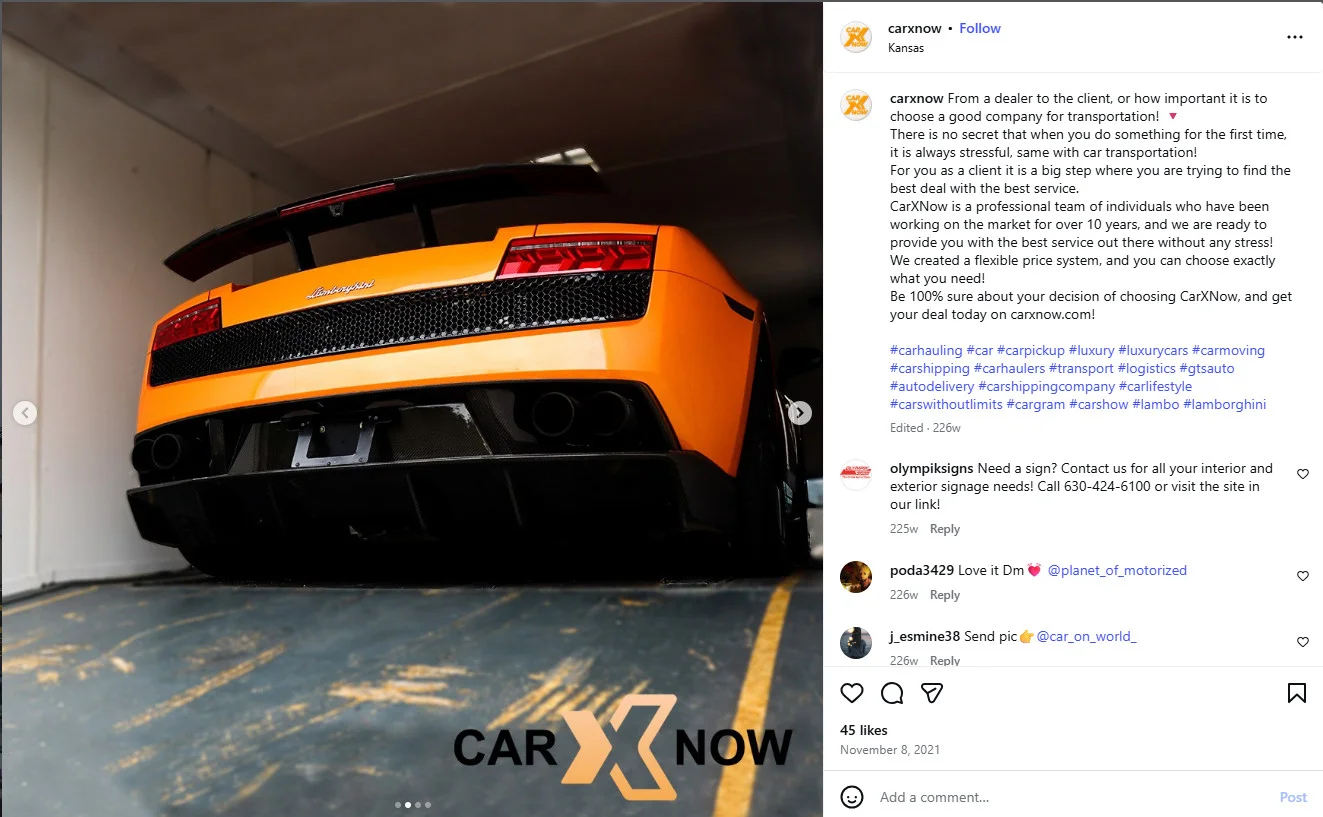
These posts make your dealership feel more authentic and help future buyers imagine themselves having the same experience.
3. Car Tips and Educational Posts
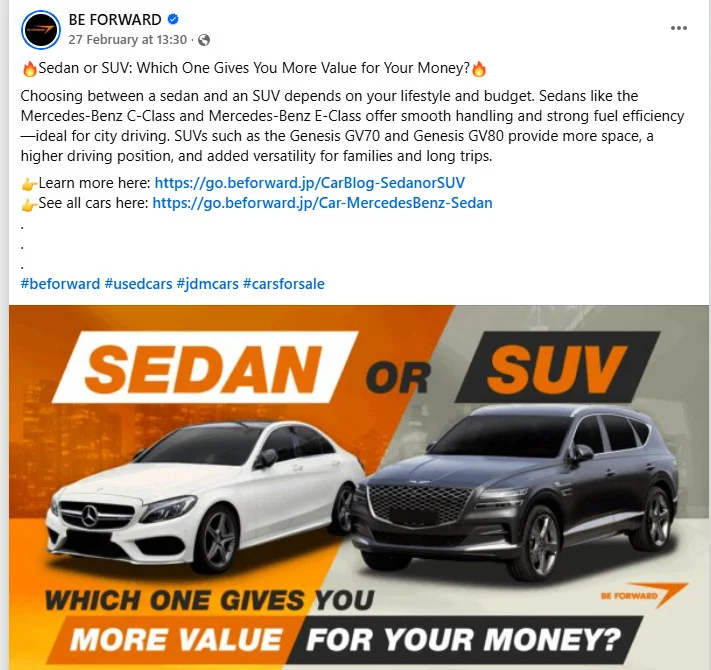
Not every post needs to sell a car. In fact, helpful content often performs better because it provides real value. Car owners are always looking for advice about maintenance, safety, and buying decisions.
Example post ideas you can try:
- 5 signs your car battery needs replacing
- Sedan vs SUV: Which is better for city driving?
- 3 simple ways to improve your car’s fuel efficiency
Posts like these position establish your business as a trusted automotive expert, not just a place that sells cars.
4. Behind-the-scenes Dealership Content
People like doing business with brands they trust and showing the human side of your automative business helps build that trust. Also, behind-the-scenes content makes your brand feel more approachable.
Example post ideas:
- Introduce your sales team
- Show technicians working in the service area
- Preparing a vehicle before delivery
- A day in the life at your car dealership showroom

5. Interactive Posts to Boost Conversations
Social media works best when it feels like a conversation rather than a broadcast. Simple interactive posts can dramatically increase engagement and visibility.
A few examples for inspiration:
- Which color would you choose for this SUV: black or white?
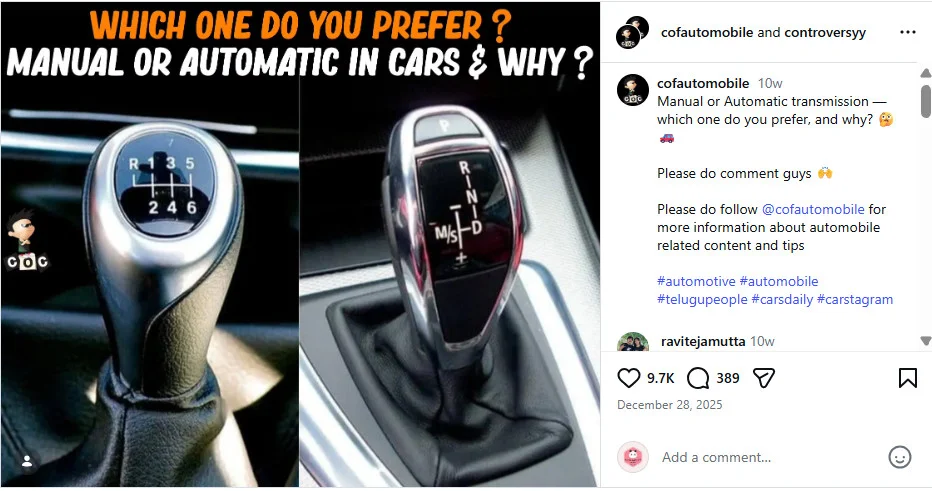
- Polls like “Manual or automatic: what’s your pick?
- What was your first car brand?
These posts encourage comments and discussions, which helps your content reach more people.
6. Local and Community Content
For a local car dealer’s social media marketing, community content is extremely important. You can highlight local events, landmarks, or partnerships to help your business feel like part of their neighborhood.
Example content ideas:
- Best road trip destinations near Alaska
- Sponsoring a local sports team
- Supporting a community charity event
- Sharing photos from a dealership event or car meet

This type of content builds local businesses’ recognition and trust.
Your service department can also generate excellent social media content while attracting repeat customers.
Example posts you can try:
- When should you change your engine oil?
- 5 dashboard warning lights you shouldn’t ignore
- Seasonal service reminders (summer AC check, monsoon tire inspection)
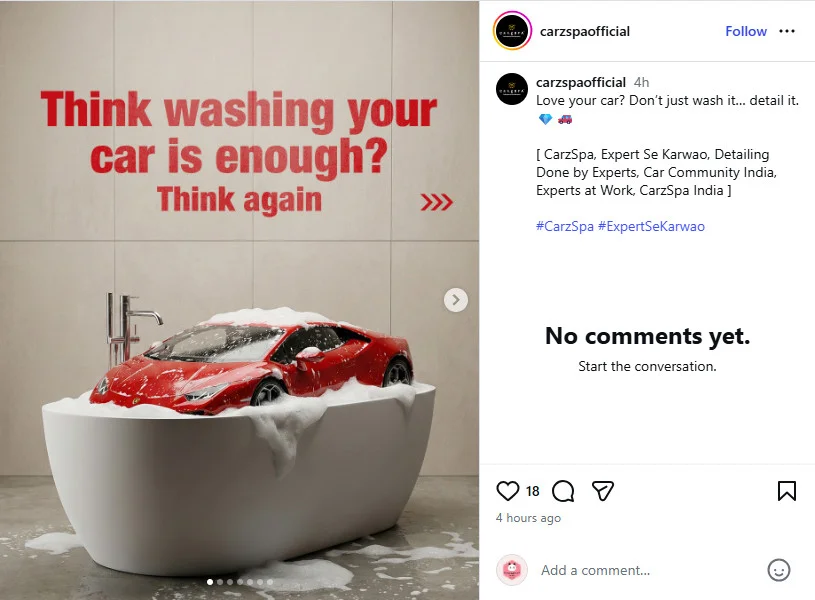
These posts not only help car owners but also remind them that your business offers professional service. But before that, you need to find out what social platforms are right for your business’s nature, and where you can find a targeted audience.
Not every social media platform works for all businesses because all social media works differently. Successful car dealers focus on the platforms where their target audience spends the most time.
1. Facebook
Even after more than two decades, Facebook remains one of the most effective platforms for local car dealer businesses to reach nearby buyers and generate leads. Many people still use Facebook to discover local businesses, read reviews, and ask questions before making a purchase.
Car dealers can use Facebook marketing to:
- Promote special offers, discounts, and sales events
- Share customer delivery photos and success stories
- Respond to questions and messages from potential buyers
- Build a local community on Facebook around the business

Facebook groups, reviews, and marketplace listings can also help attract more local attention.
2. Instagram
Instagram is a visual first platform, which makes it perfect for showcasing cars. High-quality images and short videos can quickly capture attention and help buyers explore vehicles before visiting your showroom.
Effective Instagram content includes:
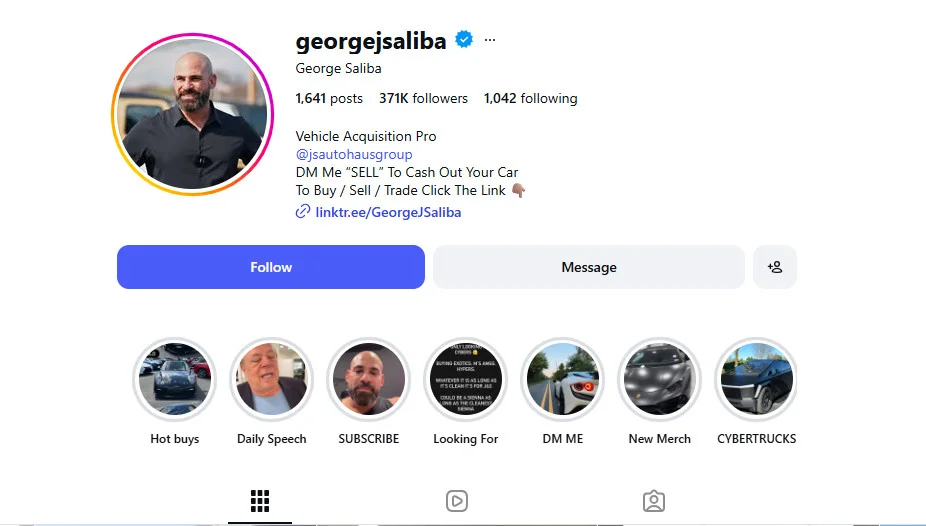
Using consistent branding, creative visuals, and engaging captions can help your business stand out in a crowded feed.
3. YouTube
YouTube is ideal for longer, more detailed content that helps buyers research vehicles before making a decision. Many car buyers watch videos to understand features, compare models, and see real driving experiences.
Here are some popular YouTube marketing content ideas:
- Detailed vehicle reviews and walkthroughs
- Feature demonstrations and technology highlights
- Comparisons between different models
- Service and maintenance tips
Because YouTube videos appear in search results, they can continue attracting viewers and potential buyers long after they are published.

4. TikTok
TikTok has quickly become a powerful platform for short-form video content. It allows car dealers to create engaging and entertaining videos that show vehicles and the personality behind the business.
Successful TikTok marketing content ideas include:
- Fun behind-the-scenes clips
- Quick car tips or feature highlights
- Trend-based videos featuring vehicles
On TikTok, authentic and creative videos usually perform better than overly polished marketing content. Simple content that feels natural can often reach a larger audience and generate strong engagement. There are a lot of ways to make TikTok videos for your business and make them viral.

5. Google Business Profile (Google My Business)
In addition to traditional social platforms, maintaining an active Google Business Profile is extremely important for local car dealer businesses. Many buyers discover car sellers through Google search and Google Maps when looking for vehicles nearby.
Posting updates on your Google Business Profile can help drive local traffic, phone calls, and direction requests.
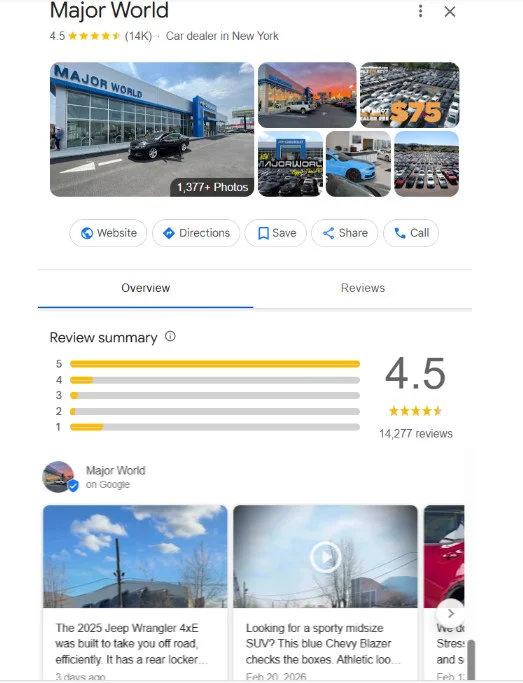
You can use it to:
- Post updates about new vehicle arrivals
- Promote special offers or seasonal sales
- Share photos of available cars
- Announce events or limited-time deals
If you have already set up your Google Business Profile, then by doing regular posts and profile updates, you can improve visibility in local search results and make it easier for nearby buyers to contact your business or visit your location.
Conclusion
Social media has become one of the most effective ways for car dealerships businesses to reach online buyers as well as local buyers. By sharing engaging content, showcasing inventory creatively, and interacting with your local audience, car dealers can turn social platforms into a steady source of leads, test drive requests, and increase vehicle sales.
Managing multiple profiles, scheduling posts consistently, and tracking performance can quickly become challenging, though. That’s where social media marketing tools can help. With tools for scheduling, collaboration, and analytics, you can manage your entire social media strategy at one place, and you can focus on your core business.
If you’re looking to streamline your car dealership social media marketing, explore SocialPilot’s features and find a pricing plan that fits your requirements.