
Jumping into social media marketing for the first time? You’re definitely not alone. As of late 2025, there are 5.6 billion people on social media, which is approximately two-thirds of the global population, and over 90% of the global internet users.
With numbers like that, it’s clear why brands of all sizes are eager to get a piece of the action.
But here’s the catch: social media marketing can sometimes feel like a giant puzzle where everyone wants to be seen. But given the huge competition on social platforms, mass visibility for businesses certainly becomes a challenge.
This is where the need for a smart social media marketing strategy can help you cut through the noise, focus on the right platforms, and speak to the right audience.
In this guide, we’ll break down what social media marketing really means and how you can create a strategy that aligns with your business goals, resources, and audience expectations.
At its core, social media marketing (or SMM) is the strategic use of social media platforms to promote and sell products or services. So, every time a business shows up on social media with a purpose – whether to talk about its products, introduce new launches, or engage with existing customers – it all comes under the domain of social media marketing.
Platforms such as Facebook, X (formerly Twitter), Instagram, and others have revolutionized the way businesses connect and interact with their customers. These platforms also provide invaluable customer insights that can help influence consumer behavior.
But everything that brands do on social media requires a plan, a well-thought-out strategy that aligns with their purpose and supports their larger business goal.
This is why creating a social media marketing strategy becomes important.
A social media strategy is a well-documented plan of action that tells you everything you need to do on social media. It gives you a clear map that directs every move of your social media marketing team.
Social media strategy answers simple but important questions like:
- What are your business goals?
- Which platforms should you focus on?
- Who is your target audience?
- What content verticals should you use?
- How often should you post?
- And how do you know if it’s actually working?
Having an agile strategy helps businesses take quick and definitive actions by directing their focus on opportunities and challenges, and helping them plan ahead for all possible situations.
Try SocialPilot’s free social media strategy template, where you can document your business goals, create a roadmap to achieve them, and also compare the results with your set targets.
Let us now dive in further and explore the benefits of social media marketing:
With over two-thirds of the world’s population using social media, it has become an important tool for marketers and businesses to amplify their brand presence, engage their customers, and plan strategic growth.
Here are some important benefits of social media marketing:
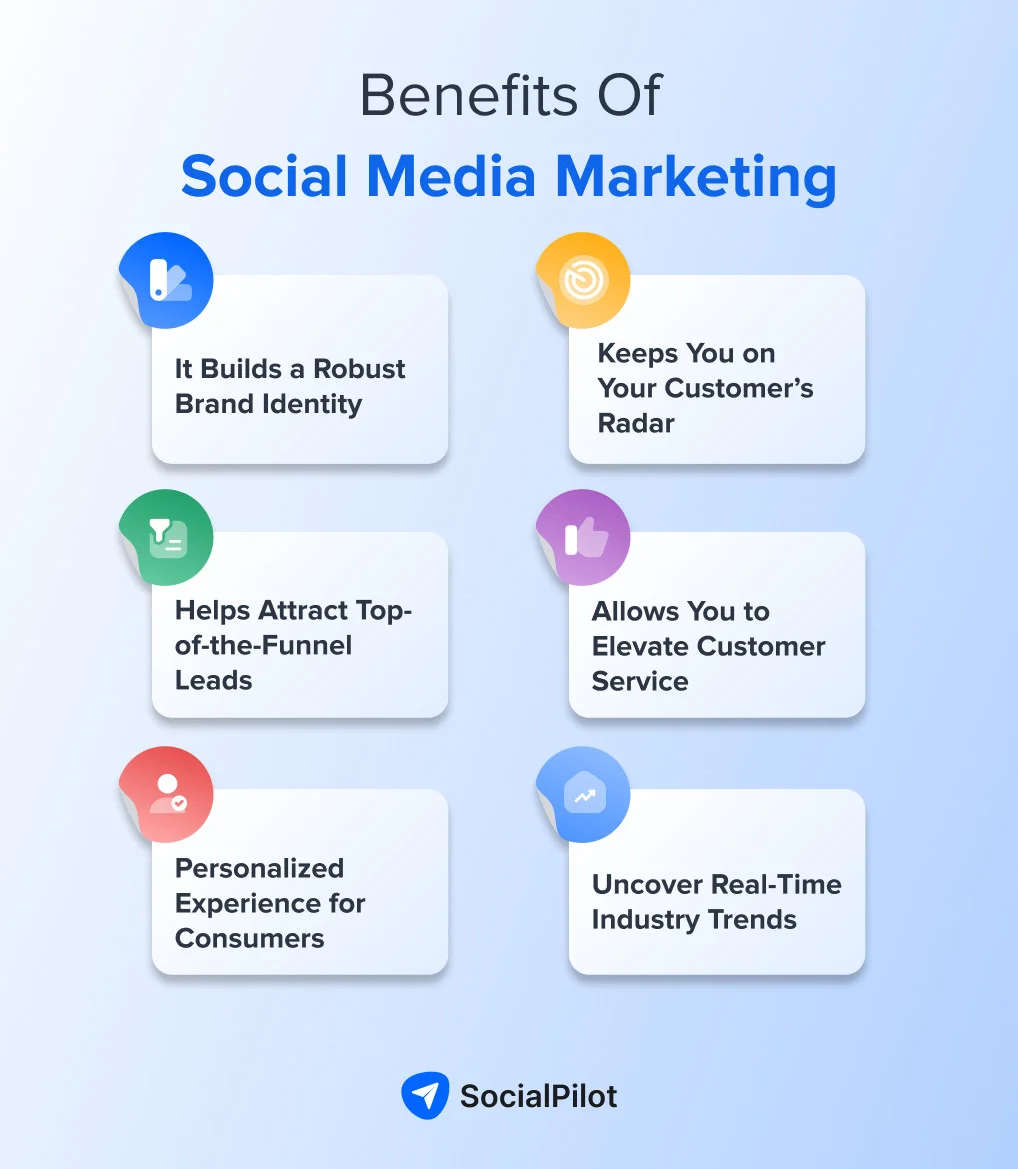
1. It Builds a Robust Brand Identity
Social media is more than just a platform for posting content; it’s a goldmine for brand building.
By showcasing behind-the-scenes moments, team highlights, and customer testimonials, you’re giving your brand a face and a personality. Moreover, when you share industry insights, research findings, and expert opinions, you position your brand as a go-to source for valuable information.
Consistency in your posts and interactions helps people connect with you on social media.
Take Wendy’s, for example.

Their witty comebacks and humorous posts aren’t just about selling burgers; it’s about creating memorable interactions that make them stand out in the crowded fast-food space.
2. Keeps You on Your Customer’s Radar
Putting out regular updates on product launches, special offers, and company news is essential because they help you stay visible.
Additionally, posting user-generated content, like reviews and testimonials, showcases real-life experiences with your brand, fostering trust and credibility. Hosting live sessions or Q&As can create a sense of community, making your audience feel more connected.
Engaging in trending topics and challenges keeps your content fresh and taps into what’s currently capturing your audience’s attention. Collaborations with influencers or complementary brands can expand your reach, introducing your brand to new audiences.
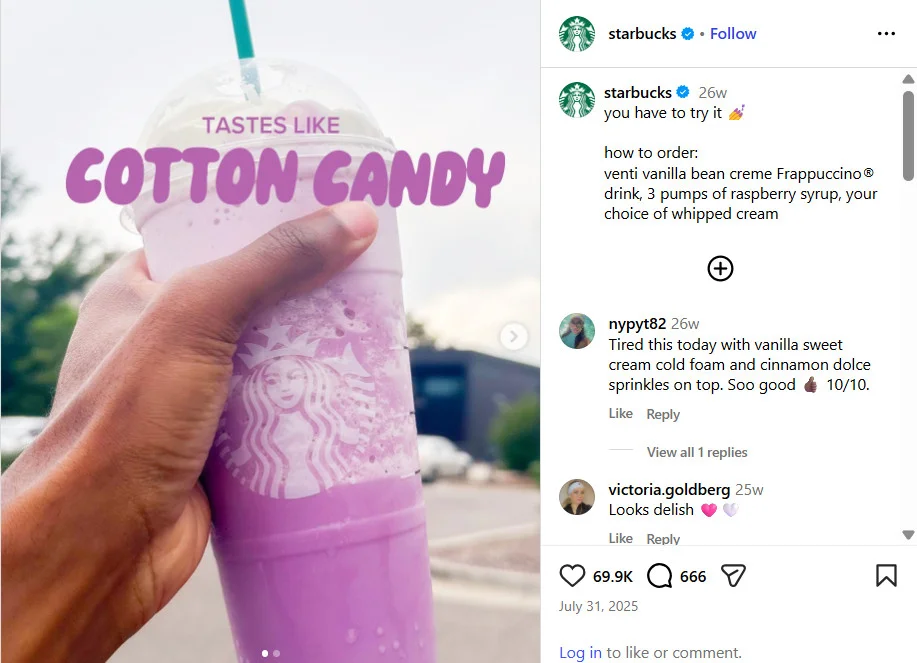
Starbucks, for instance, has mastered the art of staying relevant. Their social media marketing campaigns blend product promotions, engaging content, and seasonal posts to stay top of mind for coffee lovers.
3. Helps Attract Top-of-the-Funnel Leads
Social media isn’t just about likes and shares. It’s a potent tool for capturing leads.
Offering a diverse range of content, from infographics to webinars, caters to different audience preferences.
Additionally, there are interactive content formats like polls, quizzes, and challenges, etc. that engage users, making them more likely to share their contact information. Plus, with targeted digital marketing and remarketing campaigns, you’re not just reaching potential customers; you’re also nurturing them.
Platforms like Facebook and LinkedIn offer advanced targeting options, allowing you to reach the right audience based on demographics, interests, and behaviors. Furthermore, integrating your social media with CRM tools can help streamline the lead management process, ensuring no potential customer slips through the cracks.
4. Allows You to Elevate Customer Service
The beauty of social media lies in its immediacy, but there’s a depth to it that many businesses overlook. It has revolutionized customer service, allowing brands to address concerns, answer queries, and resolve issues in real time.
But it’s also a platform for proactive engagement.
You can jump into conversations by monitoring mentions and industry-related keywords, offering solutions before a customer even reaches out.
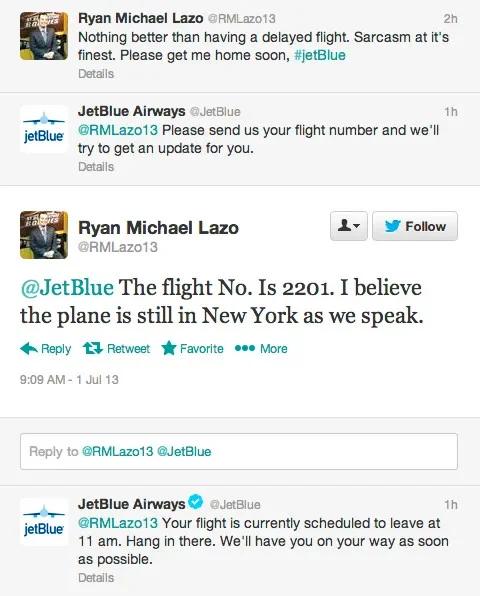
JetBlue, for example, showcases its commitment to customer satisfaction with its proactive approach on X.
5. Personalized Experience for Consumers
One of the standout benefits of social media marketing is its ability to deliver a tailored experience for users.
Brands use effective social media marketing strategies to target audiences based on various factors, like demographics, shopping patterns, and interests. This means that consumers are more likely to see posts and advertisements that align with their personal preferences and needs.
Such personalized content enhances user engagement and leads to higher conversion rates. When consumers feel that a brand understands and caters to their specific interests, they are more likely to engage and build loyalty with that brand.
6. Uncover Real-time Industry Trends
Social media is a goldmine for businesses to uncover the latest trends before they even show up in reports or news articles. This is because people indulge in active conversations on social media; all you need to do is LISTEN.
Using social listening tools can help you get a real-time pulse on what your audience cares about. You start noticing what products people love, what they’re frustrated with, and what topics are suddenly gaining traction in social networks and your industry.
These insights can help you tweak your messaging, improve an offering, or jump on a trend before it peaks.
Given the immense benefits of social media marketing, it is a no-brainer that businesses today need to live and breathe social. But doing so, without a proper strategy, will lead you nowhere.
So, here are the steps that you must follow to create an effective social media marketing strategy:
1. Define Your Business Goals
Not all your goals can be fulfilled simultaneously. You have to start from scratch and write down your social media goals for business in order of priority.
Start by writing bigger goals and then break them down into smaller, achievable targets. Make sure your goals are SMART – specific, measurable, achievable, realistic, and time-bound. Clear and well-defined goals give your team direction and help them track progress.
Below are the most common social media goals businesses focus on and the KPIs or metrics used to track them.
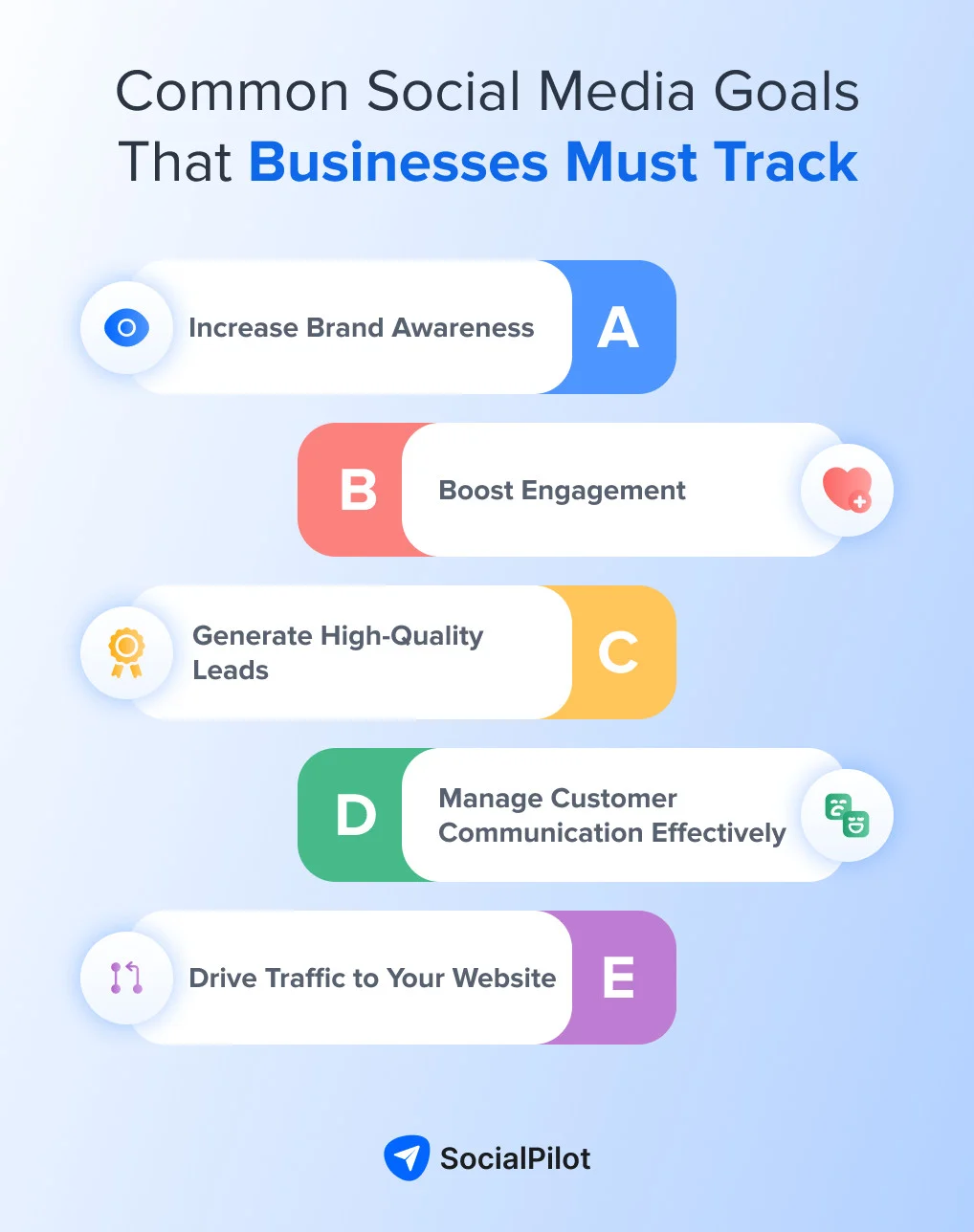
Let us now talk about each of these social media goals and understand how to track them
A. Increase Brand Awareness
In social media terms, brand awareness is about getting your brand in front of more people. The more users see and recognize your brand, the more likely they are to remember and trust it.
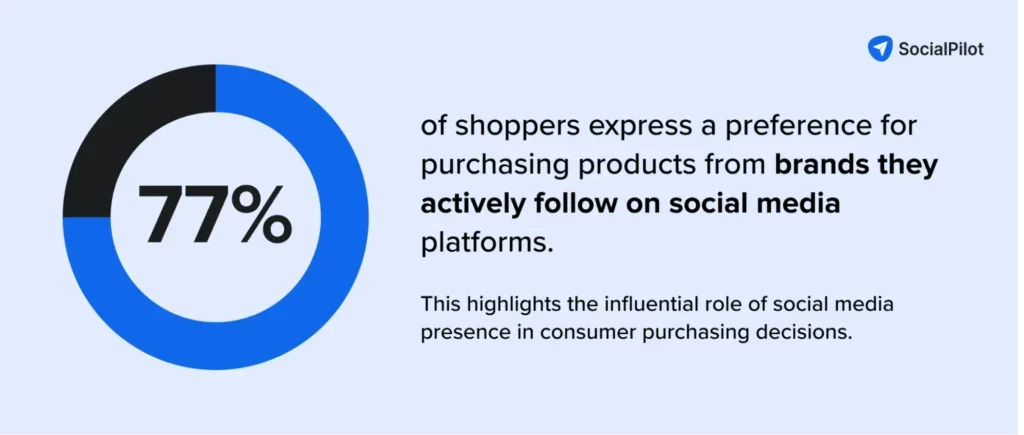
According to a G2 article, 77% of shoppers prefer to buy products from brands they follow on social media. Hence, brand awareness is the first step to establishing familiarity and brewing loyalty among the audience.
Here are some key metrics to help you measure brand awareness:
- Social media reach
- Post impressions
- Follower growth
- Brand mentions
B. Boost Engagement
Better engagement signals that people are having meaningful conversations about them on social media, which in turn helps them build a strong online community.
Here are some key performance indicators to identify increased engagement on social profiles:
- Likes, comments, and shares
- Engagement rates
- Mentions and tags
C. Generate High-Quality Leads
When used strategically, social networks can help businesses generate high-quality leads. Whether these leads are your followers or a completely new audience, the next step is to move them to your social media marketing funnel for further nurturing and conversion.
Here are the key metrics that indicate that you are getting leads from your social profiles:
- Conversion rate
- Form submissions
- Email sign-ups
- Clicks on CTA buttons
- Traffic to landing pages
- Subscriptions for newsletters
D. Manage Customer Communication Effectively
Given the ease of communication, a lot of customers turn to social media for customer service, like getting quick support or sharing unpleasant experiences. Businesses must answer such queries proactively and thoughtfully to improve the quality of their customer service.
Here are the metrics that will help you gauge the effectiveness of social media communication:
- Response time
- Customer review rating
- Sentiment analysis
E. Drive Traffic to Your Website
The ultimate goal of all businesses is to generate ROI, which can be done by increasing website traffic through social media. This is often a key step towards conversions.
Here are the metrics to track:
- Website sessions
- Referral traffic
- Click-through rate
- Bounce rate
- Session duration
- Webpage heat maps
You can focus on any one of these goals or work toward multiple goals at the same time, depending on your business priorities and where your social media presence currently stands.
2. Understand Your Target Audience
Every social media marketing strategy you make must be focused on your target audience. So, make it a priority to clearly understand your target market and target audience. This clarity will give a direction to every social media decision you make.
Surprisingly, most marketers skip this step and jump straight into posting, which often leads to their marketing efforts falling flat.
Here’s how to know your target audience:
Conduct Market Research
To create an ideal buyer persona, start by identifying basic details like age, location, and profession. Then go deeper, look at habits, preferences, motivations, and pain points. Social media itself offers plenty of clues, from trending conversations to common questions and complaints.
Create Customer Personas
Social media marketing works best when messaging feels personal. To achieve that, you need to use the insights you have gathered and create customer personas based on real data.
These personas give structure to your marketing efforts and help you create engaging social media content that resonates with your audience.
By creating clear reference points for your team like who you’re talking to, what tone to use, and what type of content you create, you can ensure that your messaging feels intentional and relevant. Here are some questions that can help you define your ideal customer persona.
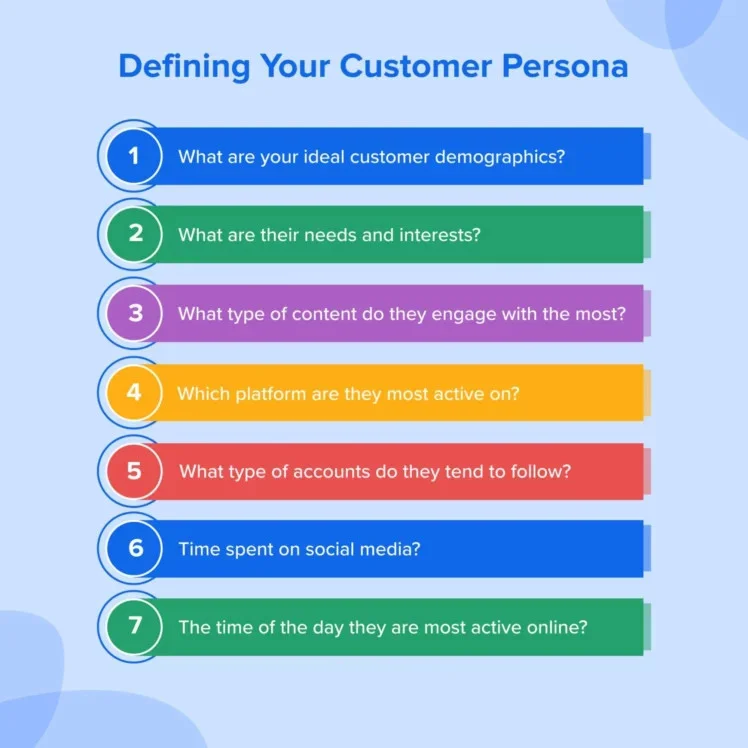
Answering all these questions will help you align your marketing moves with your customers’ preferences and pain points.
3. Analyze Your Competitors
The next step is to identify competitors in your industry for in-depth analysis. A thorough competitive analysis will help you figure out what kind of strategies they employ and what works among their audience.
Here’s how you start:
Identify the Competition
Finding competitors on social media is pretty simple. Just look for relevant keywords on search engines and hashtags on social platforms to spot brands that are targeting them. These brands are your competitors, and they most likely have the same target audience as yours.
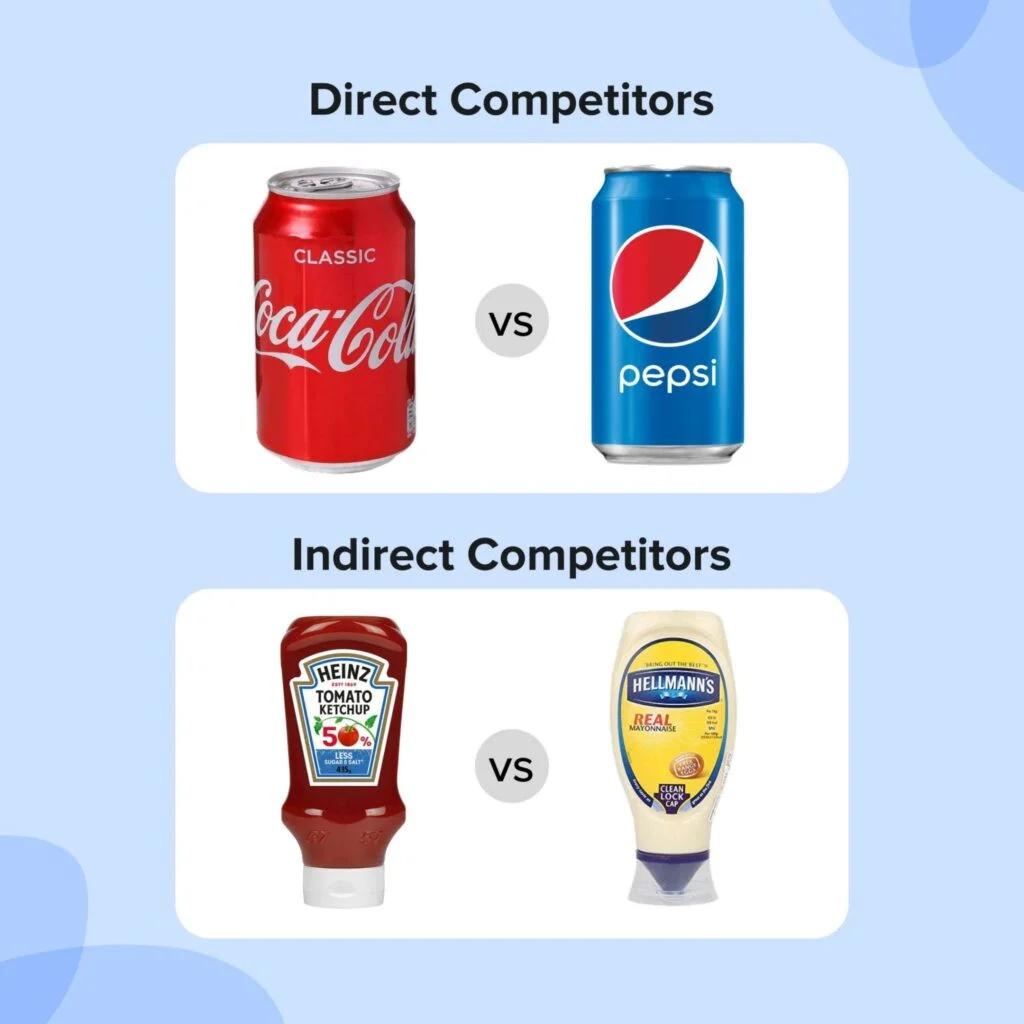
They could either be your direct competitors or indirect competitors:
- Direct competitors – brands offering similar products or services
- Indirect competitors – brands from related niches that target the same audience but sell different offerings
Below is an example of the direct and indirect competitors: two cola drinks of the same type and two condiments, but of different types.
Perform A Complete Competitive Analysis
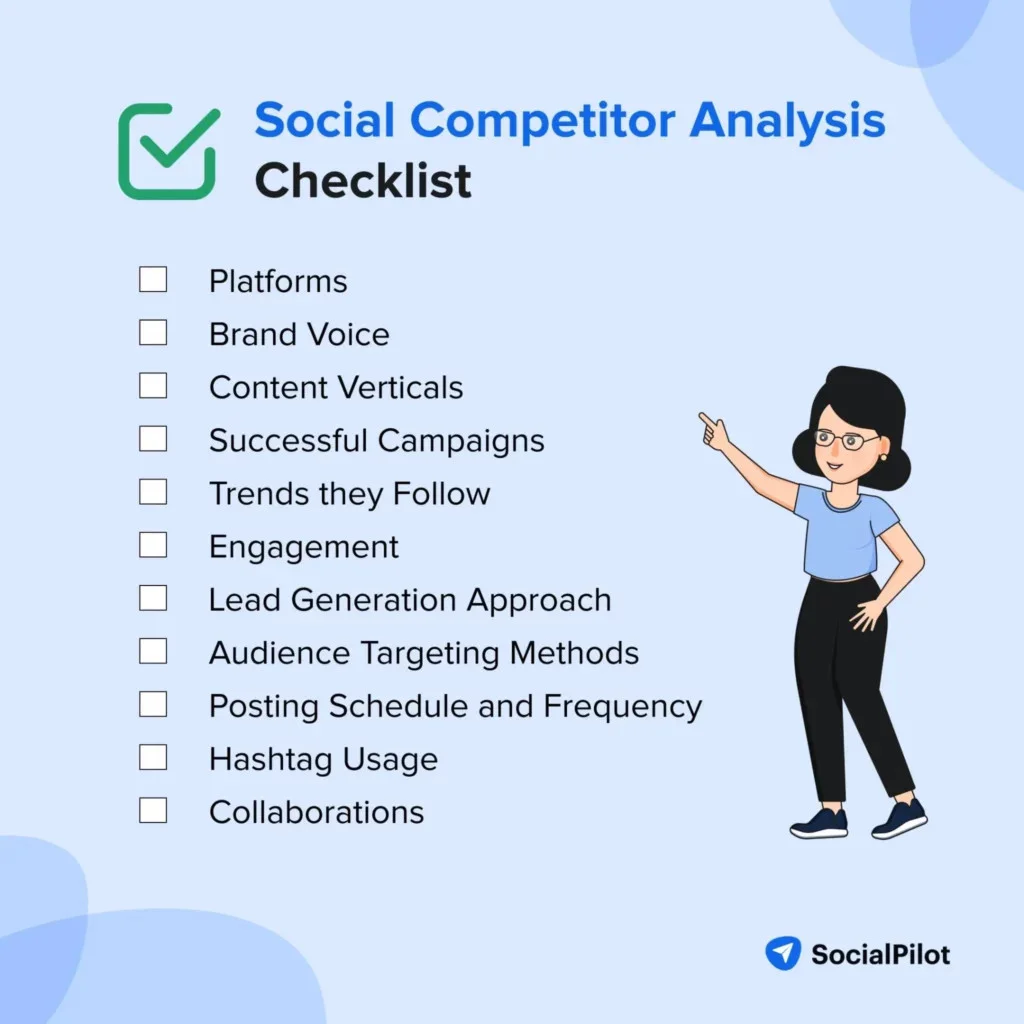
Once you have identified the right brands, it’s time to look at their social media marketing plan from every angle.
Pay attention to their:
- Marketing tactics
- Audience engagement
- Lead generation methods
- Posting frequency and consistency
- Targeting strategies
- Content themes and formats
- Hashtag usage and collaborations
Establishing prominent benchmarks is very crucial in the initial planning phase, because it gives you an idea of how to craft your own plan.
In a nutshell, keep track of your competitors’ activity on social media and incorporate some of their best points in your strategy. You can also learn from this in-depth Competitor Analysis Guide that can help you observe your peers and understand their marketing approach.
The success of your marketing initiatives also depends on which social media platforms you use. But most businesses make the mistake of creating profiles on every possible platform.
But this is not how things work.
While large brands like Starbucks and Target can sustain an omnipresent marketing approach, small brands should select a few right social media platforms that align with their business type, audience, and goals.
Start by considering what you offer and whether your business operates in a B2C, B2B, or C2C model. Where does your audience already spend their time? That’s where your efforts are most likely to pay off.
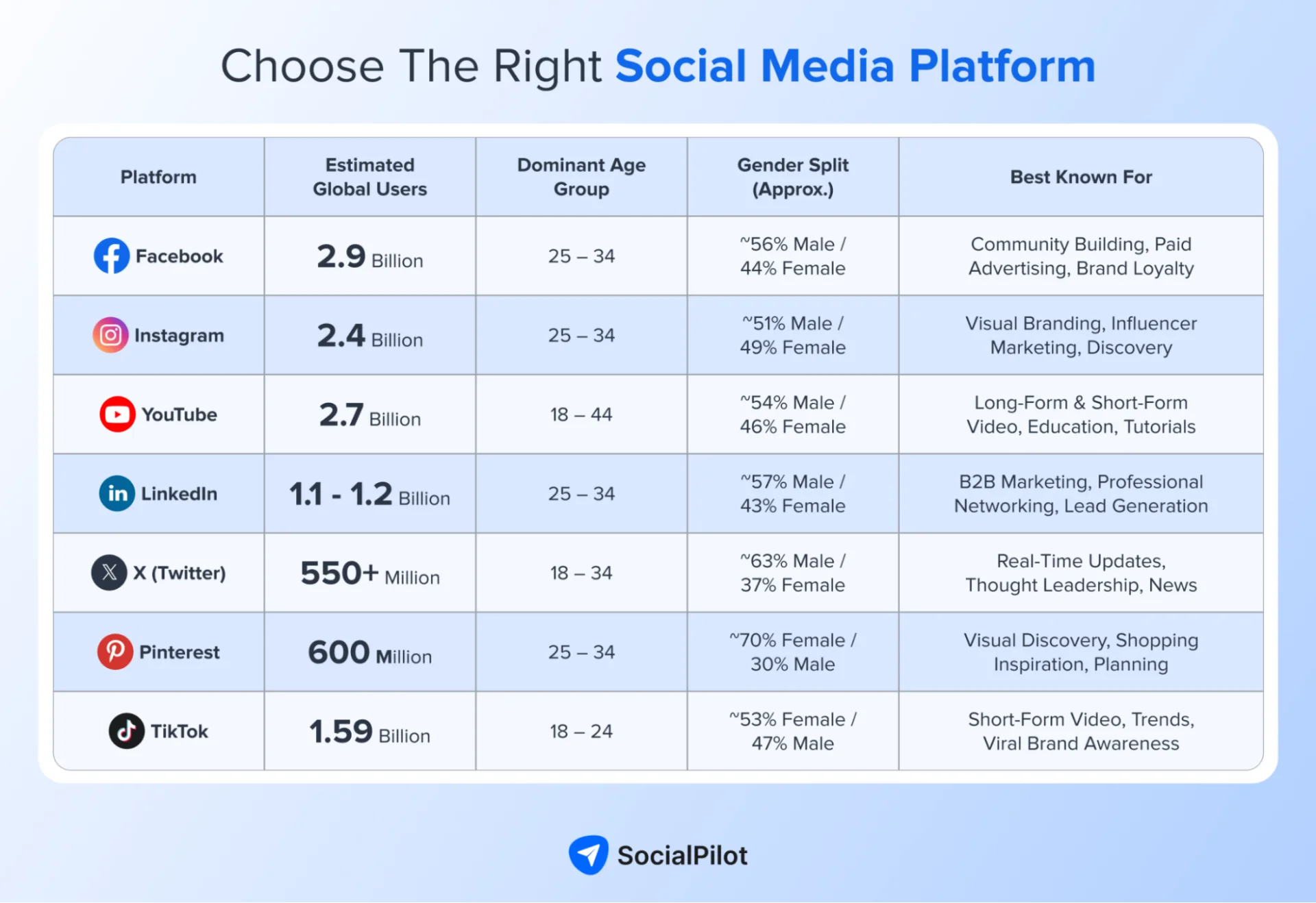
Here are some facts about the major social media platforms for businesses for you to decide which one of them fits you the best.
Social Media Platforms to Choose From
1. Facebook: The majority of users are aged between 25 and 34, with 43.7% female and 56.3% male users. With its advanced targeting options and diverse ad formats, a strong Facebook marketing strategy can help businesses improve their reach and engagement.
2. Instagram: Widely used by Gen Z and Millennials, Instagram supports organic discovery through hashtags, Explore, and location tags. It’s also a prime platform for influencer marketing and helps brands engage with diverse audiences.
3. TikTok: This famous video-sharing platform also boasts a user base of 18- to 24-year-olds of age with an almost 50-50 male-to-female ratio. TikTok can help brands create awareness about their products or services through tutorials and use cases.
4. YouTube: The largest user segment, aged 18-44, has 54.4% males and 45.6% females. Known for its highly engaged audience, YouTube works well for both long-form and short-form video content such as tutorials, explainers, and storytelling. A clear YouTube marketing strategy helps brands build communities, improve discoverability, and keep viewers coming back.
5. X (formerly Twitter): 38% of users fall between 18 to 34 years old, with 63% being males and females 37%. The platform is ideal for real-time conversations, timely updates, and trend-driven content. Brands can also promote their posts to expand their reach quickly.
6. Pinterest: Women, particularly those aged 25-34, constitute the largest demographic group. However, Gen Z is the fastest-growing segment, making up 42% of the user base.Pinterest is a great platform for visual marketing and works well for inspiration-driven products and services.
7. LinkedIn: With 57.3% male and 43.7% female users, LinkedIn is most popular among professionals. It works well for B2B brands, professional services, and personal branding. A strong LinkedIn marketing strategy helps businesses generate leads, establish authority, and build meaningful professional relationships, especially in industries like software, consulting, and high-value services.
Prioritize the platforms that best align with your social media marketing goals, target audience, and available resources.
Once you know your goals, audience, and platforms, it’s time to decide what you’ll say, how you’ll say it, and when you’ll say it. That’s exactly what your content strategy covers.
A strong content strategy has three core elements – your brand voice, your content plan, and a clear publishing timeline.
How to Formulate Your Social Media Brand Voice?
Look at Your Company’s Mission and Values
Start by revisiting your brand’s mission statement and then defining its core values. These pre-defined communication pillars give your brand a personality for powerful social media branding.
Chewy is a pet care brand with a clear mission: “To be the most trusted and convenient destination for pet parents.” Their pet-first mindset shows up consistently in their social media content, helping them emotionally connect with their audience.

Get Inspired by Your Audience
Next, you must understand the tone to which your audience would respond. For this, you must analyze what your audience listens to, or the type of tone that’s working for your contemporaries, and come up with a cohesive and consistent brand voice that will make you stand out.
Outline The Don’ts
Now, it’s time to set some boundaries and make your brand voice more concise. Your don’ts can sound something like:
- Don’t sound overtly friendly
- Don’t sound too pretentious
- Don’t be sales-y
Once you do this activity, it will become easy to consolidate your brand voice.
The Ultimate Brand Voice
Now, come up with 3 to 5 words to define your main characteristics.
Netflix is a winning example of a brand with a unique voice that is witty, funny, and entertaining to keep customers hooked to its social channels.

They use a hint of a friendly and informal tone, which keeps the conversation flowing among their users.
Test and refine your brand voice over time to ensure it builds your brand awareness and resonates with your audience.
Create a Compelling Content Plan
Once you have defined your brand voice, the next step is to create engaging content for your social media.
Start by brainstorming or curating post ideas without worrying about formats. Think in terms of themes and value first. Ensure that your content plan is a mix of:
- Educational content that informs or solves problems
- Entertaining content that keeps things light
- Inspirational content that builds emotional connection
- Interactive content that encourages participation
- Promotional content to support business goals
Also, keep promotional content limited and focus more on value-driven posts that build trust and engagement.
Create a Content Calendar With Timelines
Once you have your content ideas and verticals down pat, it’s time to set up your content calendar. This entails deciding on a weekly or monthly posting schedule and assigning content to each posting slot.
For more details, you can refer to this guide on how to create a social media content calendar and organize your posts like a pro. Laying everything out on a calendar will help you deliver consistent and goal-oriented social media content.
Make sure you also analyze the best time to post on social media and focus on those posting slots to get the maximum reach. Once the monthly social media calendar is planned, it’s time for execution!
Are you tired of creating Excel Sheets to organize your social media content?

Use SocialPilot’s Automated Social Media Calendar, a more high-tech option with multiple content management features.
Its dynamic dashboard enables users to create, customize, and schedule social media posts across multiple accounts. Posts can be easily arranged using its drag-and-drop functionality, and you can filter views to check your monthly, weekly, or daily posting plans.
And the best part? SocialPilot will automatically publish your posts on the scheduled date and time mentioned in the calendar.
Try SocialPilot Today!
The next crucial step for social media marketers is to optimize their social profiles. This process is about integrating the necessary information into your profile, including who you are, what you do, and your area of expertise.
The basic idea behind optimizing your profile is to ensure that you showcase your capabilities, generate leads, and make a good impression on profile visitors, so they become your followers.
You can start by selecting a high-quality profile picture and cover photo that reflects your brand identity. Write a compelling and concise bio highlighting your unique value proposition, including all relevant information about your business, and use relevant keywords for the search.
“Your social media profile is often the first touchpoint for potential customers. Make sure it’s not only visually appealing but also clearly communicates what your brand stands for. A well-crafted bio with the right keywords can significantly boost your discoverability.”
Katelyn Rhoades, CEO of Enfluence Marketing Agency
Here’s the perfectly optimized X profile of Burt’s Bees’ with a clear brand name, profile picture, cover image, and a concise bio with relevant keywords.
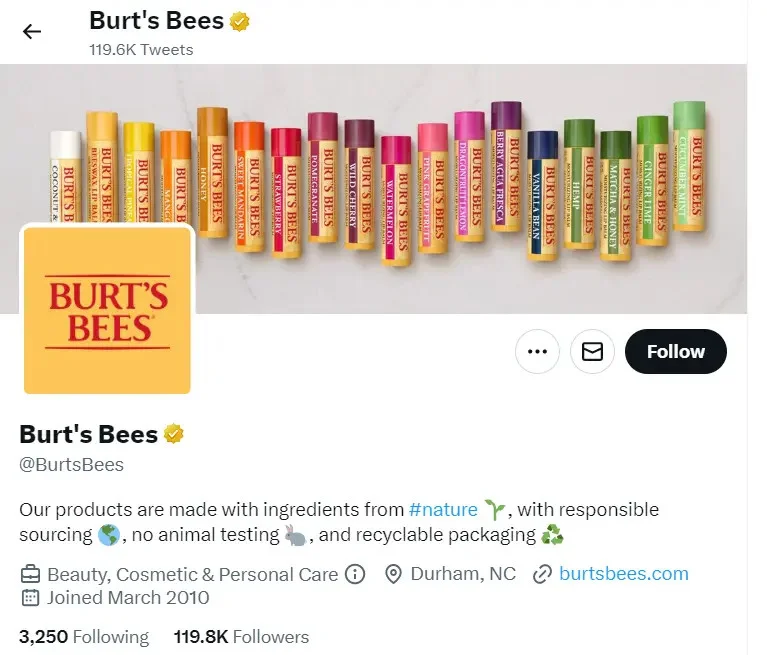
To further optimize your profiles, cross-promote your social media accounts by linking them to each other. Doing this will also increase your visibility with your target audience.
Brands often rely on an organic social media marketing strategy, especially if they are just starting out. But in the long run, it isn’t about choosing between organic and paid, but using them both together to build a successful social media strategy.
Here are some organic strategies that can help brands build trust and visibility over time:
Use visual content consistently
Videos, live sessions, and eye-catching visuals naturally attract more attention and engagement. Planning this content in advance helps you stay consistent instead of posting sporadically.
Educate your existing audience
Your current followers already care about your brand. Keep them engaged by sharing helpful, relevant content that adds value beyond promotions.
Participate in groups and online communities
Most platforms have niche communities where your audience already hangs out. Be a part of these communities and try to contribute meaningfully by avoiding hard selling. Your focus here should be on building credibility and trust for your brand.
Collaborate with influencers and micro-influencers
By getting the right people to engage with your product, your brand message spreads exponentially. You need no longer rely solely on your direct audience. Rather, find the right social media influencers who can blow the dandelion of your brand.
Use a hybrid approach
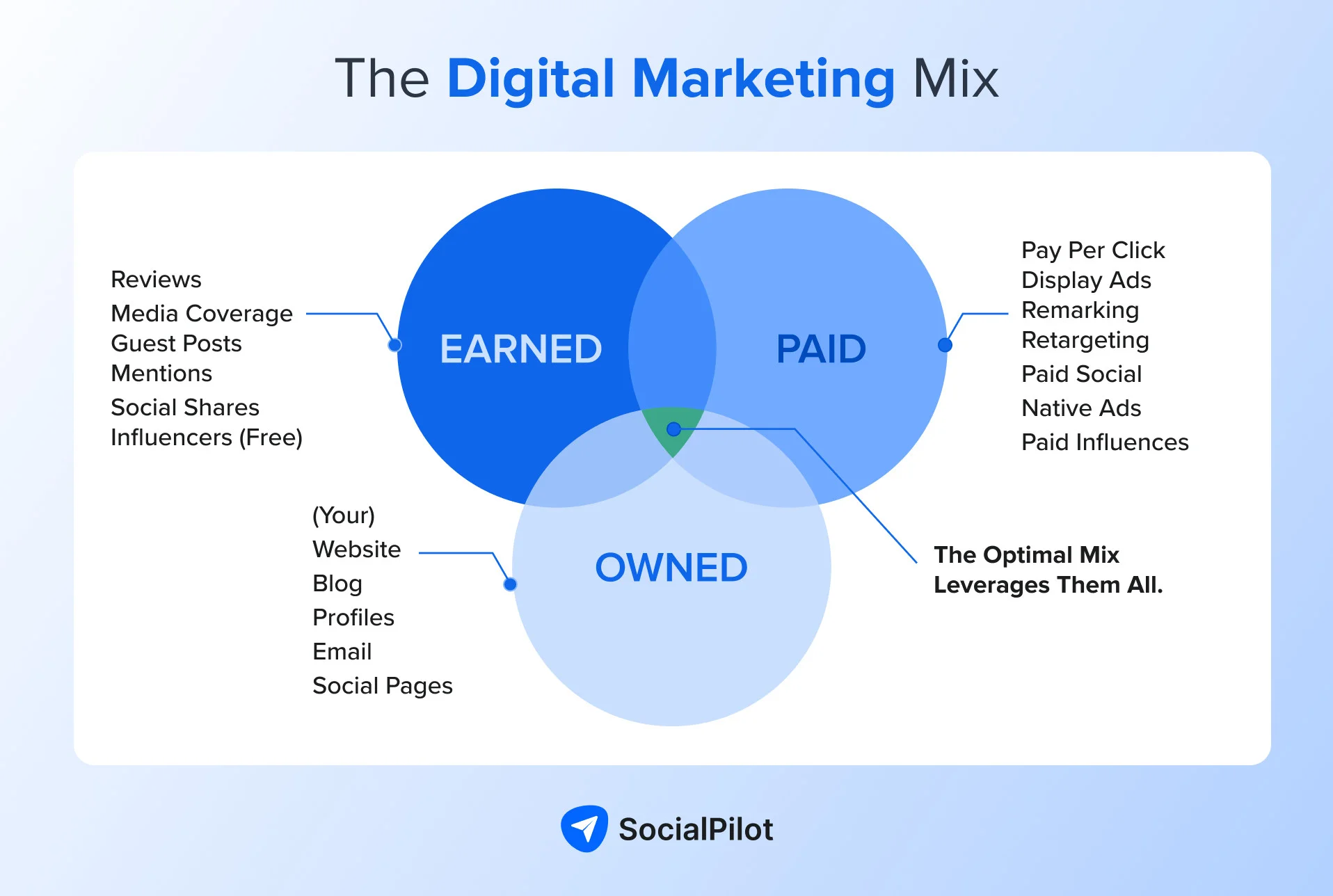
When an organic and paid approach is combined, it works better than either approach on its own. Organic offers long-term credibility, and social media advertising offers immediate visibility. Boost your high-performing organic posts to increase brand awareness, extend reach, and amplify results.
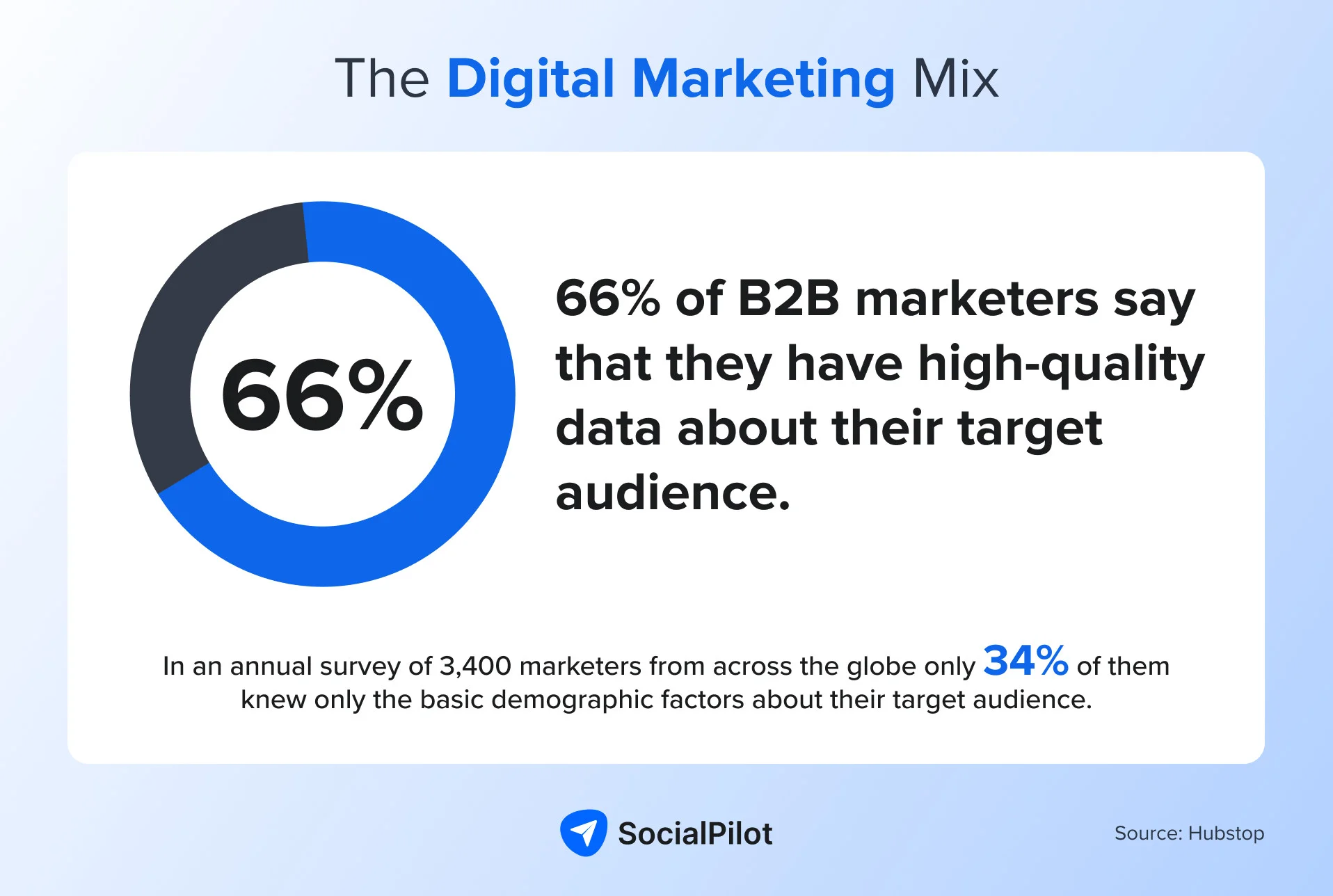
The image below shows the digital marketing mix that works well for most businesses.
8. Regularly Assess and Adjust Your Strategy
The digital landscape is ever-evolving. So it’s vital to check how your strategy is performing and be ready to pivot when necessary.
Set aside time, be it monthly or quarterly, to review your metrics, evaluate your content’s effectiveness, and keep an eye on emerging trends. Remember that your strategy should focus on building lasting relationships, strengthening your brand, and driving sustained growth over time.
By carefully following these steps and staying tuned into the ever-changing world of social media, you can build a strategy that truly connects with your audience and drives real business results.
Last but not least, there are some common social media marketing mistakes that you must steer clear of. Let us now talk about them.
1. Overposting or Underposting
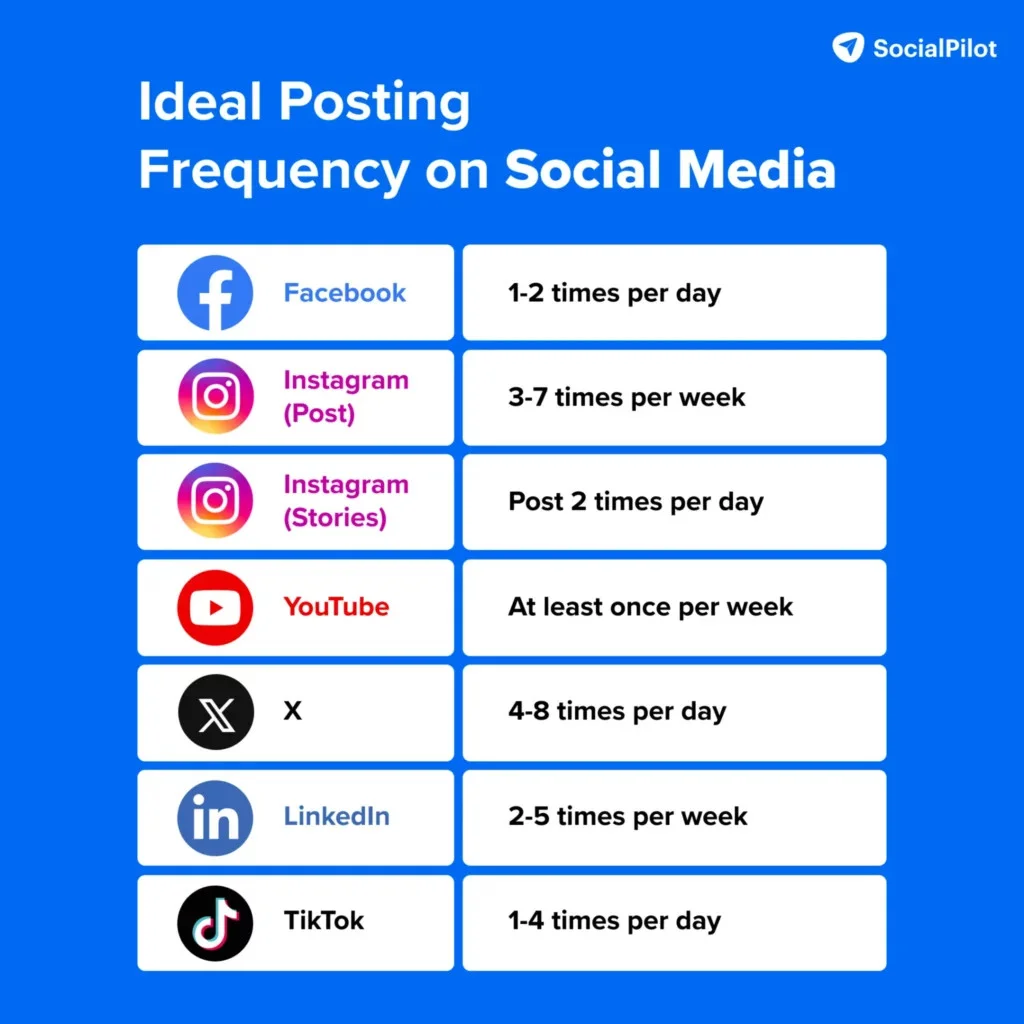
Striking the right balance in posting frequency is essential. While platforms like Facebook might suggest 1-2 posts per day for optimal engagement, Instagram’s feed might thrive with 3-7 posts per week.
As per industry standards, here is what the ideal posting frequency should look like for each social media platform:
2. Having a One-Size-Fits-All Content Approach
Your content mix requires a tailored approach. Every platform has its own unique features like Instagram Stories, Facebook Live, or X polls. Diversify with posts, Reels, infographics, and Stories to match your audience preferences and platform features.
3. Neglecting Content Creation Tools
Not using adequate resources while marketing is one of the biggest mistakes marketers and businesses commit. Here are some tools that can help you streamline your content creation process:
- SocialPilot AI Assistant for content creation
- Canva for social media graphics
- Adobe Spark to design visuals and short videos
- Unsplash for royalty-free images
- Figma to design and collaborate on social media creatives
- InShot to edit short-form videos
- iMovie for video editing on Apple devices.
4. Overlooking Audience Engagement
Social media thrives on interaction and engagement, so make sure to initiate meaningful conversations, ask your audience for their opinions, and value their feedback. When you show genuine interest in what your followers have to say, it builds trust and loyalty.
5. Reposting Without Strategy
While repurposing content for social media, it’s essential to have a strategy.
For instance, a high-performing blog on your website can be transformed into an engaging infographic, customer testimonials can be showcased across multiple platforms,etc.
By reposting popular or evergreen content and using a proper strategy, you can ensure that your content reaches a wider audience and gets more visibility.
6. Relying Solely on Organic Reach
Organic content is undeniably crucial, but solely relying on it can limit your website traffic and brand reach. So, boost your posts, experiment with different ad formats, and eventually you will find out what resonates best with your audience.
7. Not Regularly Evaluating Performance
The digital realm is ever-evolving. Strategies that were once effective might need adjustments. Hence, it is important to constantly evaluate the performance of your social media campaigns to gather insights and improve your tactics.
Turning Your Social Media Marketing Strategy into Success
Social media marketing is a vast and ever-evolving landscape that requires a solid strategy to truly succeed.
Whether you’ve just started building your presence on social media or you want to refine your already existing approach, following the insights shared in this blog can help you win in this dynamic space.
Ofcourse, you will have to give it some time and show up consistently, this is where using the right social media management tools can be helpful.
SocialPilot is a social media management platform that simplifies your entire workflow. You can plan and schedule your content in advance and analyze insights to understand what’s working and what’s not. It takes the repetitive work off your plate so you can focus on refining your strategy and growing your brand.
Take a look at our pricing plans and choose the one that aligns with your needs. We, at SocialPilot, are here to support your social media marketing goals.