
Remember when Oreo dropped its famous ‘You can still dunk in the dark’ tweet during the 2013 Super Bowl blackout? Years later, it’s still remembered as one of the greatest moments in real-time marketing.
But what if they hadn’t been ready? What if that tweet never happened?
Well, that’s where ‘Social Media Managers’ come in. They’re the masterminds behind the strategy, creativity, and real-time thinking that allows brands to seize opportunities, manage their reputation, and intrigue their audiences 24/7.
Want to know what it takes to be a social media manager in 2026? Let’s dive in.
Key Takeaways
- An SMM’s role goes beyond posting; it’s about building relationships and using data to grow.
- Creativity, data literacy, and adaptability to trends are key to thriving as an SMM.
- AI, Social Search Optimization, and trend awareness will bring brand success in 2026.
In 2026, a Social Media Manager (SMM) is the chief storyteller and community architect of a brand. They are the strategic eye that translates business objectives into a platform-specific digital dialogue.
Moving far beyond the 2013 definition of a “content poster,” SMMs now act as a bridge between the marketing team, customer service department, and executive leadership.
Their core mission is to build a community around a brand’s presence, ensuring authenticity and consistent performance across digital channels such as TikTok, Instagram, LinkedIn, and emerging niche platforms.
| Basis of Difference | Social Media Manager | Social Media Marketer |
| Primary Focus | Organic growth, brand reputation, and community engagement. | Performance-focused, driving conversions and Return on Investment (ROI). |
| Key Responsibilities | Builds the brand’s voice, manages daily communications, and handles crisis management. | Manages paid ads, A/B testing, conversion rate optimization (CRO), and ensures social campaigns contribute to the sales pipeline. |
| Key Performance Indicators (KPIs) | Engagement rates, follower growth, and positive sentiment. | ROI, ad spend, conversion rates, and social media metrics. |
| Target Metrics | Community growth, customer loyalty, engagement metrics. | Conversion metrics, sales growth, and lead generation. |
| Tools & Platforms | Social media management tools, social listening, content scheduling, and platform expertise. | Paid media platforms (e.g., Facebook Ads, Google Ads), A/B testing tools, and social media platforms. |
| Role in the Sales Funnel | Nurtures audience, builds trust, and enhances social media presence. | Turns audience into customers, directly influencing sales pipeline and driving revenue growth. |
A Social Media Manager (SMM) is the backbone of a brand’s digital presence. With more than 5.4 billion people worldwide using social media, SMMs directly connect brands with audiences across platforms like TikTok, Instagram, LinkedIn, and more.
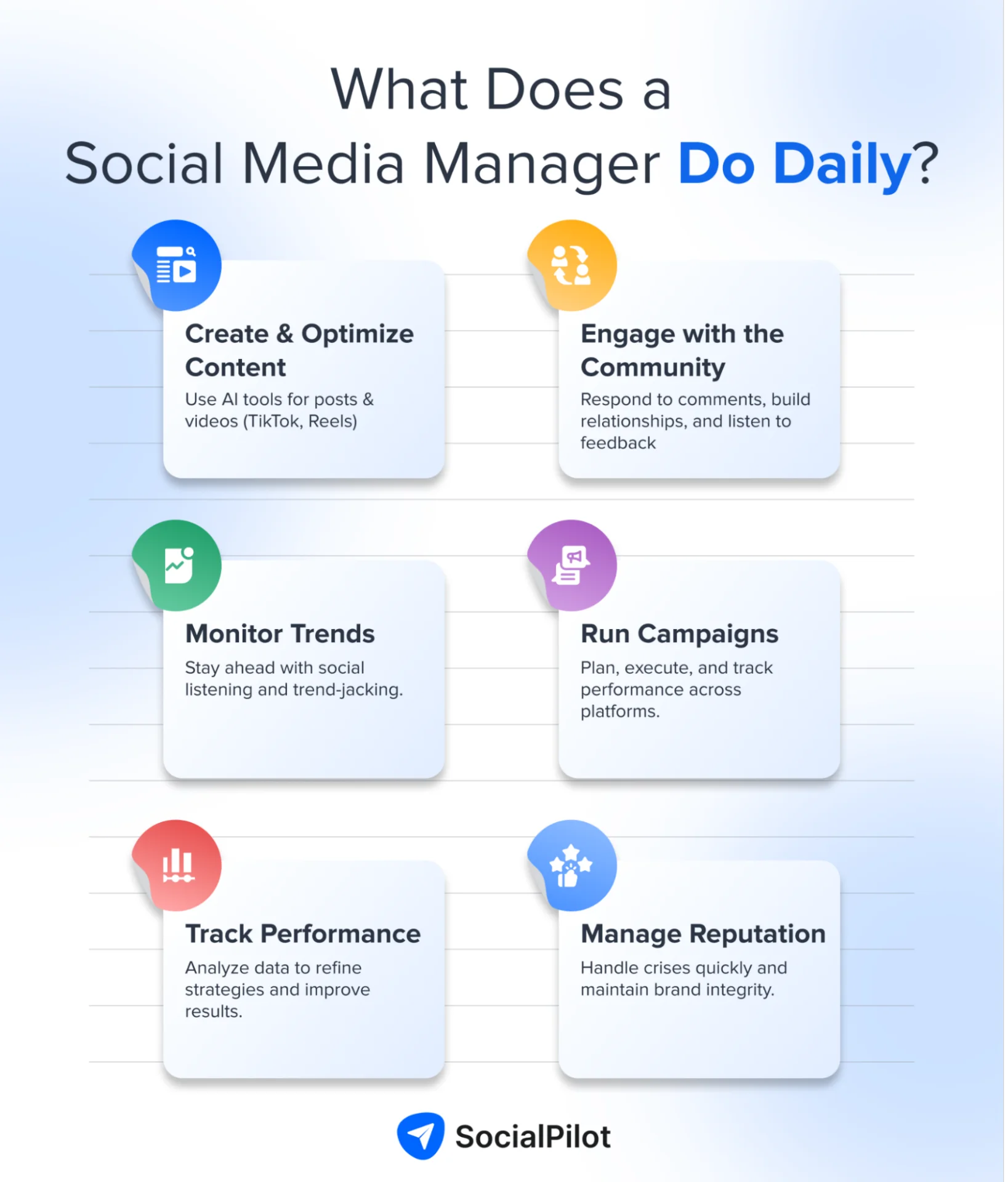
Here’s a breakdown of their core tasks:
1. Content Creation & AI Integration:
An SMM collaborates with marketing teams to create content that resonates with the brand’s audience.
In 2026, this includes using AI-assisted tools for video production for platforms like TikTok and Reels, where engagement continues to soar. 66% of users engage with TikTok for product discovery, making it essential to produce high-quality content that captures attention and brings brand awareness.
The integration of AI helps scale content creation without compromising on quality. It ensures that every post reaches the right audience at the right time. To see how AI is being used across platforms today, here’s a closer look at AI in social media.
Analyzing and responding to comments and messages remains a priority. The SMM nurtures the brand’s community by having a meaningful dialogue, answering technical questions, and maintaining a consistent brand voice across all channels.
In fact, 76% of consumers value how quickly a brand responds to their needs on social, and 70% expect a personalized response rather than a generic automated reply. By meeting these expectations, the SMM turns followers into loyal advocates.
3. Strategic Campaign Management:
From ideation to execution, SMMs oversee campaigns that align with broader business goals. This involves managing the rollout of multi-platform initiatives designed to increase engagement rates, follower growth, and brand equity.
This also means planning timelines, coordinating across platforms, and tracking results in a structured way, especially when handling multiple campaigns at once. That’s where knowing how to manage social media campaigns properly becomes important.
Staying ahead of the curve is essential for any successful social media strategy. SMMs use advanced social listening tools to track industry conversations, monitor competitor activity, and spot emerging trends. This helps them to quickly “trend-jack” by leveraging cultural moments that keep the brand relevant and top of mind.
With the social media listening market projected to reach $10.91 billion by 2026, it’s clear that social listening has become an important business intelligence function. It helps brands use real-time data for demand forecasting and trend prediction.
5. Performance Tracking & Data Analytics:
Using integrated data suites, the SMM tracks the performance of every post and campaign. They move beyond vanity metrics for predictive analytics, helping them adjust their strategy and measure key performance indicators (KPIs) such as conversion intent and audience sentiment.
6. Reputation & Crisis Management:
In an always-connected environment, the SMM acts as the brand’s shield. When negative sentiment arises, they are responsible for immediate crisis management, ensuring the brand’s reputation remains intact through swift, authentic, and professional communication.
Speed is the ultimate damage control; effective crisis management now resolves 90% of issues within 24 hours, and companies with a structured plan experience 67% less reputation damage than those caught unprepared. By addressing issues quickly and with a well-organized response, the SMM helps maintain brand integrity and customer trust.
Thus, the social media manager is an expert multitasker. They balance creative tasks with rigorous data analysis to ensure every digital interaction is optimized for overall growth.
Today’s SMMs need a balance of technical and creative skills. Here are the key skills every SMM must possess:
1. AI Prompting & Automation
AI is changing social media management. In 2026, SMMs must be comfortable using AI-assisted tools to automate routine tasks such as content scheduling, social media monitoring, and even video production. The ability to use AI technologies increases productivity and ensures consistency across platforms.
2. Data Literacy & Analytics
The most effective SMMs are data-driven. Understanding social media metrics and analytics is critical for tracking performance and optimizing strategies. This is a high-growth area, as the social media analytics market is projected to reach $20.21 billion by 2026. Be it monitoring engagement rates, follower growth, or sentiment analysis, an SMM needs to get into the numbers and use them to make their campaigns even better.
SMMs are the custodians of a brand’s community. They must engage with followers, respond to questions, and manage conversations in real-time. Customer engagement requires empathy, strong communication skills, and the ability to manage crises.
A successful SMM needs a deep understanding of social media strategy.
Currently, 86% of marketers use Facebook for business, followed closely by Instagram at 79%. An SMM must know how to create strategies that build brand awareness, customer loyalty, and community engagement across multiple social media platforms. From defining the brand’s voice to identifying the right target audience, strategic planning is central to their role.
5. Content Creation & Editing Skills
While AI tools help automate tasks, content creation remains the heart of SMM’s job. Be it creating content for TikTok, Instagram, or LinkedIn, a successful SMM must have excellent writing skills and the ability to produce visually appealing graphics and videos.
6. Crisis Management
Crisis management is crucial in the 24/7 social media environment, where negative sentiment can spread quickly. An SMM must be prepared to handle reputation management, respond swiftly, and maintain a consistent, authentic voice.
7. Adaptability & Trend Awareness
A successful SMM must stay up to date with the latest social media trends and platform updates. The ability to trend-jack and use emerging trends creatively is a hallmark of successful social media management.
This agility is also important because TikTok users now spend an average of 34 hours per month on the app. This creates a high-speed environment where brands must act on trends within 24–48 hours to remain in the spotlight.
8. Paid Media Knowledge
While organic growth is important, paid media is an integral part of most strategies. Today’s SMMs often oversee significant investments. Understanding how to run paid ads and optimize ROI is essential for generating measurable business results.
Today, social media management is no longer a side task. It is a specialized, high-demand profession with a salary to match. As brands move toward social-first commerce and the AI-driven space, the financial rewards for skilled managers have reached record highs.
Global Salary Benchmarks (2026)
Earnings vary significantly based on region, experience, and specialized skill set. Below are the average annual benchmarks for 2026:
| Experience Level | USA (Annual) | UK (Annual) | India (Annual) |
| Entry-Level (0-2 yrs) | $52,000 – $68,000 | £26,000 – £36,000 | ₹3.5L – ₹6L |
| Mid-Level (3-6 yrs) | $75,000 – $98,000 | £40,000 – £58,000 | ₹8L – ₹14L |
| Senior / Head of Social | $110,000 – $145,000+ | £65,000 – £85,000+ | ₹20L+ |
Data derived from Glassdoor 2026 Trends, Payscale Market Reports, and AmbitionBox
Factors Influencing Your Pay
- Specialization: Social media managers with an expertise in paid media or social analytics typically earn 20-30% more. These professionals are highly valued for their ability to drive conversion rates and maximize ad spend effectiveness.
- Industry: The Internet and Software sectors offer higher average salaries compared to traditional retail. Companies in the tech sector often require SMMs to manage multiple social media platforms with advanced data analysis and AI integration.
- AI Fluency: Professionals who integrate AI into their workflow can command a premium. As AI-assisted tools become more prominent, SMMs who consider automation, AI content creation, and predictive analytics for social media campaigns can significantly increase efficiency and output.
The Growth Outlook
The demand for social media experts remains robust. While the overall media field grows steadily, the Social Media Management market specifically is expanding at an explosive CAGR of nearly 25%.
As platforms like TikTok and Instagram grow into full-scale search engines and shopping platforms, the SMM’s role is moving toward a revenue-generating position. Social Media Managers are now expected to contribute not only to brand growth but also to direct sales and lead generation.
A polished CV is just the entry ticket; the real hiring happens through “Proof of Work.” 92.6% of recruiters now view a candidate’s LinkedIn profile as “critical” to their decision, and 86% consistently check a digital footprint before offering an interview.
Recruiters now bypass traditional interviews in favor of strategic auditions and live portfolio walkthroughs to see how a candidate thinks, not just what they’ve done. This shift means companies are getting much more intentional about how they find the right fit. For a complete look at how to hire a social media manager, including interview strategies and screening tips, see this guide.
This makes it essential for social media managers to maintain a strong social media presence. This shows their social media management skills and success across different platforms.
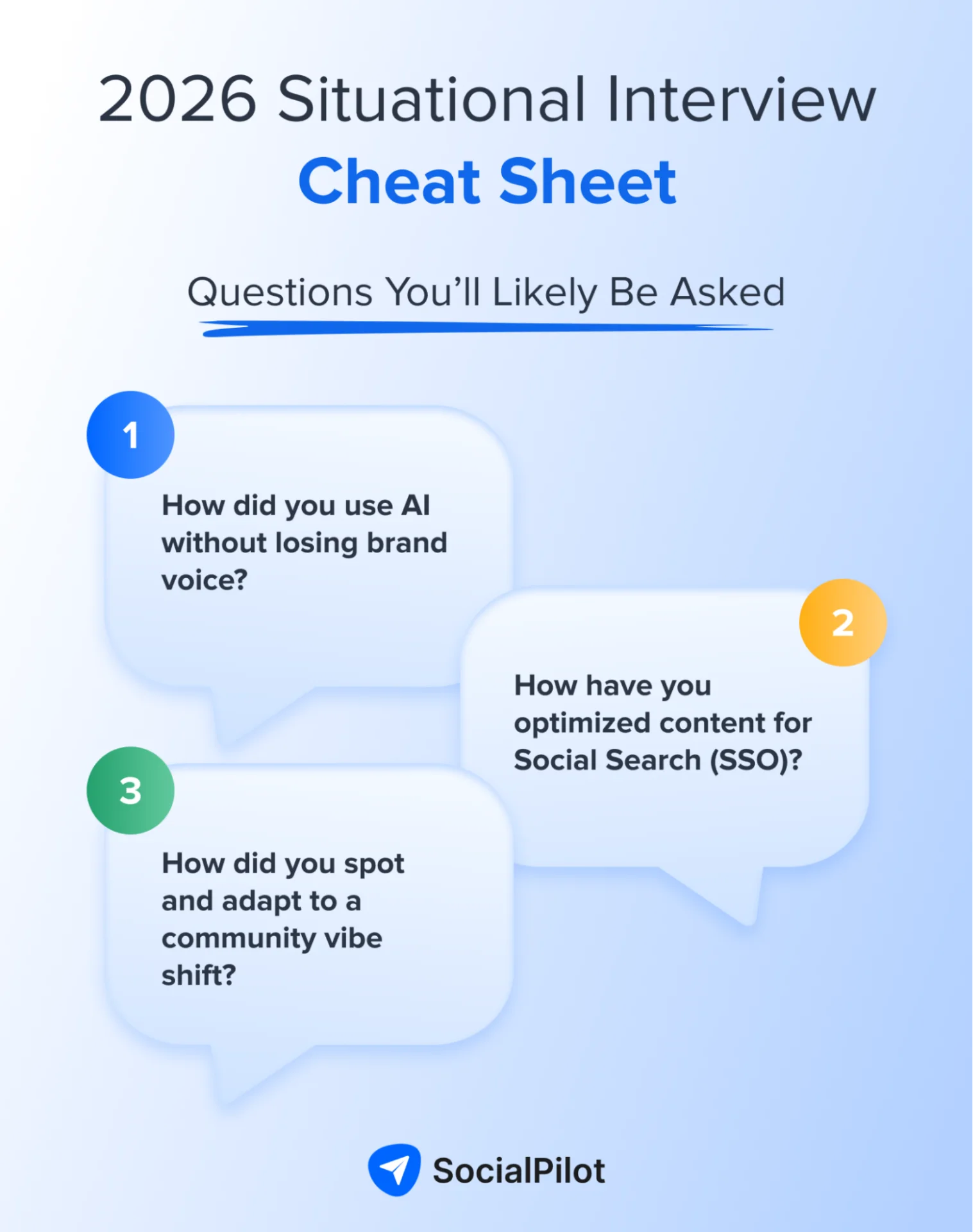
What Recruiters Specifically Look For:
- The “Strategic Narrative” Portfolio: Beyond pretty grids, recruiters want to see case studies using the Goal → Strategy → Result formula. This shows the impact on social media metrics, brand reputation, and customer engagement.
- AI Ethics & Human Balance: Paradoxically, recruiters are now on high alert for “lazy” AI usage. They prioritize social media managers who use AI for data analysis but keep the brand voice 100% human and authentic.
- Cultural Fit Over Credentials: 98.5% of HR professionals now prioritize cultural fit. Expect situational questions about your creative “vibe”, your approach to community management, and how well you understand the target audience.
- Social Search Proficiency: Candidates who can demonstrate they’ve ranked content in TikTok or Instagram search are prioritized over traditional SEO experts. Social Search Optimization (SSO) has become a core skill for modern social media managers.
Pro-Tip: Many companies now use AI-driven screening to find candidates with specific niche skills. Optimizing your LinkedIn with precise keywords like “Social Media Manager” or “Social Search Optimization” is important to getting noticed by 2026 headhunters.
Social media management is a high-speed elevator to the C-suite. The professional outlook is exceptionally strong, with the demand for digital marketers projected to grow by 6% over the next decade.
As brands shift their entire social media strategy and communication efforts to social platforms, the career journey for an SMM has expanded into lucrative, specialized niches.
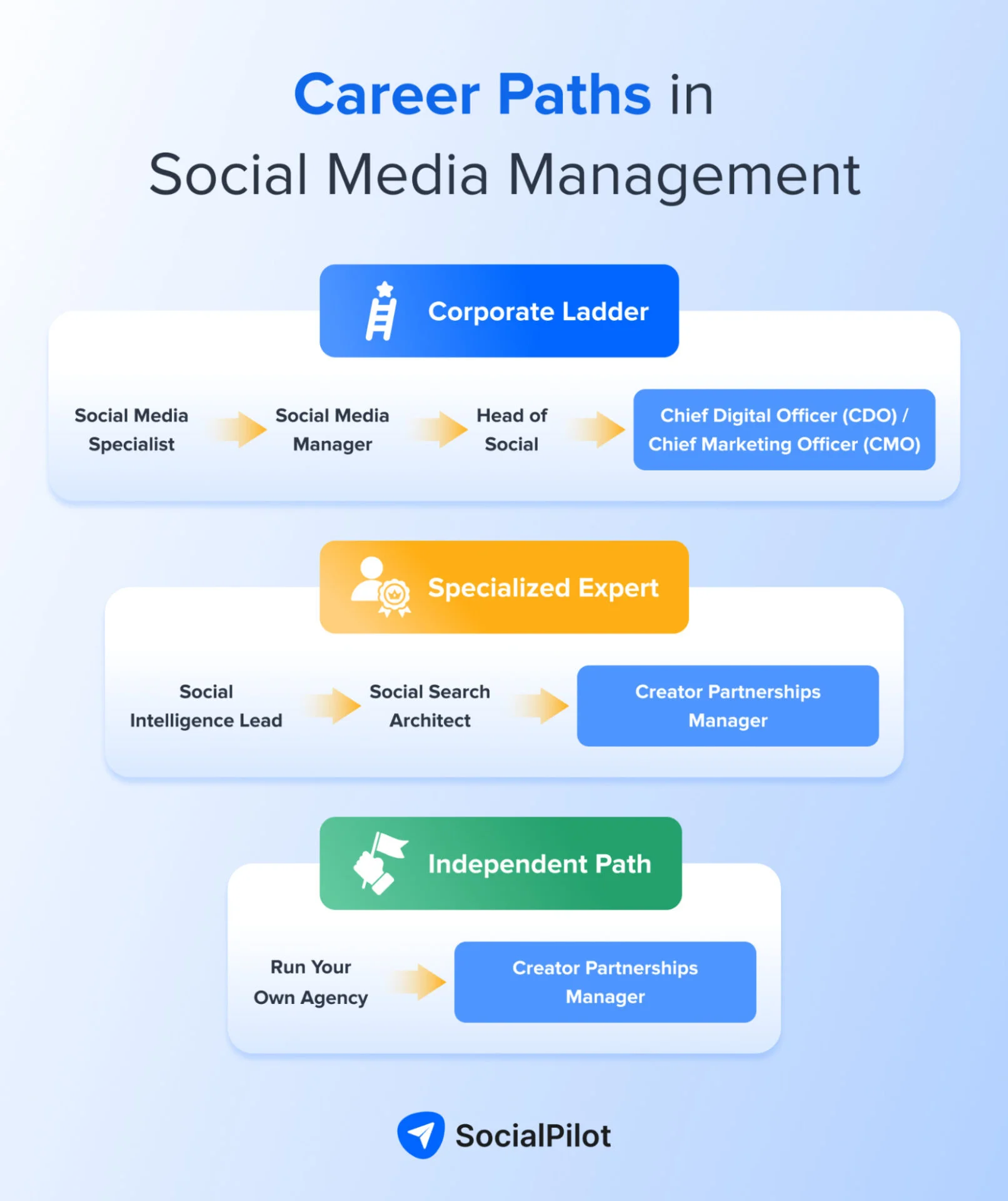
Where This Career Can Take You:
- The Corporate Ladder: You start as a Social Media Specialist, rise to Social Media Manager, and then to Head of Social. Eventually, you land the Chief Digital Officer (CDO) or Chief Marketing Officer (CMO) role, leading the overall social media presence and brand voice.
- The Specialized Expert: You can move into high-paying niche roles such as Social Intelligence Lead (Data & Listening), Social Search Architect (SSO), or Creator Partnerships Manager, where expertise in social media analytics and paid media brings strategic outcomes.
- The Independent Path: Many senior SMMs transition into running their own Boutique Agencies or becoming Fractional Social Strategists for high-growth startups. Here, they provide specialized expertise in content creation and social media management.
Your “boots on the ground” experience on the digital frontlines makes you one of the most valuable assets in any marketing team today.
Becoming a Social Media Manager is no longer about a specific degree; it’s about proving digital competency and social media skills. Follow this 4-step roadmap to professional entry:
Step 1: Get Certified (Technical Foundation)
Recruiters in 2026 prioritize verified skills over university credentials. Start with industry-recognized certifications:
Step 2: Build a “Ghost Portfolio”
If you don’t have clients, become your own first client. Pick a niche (e.g., Sustainable Tech or Local Food) and build a dedicated social media presence from zero.
- The Goal: Document your process. Create a one-page Case Study showcasing Problem → Strategy → Result.
- The 2026 Edge: Specifically show how you used Social Search Optimization (SSO) to drive organic discovery and improve social media metrics.
Step 3: Learn the Tech Stack
Baseline proficiency in these categories is non-negotiable:
You don’t just send a resume; you exhibit value.
- Network: Engage directly with Heads of Social on LinkedIn and TikTok.
- Optimize: Ensure your LinkedIn profile uses 2026 keywords like “Social Intelligence” and “Predictive Analytics.” For the latest LinkedIn features that can enhance your profile and improve visibility in job searches, check out our recent article on the new LinkedIn features and updates.
- The Audition: Be prepared for “Strategic Auditions”; live tasks where you might be asked to “trend-jack” a current event to test your real-time thinking and ability to leverage social media trends.
| Feature | Tools/Technology | Value Provided |
| Social Media Management | SocialPilot, Hootsuite, Sprout Social | Manage social media accounts and schedule posts across multiple platforms.Track social media metrics to measure engagement and performance. |
| AI-Powered Content Creation | CapCut, Canva Magic Studio | Use AI to create video content and enhance creativity.Increase social media engagement with optimized content for platforms like TikTok and Reels. |
| Social Listening & Analytics | Brandwatch, Google Analytics | Monitor audience sentiment and social media trends using social listening tools.Analyze social media data to optimize social media strategies and KPIs. |
| Paid Media Management | Facebook Ads, Instagram Ads, Google Ads | Optimize paid social media campaigns for maximum ROI and ad spend efficiency.Track conversion rates for sales growth and better targeting. |
| Collaboration & Workflow | Trello, Slack, Google Drive | Enable marketing teams to collaborate and streamline workflows.Ensure faster execution of social media strategies through effective content management. |
| Social Search Optimization | TikTok, Instagram Search | Use Social Search Optimization (SSO) for organic discovery.Improve content visibility across popular social media platforms. |
The Social Media Manager Who Leads the Conversation
Being a Social Media Manager in 2026 is about creating conversations, driving change, and being the face behind a brand’s story.
You’ll wear many hats: strategist, creator, listener, but at the end of the day, you’ll be the one guiding the brand’s voice and direction across platforms.
So, ask yourself —
Are you just ready to post, or are you ready to lead the conversation?