An article published on People.com in early March 2025 reported on Buddies Coffee owner Rachel Rose posting a TikTok. She did not post with growth or social engagement as a KPI. The video was a personal reflection on the strain of keeping a neighborhood café open amid rising costs. It wasn’t a promotional play or a campaign. Just a moment of honesty tied to a larger reality many small businesses were facing. But that honesty traveled. Engagement spiked, people showed up, and footfall and revenue followed.
A similar pattern played out earlier in 2023 at Lexington Candy Shop. A short TikTok video featuring its classic Coke float went viral, not because it was selling anything, but because it tapped into a shared cultural moment. As reported by the Associated Press, daily Coke float sales jumped from roughly ten a day to hundreds. Again, no messaging strategy, just context that resonated.
These moments aren’t marketing wins in the traditional sense. They’re signals of a deeper shift in how audiences respond to brands.
According to an analysis published by the Harvard Business Review, people increasingly expect brands to acknowledge the social, economic, and cultural realities around them. The analysis draws on consumer trust research from NYU Stern’s Center for Sustainable Business, conducted in partnership with Edelman.
For small and mid-sized businesses, this changes the playbook. Social messaging isn’t about statements, positioning, or campaigns. It’s about awareness. In 2026, SMBs don’t grow by sounding bigger. They grow by sounding closer, and by letting context do the work that advertising used to.
In the past, social messaging was largely associated with big brands. It showed up as multi-million-dollar campaigns, high-profile commitments, and carefully scripted statements designed for national visibility. That model depended on scale, production budgets, and controlled distribution. Today’s digital ecosystem operates on a different logic.
Platforms like TikTok and Instagram now amplify content based on engagement signals rather than polish or spend. What travels is relevance, timeliness, and human context, not just production value. As a result, even a small business with no paid marketing budget can reach far beyond its immediate neighborhood if its content resonates. Distribution has shifted from who spends more to what connects better.
For small businesses rooted in community relationships, this shift is especially consequential. Where customers once discovered local businesses through foot traffic or word of mouth alone, they now encounter them through shared stories and everyday moments online. A behind-the-scenes update, a candid explanation of a challenge, or a simple acknowledgment of a local event can function as social messaging. These moments communicate meaning beyond product features.
Research cited in Harvard Business Review reinforces this change in consumer behavior. Audiences are not indifferent to how brands acknowledge the social and economic context around them. They look for relevance and responsiveness rather than slogans or symbolic gestures. For SMBs, this creates an opportunity to engage without taking positions or running campaigns.
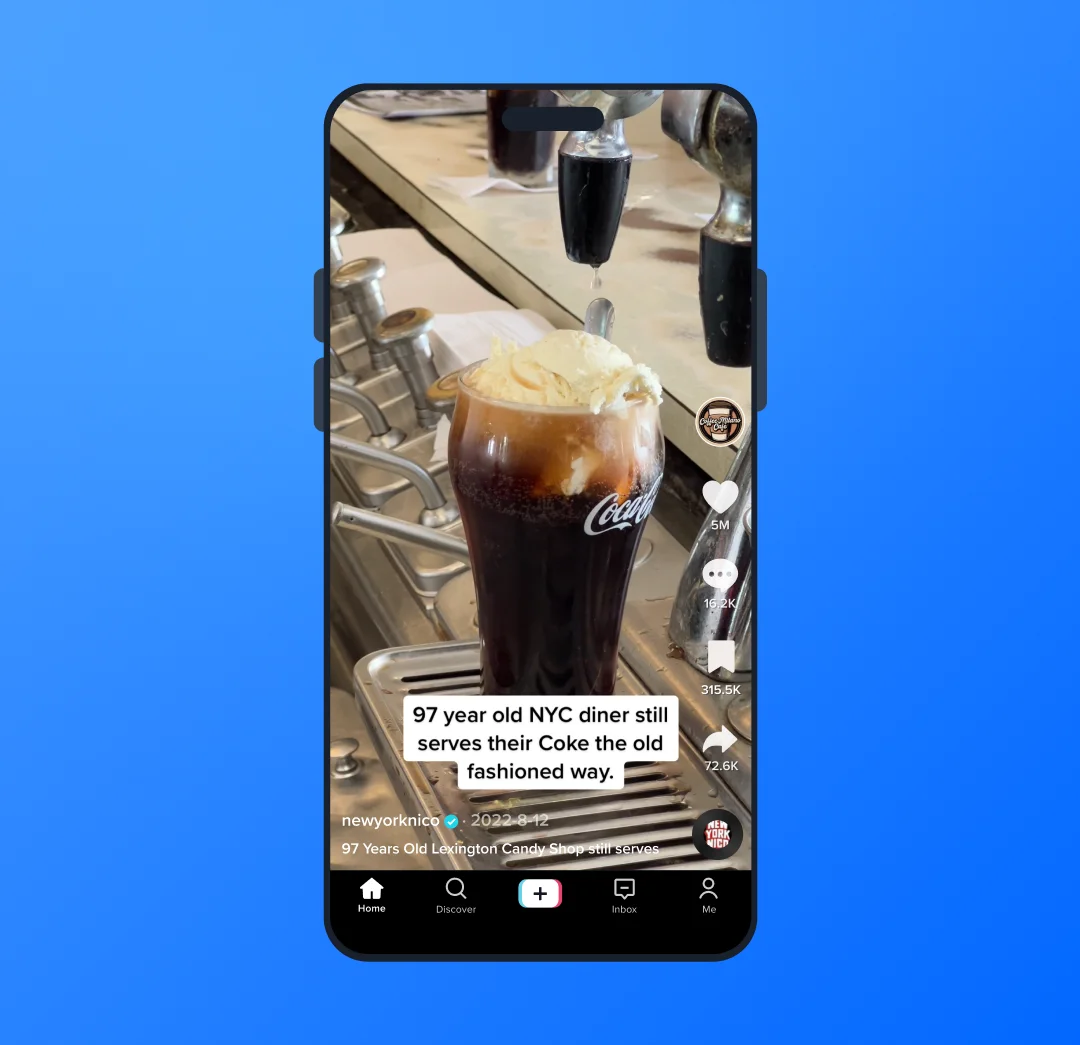
The example of a diner selling hundreds of Coke floats instead of ten points to a broader change in how audiences respond to content. The outcome was not driven by persuasion or promotion, but by context aligning with audience interest and platform incentives.
For SMBs in the United States entering 2026, social messaging works because it reflects how people now decide what content is worth engaging with. It is less about saying more, and more about saying what is already happening.
For small and mid-sized businesses, social messaging is often misunderstood because it gets confused with activism or corporate positioning. In reality, most effective social messaging at the SMB level is quiet, situational, and closely tied to everyday operations. It emerges naturally when businesses explain what is happening around them rather than when they attempt to communicate values.
This is why social messaging for SMBs is closer to context. It shows up when a business acknowledges local conditions, community dynamics, or operational changes that customers are already noticing. When handled this way, social messaging does not interrupt the customer relationship. It deepens it.
Local issue awareness
Social messaging often begins with explaining real conditions such as rising costs, supply disruptions, staffing shortages, or neighborhood challenges. These updates work on social media because they provide clarity rather than persuasion. Customers respond when businesses articulate what is happening instead of pretending nothing has changed.
Another common form of social messaging is visibility within the local ecosystem. Sharing involvement in local events, partnerships, or community initiatives signals that the business is part of a shared environment. This kind of messaging resonates because it reflects relationships that already exist offline.
Transparency without performance
The strongest social messaging avoids emotional appeals or calls for support. It focuses on explaining decisions, changes, or constraints in plain language. Over time, this consistency builds trust because customers feel informed rather than influenced.
What social messaging does not require is positioning or amplification. It does not demand that small businesses speak on every issue or align with broader movements. Its effectiveness comes from relevance and proximity, not scale.
Still, context alone does not guarantee impact. Some messages consistently travel further, generate deeper engagement, and convert attention into action. Understanding which types of social messaging actually resonate is what separates visibility from results.
Research explains what should resonate, but platform behavior determines what actually travels. To understand how social messaging performs in real conditions, we reviewed anonymized TikTok performance trends across small and mid-sized businesses using SocialPilot from the last 6 months. The focus was on everyday posts, not outliers or viral anomalies.
When posts were grouped based on whether they included social or community context, clear differences emerged in how audiences interacted with them. The distinction was not about quality or format, but about the type of response each post invited.
Average TikTok performance across SMB posts (last 6 months data)

Based on internal analysis of anonymized TikTok post performance across SMB accounts using SocialPilot. Metrics shown are averages.
At first glance, the numbers may look counterintuitive. Social and community-context posts received fewer likes on average, yet they reached more people and generated more comments and shares. The data suggests that these posts encourage a different kind of engagement.
Likes are a low-effort signal. They indicate approval, but rarely invite further interaction. In contrast, comments and shares require participation. They signal that the content sparked a reaction strong enough for people to respond, add context, or pass it along.
Social messaging tends to do exactly that. By referencing shared conditions, local moments, or operational realities, these posts invite audiences into a conversation rather than a transaction. The result is less passive approval and more active engagement, which platforms are more likely to amplify.
What stands out in the data is not that social messaging always outperforms promotion, but that it changes the engagement mix. Promotional content collects acknowledgment. Context-driven content creates discussion. In an environment where distribution favors conversation, that difference matters.
Common Mistakes SMBs Should Avoid
Social messaging breaks down when it is treated as positioning instead of communication. The fastest way to lose credibility is to talk about values without grounding them in how the business actually operates.
Greenwashing is the clearest example of this failure.
Many businesses adopt sustainability language because it is expected, not because it reflects operational reality. When messaging about ethics or sustainability is not anchored in sourcing, pricing, or process, audiences disengage quickly. The gap between what is said and what is experienced becomes visible.
Positioning that isn’t grounded in day-to-day operations
Social messaging should emerge from how a company functions day to day. When values are layered on as branding rather than explained through behavior, the messaging feels performative rather than informative.
Responding to trends instead of real conditions
Businesses often chase social narratives that are popular rather than relevant. This weakens trust because customers cannot connect the message to anything tangible.
Overcorrecting with language instead of clarity
When businesses sense skepticism, they often add more words instead of better explanations. Clear context performs better than elaborate framings.
When messaging runs ahead of reality, audiences stop listening.
Using Context as a Competitive Advantage
Social messaging works when it reflects how a business actually operates, not how it wants to be perceived. For small and mid-sized businesses, credibility comes from the local communities and circles.
In 2026, SMBs do not need louder promotion or stronger positioning. They need clearer communication. Explaining what is happening, why it matters, and how the business is adapting is often enough to earn attention and long-term trust. The challenge is maintaining that clarity over time. Consistency across platforms turns individual moments into recognizable patterns.
This is where SocialPilot fits. Not just as a tool, but as a way to manage consistency, schedule context-driven updates, and observe what audiences respond to. When social messaging becomes part of a steady workflow rather than a reaction, it starts working the way platforms and customers already expect it to.