
If asked, any professional would vouch for LinkedIn as the best platform for professional networking. With the platform having crossed 1.2 billion members in 2025, this is the space for job seekers, recruiters, business owners, and marketers to make the right connections.
Even though AI is slowly transforming the digital landscape, professionals still trust their network to make decisions confidently. For businesses, a large majority of millennials and Gen-Z buyers depend on the insights from their colleagues rather than asking AI.
This warrants the need to build a widespread LinkedIn network, which would connect you to your industry peers effectively. In this article, we will see just how you can grow your professional network on LinkedIn.
Key Takeaways:
- An optimized LinkedIn account with complete details makes a good first impression and gets more connections accepted.
- Strategic engagement is better for your growth than sending random connection requests.
- Personalized connection notes increase the chances of connection requests being accepted.
- Regular commenting in your niche earns consistent visibility and credibility in the community over time.
- Publishing content regularly earns long-term growth of your LinkedIn network, showcasing your domain expertise.
- LinkedIn Groups lets you tap into pre-existing niche communities and make meaningful connections.
- Participating in LinkedIn events creates organic networking opportunities.
- Long-term sustenance and success of your network depend on regular and genuine engagement.
- Managing a growing and active LinkedIn network can be streamlined with LinkedIn automation tools.
Why Networking Matters on LinkedIn
LinkedIn networking is not limited to any audience demographic. From interns to CEOs, it offers multiple benefits to anyone working professionally. Let us see how LinkedIn networking can help you achieve your goals:
More Opportunities Come Your Way
Being connected to people globally makes you privy to opportunities that would otherwise be impossible to find. Be it a job opportunity, clients, referrals, or introductions, they are more and easier to come by if you are in touch with the right people.
Higher Engagement Rates
LinkedIn’s AI-driven algorithm distributes content down the grapevine of your connections, direct and indirect. People on the platform are more likely to engage meaningfully with your posts if they are following you.
Industry Knowledge and Insights
LinkedIn is a knowledge-sharing hub. People share all kinds of informative content from their respective industries. When you have a diverse network of connections, you’re bound to gain from their shared insights and experiences.
LinkedIn is the designated social media platform for all businesses and professionals. This is the perfect space for finding employers, recruiters, investors, vendors, advisors, and creating a professional brand. If you need to make connections in your niche, the probability is that you’ll find them on LinkedIn.
Access to Guidance, Mentorship & Support
Networking gives you access to a pool of more experienced professionals who can offer mentorship, advice, feedback, or even guidance. Especially useful when you’re navigating a career pivot, new role, or complex project.
Proof of Credibility and Domain Expertise
In addition to having an active LinkedIn account, people see a strong network as proof of your niche-knowledge authenticity. So building a network, along with being an active part of the LinkedIn community, gives you unsaid professional credit where it counts.
Hence, building a network yields many benefits that boost your professional credibility and long-term growth.
Now, before diving into hacks for LinkedIn networking, you need to optimize your persona on the platform, i.e., your LinkedIn account.
Optimize Your LinkedIn Profile for Better Results
Before anyone accepts your request to connect on LinkedIn, they’ll check your profile. It’s basically your credibility checkpoint. It’s also the difference between being ignored or welcomed into someone’s network.
Before you start sending out connection requests, take a look at your own professional image, i.e., your LinkedIn account. This will be the first impression you make on people you want to connect with.
Having an optimized LinkedIn account makes a world of difference. Take a look at the profile below and think which of them you would rather connect with.
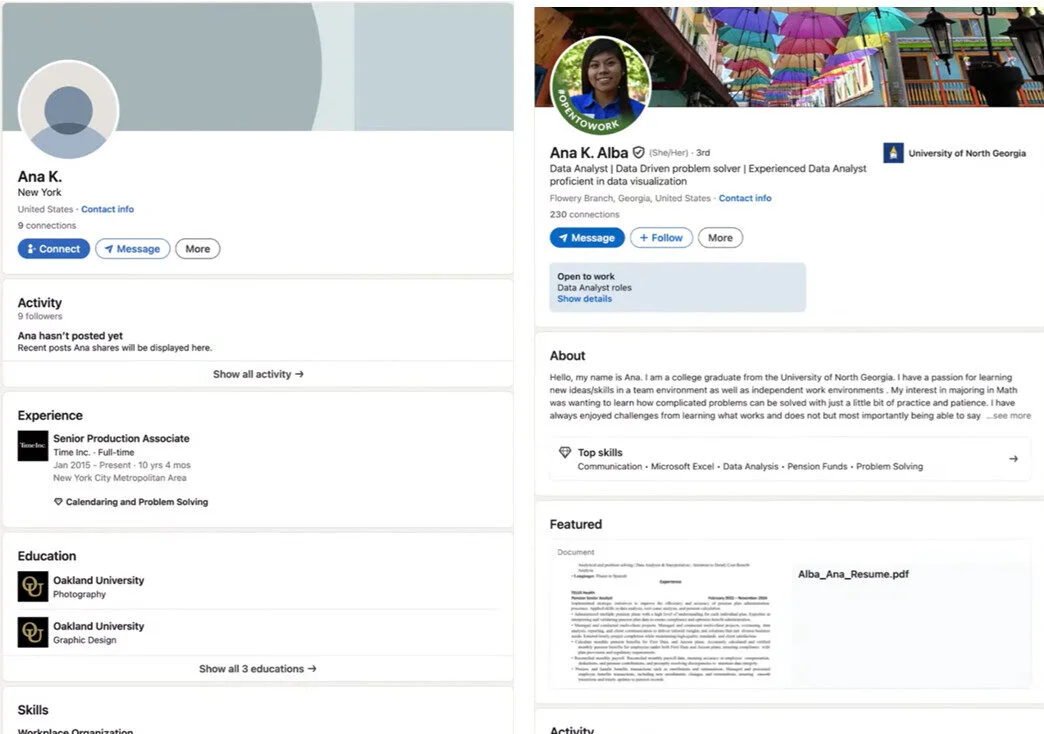
One of the left has little to no valuable information, while the one on the right paints a detailed picture of the professional. Hence, you see, having a LinkedIn profile with all the information in place boosts your credibility and trustworthiness at first glance.
If you dive into the task, refer to SocialPilot’s guide to building a strong LinkedIn profile, step-by-step.
Here, we’ll list out the absolutely essential parts of your profile you need to optimize for effective networking on LinkedIn.
Step 1: Select a Professional Profile Photo
Use a recent and clear headshot for the profile image, with your face covering 60% of the frame with a neutral background color.
Step 2: Add a Profile Banner
Use your banner to signal your expertise or personality at a glance. Keep it clean, readable, and aligned with your professional identity.
Step 3: Craft an Effective Headline and Strong Bio
Write more than just your job title in the headline field. Mention your role, your area of expertise, and the results you have achieved in brief.
Step 4: Make Your Profile Public
Enable public visibility so recruiters, clients, and search engines can find you. A private profile reduces your chances of being discovered.
Step 5: Create a Compelling About Section
Make sure to fill your About section, as this is the first descriptive field in your LinkedIn profile. Create a whole story, including why you chose this field and what drives you. Don’t forget to mention the impact your work has had on your company or clients. If you are a LinkedIn Premium user, use AI to check and optimize your draft for the About section.
Step 6: Compile Your Featured
Here, you need to curate your best work on LinkedIn, including top-performing posts, case studies, or media features. This acts as your highlight reel for anyone landing on your profile.
Step 7: List Out Your Professional Experience
Create a complete outline of your professional journey in the Experience section. It should include your full-time job roles, part-time gigs, industry-relevant projects, and freelance work.
Add accurate timelines and mention major impacts you’d brought during your time in the role with brief summaries.
Step 8: Highlight Your Skills
Add industry-relevant skills to your profile that help the platform match you with job roles, LinkedIn searches, and opportunities with similar requirements. You can ask colleagues for endorsements of your skills to help you seem more credible.
Once you’re done with these basics, your profile is ready for outreach.
Now the question arises- how to network on LinkedIn?
We have curated a list of easy, actionable steps that would help you build your network from the ground up.
How to Grow Your LinkedIn Network?
If you have set up your profile, you already have previous LinkedIn connections and are adding new ones as well. However, strategic networking can make a world of difference to how effectively you achieve your goals on LinkedIn.
Effective LinkedIn networking is built with outreach, follow-up messaging, content publishing, and active engagement. These are constant practices rather than one-time efforts.
Here are the tried-and-tested practices to consistently expand your LinkedIn network.
1. Connect With People from your Own Network
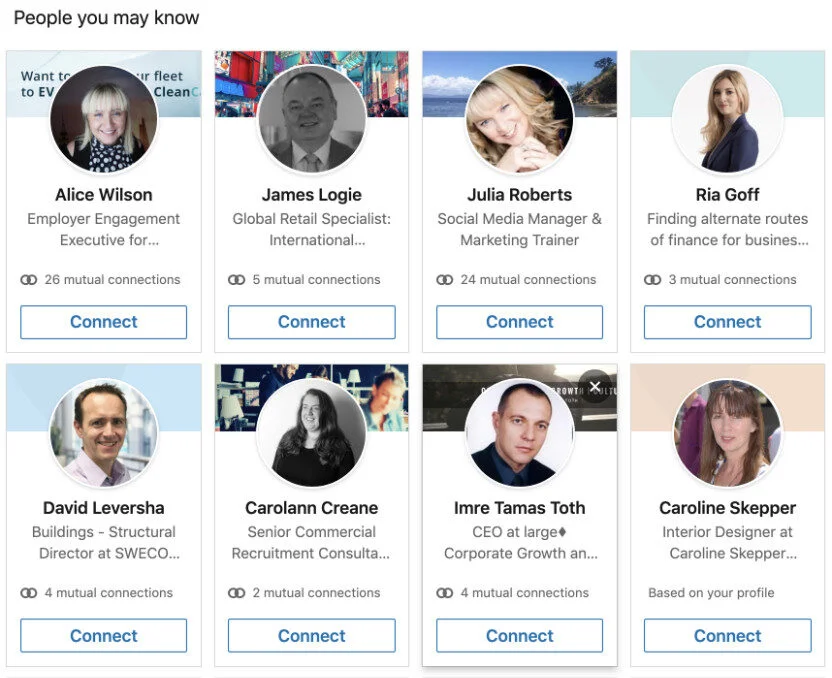
The best way to start building your connections is to reach out to people whom you already know. LinkedIn offers tons of recommendations in the My Network tab on your LinkedIn profile.
Send follow requests to members in your People You May Know list. The LinkedIn algorithm recommends people from the same school, college, current or past companies, or from the same industry and location.
Make sure to check your own Followers list in case you have missed out on following anyone who could benefit your network.
2. Connect with Professionals in Your Field
Once you’ve exhausted connections from your own network, you can reach out further, finding more connections. Finding like-minded people on LinkedIn can be very easy if you have a specific aim in mind.
The LinkedIn Advanced Search does a great job at narrowing down your search with the help of granular filters. All you have to do is write a few keywords and then apply the right filters.
Here’s how it works:
- Go to the search bar at the top of your LinkedIn feed and type in the keywords and search.
- Choose People from the top filters.
- Now, click on All Filters.
- The whole list of People Filters will appear on the right side of the screen.
- Now customize your search by selecting the right criteria.

Once the search pulls up the profiles you are looking for, click on connect.
3. Engage Before Requesting Connection
More than 17k connections are made on LinkedIn every minute of the day, so sending direct connection requests might work with some people. However, some users, mostly prominent names on the platform, are more likely to accept your request if they are familiar with you. Engaging with their content is the easiest way to achieve this.
If you want to build touchpoints with other professionals in your industry before you try to connect, here are a few things you can try:
- Start by leaving genuine and well-thought-out comments on their posts.
- Repost their content with your own unique insight and mention them in your caption.
- Interact not just with their posts, but also with posts they comment on.
- Reply to their comments on other people’s posts with smart follow-ups.
- DM creators with a relevant question on one of the subject matters they’ve recently covered.
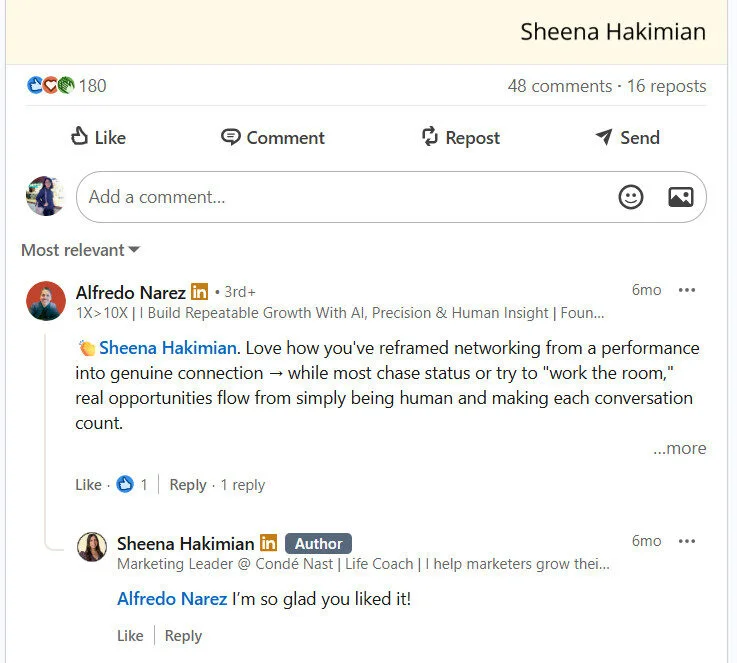
Here is an example of how one should comment with the purpose of networking. A user has genuinely appreciated a post and stated their unique takeaway. As a result, the post’s creator has replied to the comment.
Note: Don’t spam the comment section of creators or professionals you want to add to your network. Rather than building visibility, it’ll hurt your credibility, making people averse to connecting with you.
This is how you form a quality connection- get noticed, start a conversation, build familiarity, and then send the follow-up request.
4. Send Personalized Connection Requests
When sending connection requests to a profile, LinkedIn gives you the option to send it directly or with a note. People mostly tend to shoot out their invites without a note. But if you add a personalized message to your invite, it has a better chance of succeeding at making a meaningful connection.
Many senior-level influencers and decision-makers on LinkedIn support the normalization of tailoring requests to individuals. They believe that adding a personal note with a request should not be considered a strategic move but a common courtesy.
Tips to Write a Successful Connection Request Note
- The Opening: The first 5 to 10 words of the note need to be very specific to the invitee.
- Recipient Name: Always address them by the name they actually use publicly.
- Establishing Common Ground: You need to refer to a point of connection with the receiver. Be it a mutual connection, previous interactions you’ve had, shared organizations, etc.
- Mention the Value Proposition: Establish mutual advantages of forming the connection rather than selling yourself.
- Casual Closing: Keep the closing simple and refrain from pressuring them into accepting.
- Follow-up: If the invite is accepted, send your follow-up message within 2 days. If not, wait 4 to 5 days, then message them.
Being visible and familiar increases your chances of connecting with a relevant set of people on LinkedIn.
One way of making connections is directly seeking them out and sending connection requests. But if you engage with your network and people in your niche, it will attract potential connections and boost your reach. If you want to read on how the platform rewards engagement, read our analysis of how the LinkedIn algorithm works.
Tips for Engaging Effectively on LinkedIn:
- Comment regularly on posts from your niche.
- Link personal experience to shared insights to build relationships.
- Engage with other commenters on a post, replying to them if you can provide valuable answers.
- Congratulate them on the achievements shared on LinkedIn.
- Mention other users in your posts from the relevant industry.
- Add a different take on shared insights and conclusions.
- Use LinkedIn’s advanced search to find people and posts to engage with.
- Provide additional resources related to the information in the post.
- Engage with all post formats, including polls, pulse articles, shared blogs, and carousels.
- If you have doubts over shared insights, ask questions in the comments.
- Avoid leaving controversial or negative comments.
- Instead of generic comments, write specific comments for each post.
- React to the replies to your comments.
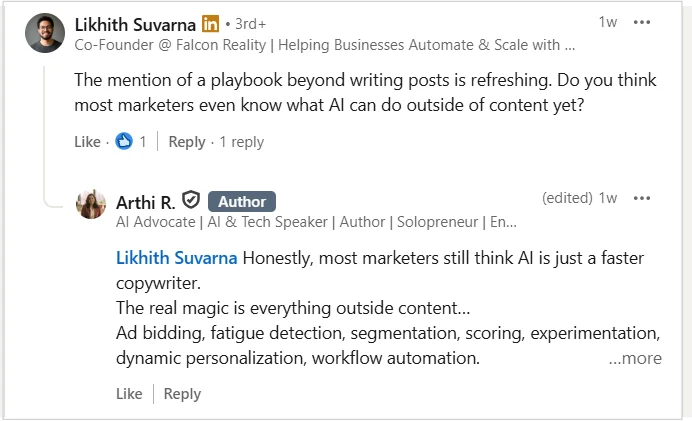
This here is a significant comment on a post in which the commenter mentions a specific part and asks a question at the end. This is a surefire way to get a reply from an author. This can then lead on to a prolonged discussion, establishing a foundation for a real connection.
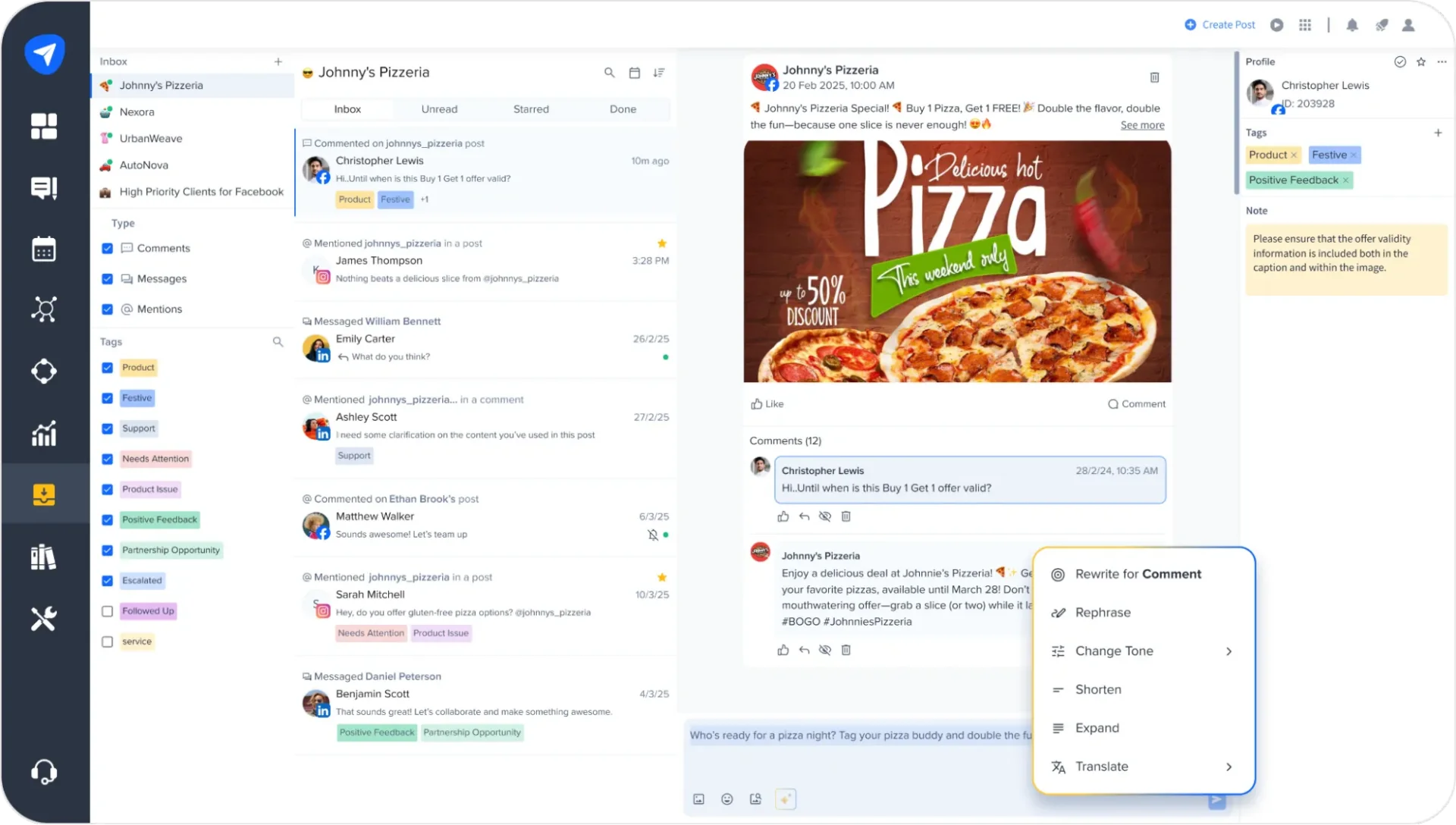
LinkedIn networking runs on timely and meaningful engagement. Yet with multiple posts, comments, and incoming mentions happening at once, staying on top of everything can quickly become a challenge.
SocialPilot’s LinkedIn Inbox helps you manage all your professional communication. Connect multiple LinkedIn profiles and company pages to monitor and respond to all the comments and mentions from a centralized inbox dashboard.
This helps you proactively engage with your network without any delays.
Start Your 14-day Trial
6. Keep Creating Content Consistently
On LinkedIn, the most irrefutable proof of your expertise and skill is the content you create. When you start posting regularly, it boosts reach and invites engagement, which later leads to networking.
Professionals on LinkedIn are drawn to visibility and public proof of value far more than to empty connections. People decide whether they want to be in your professional ecosystem by looking at your content.
If you want to get some inspiration for creating unique content on a regular basis, we have compiled a list of the most effective LinkedIn post ideas you can refer to.
Tips on LinkedIn Content Creation to Boost Networking
- Build a Repeatable Content Stack: Stick to a set of content themes and build your expertise around them. Being discoverable in a particular niche makes you more likely to be found by a specific community, making networking more likely and meaningful.
- Share Stories That Invite Conversation: Share findings, learnings from experiments, a failed attempt, an eye-opening discovery that changed your opinion. Rather than sharing only wins and achievements, talk about real moments people relate to and that spark conversation.
- Tag With Intent, Not for Reach: When mentioning collaborators, mentors, or peers from your industry, make sure it is done contextually rather than just to get reach. If your post calls for a shoutout to them, or if you’ve taken inspiration from their work or discussed a post they shared, only then should you mention them.
- Get Inspiration from Other Creators: Make it a practice of writing content based on your learnings from someone’s post, a webinar, a book, or a conversation. This helps you maintain a steady stream of new content without fatigue and puts you on the radar of said creator and their target audience.
- Simplify Niche Knowledge for Non-Experts: If you cover complex niche topics but make them easy to understand, you make it palatable for a much wider audience than just your own community. This gives you cross-industry visibility and broadens your network.
- Post at High Activity Times: Timing is a key driver of visibility and engagement for LinkedIn posts. Make sure to look at the engagement data and observe patterns to find when your audience is most active. You can also look at the best times to post on LinkedIn, we found this after analyzing data from around 50,000 accounts.
7. Join LinkedIn Groups
The best way to grow your network effectively is to find and tap into pre-existing ones- that would be LinkedIn groups.
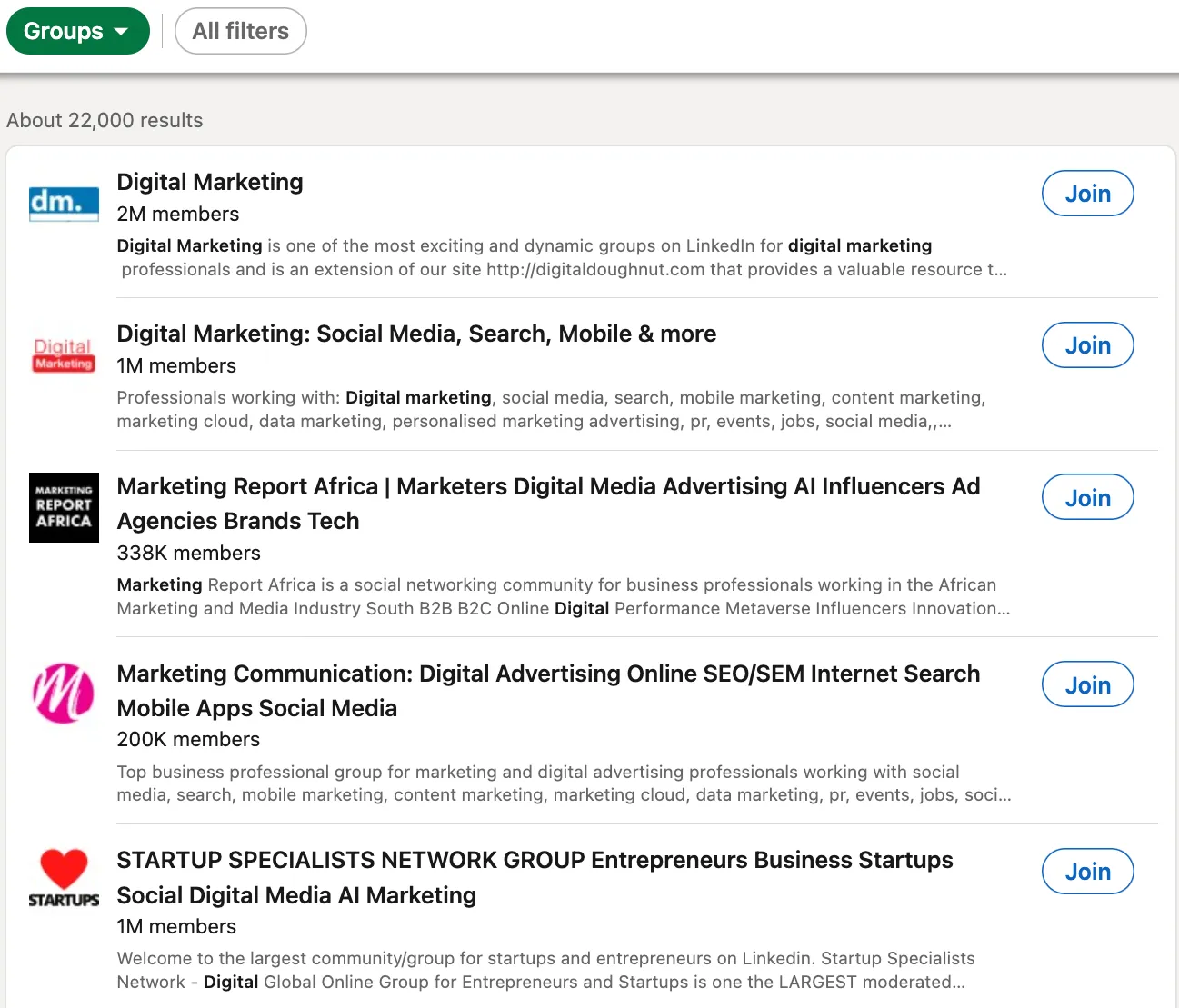
It’s a space driven by like-minded professionals from a common niche with similar interests and goals. By joining LinkedIn groups from your industry or domain, you get access to this network. This proves to be a perfect space for forming meaningful connections.
Being a part of LinkedIn groups means your content reaches the people who are actually interested.
Additionally, you can contribute insights, answer questions, and share industry-specific knowledge. This positions you as someone who knows the industry and can add value to a conversation. If you want to know how to leverage LinkedIn groups to grow your business, SocialPilot’s guide on the same has some truly valuable insights to offer.
Dos and Don’ts of LinkedIn Groups
| ✅ Do | ❌ Don’t |
| Pick groups relevant to your industry with active discussions. | Avoid groups that are huge but inactive |
| Observe other members to understand the group’s culture. | Don’t rush into engaging without learning the proper etiquette. |
| Introduce yourself briefly. | Don’t be too self-promotional from the get-go. |
| Engage regularly and meaningfully. | Avoid leaving generic comments or just a like. |
| Share content resources that would help the group. | Never spam the group feed with sales pitches. |
| Start discussions with open-ended questions to invite dialogue. | Don’t force conversations that don’t fit the group’s collective interest. |
| Check in with the group regularly. | Don’t be absent from the group for extended periods. |
8. Participate in LinkedIn Events
When you join a LinkedIn event, you become part of a shared space of people who have overlapping interests or challenges. That common ground instantly raises your chance of finding relevant connections.
Also, events create natural conversation triggers stemming organically from Q&A sessions, breakout rooms, chat windows, and discussion threads.
Engaging meaningfully during the event establishes your presence and showcases you as a relevant part of the given interest group.
Must-Know Strategies Before You Attend a LinkedIn Event
- Make sure to optimize your LinkedIn profile before the event. If an attendee wants to know more about you, this will give a good first impression.
- Research the speakers and attendees, and identify if their backgrounds and interests align with yours.
- Understand the topic of the event is about and do your homework on the subject matter.
- Pay careful attention and engage actively during the live event by asking questions in Q&A.
- Create posts on LinkedIn summarizing things you learned or interesting discussions, tagging speakers or participants.
- Send personalized connection requests or LinkedIn messages to attendees or hosts of the event, referencing the conversation or a specific topic that was discussed in it.
9. Continue Building Relationships Over Time
Building a network on LinkedIn doesn’t end at “connection accepted.” The real value lies in consistently nurturing those relationships.
When you keep interacting with people in your network, you stay on their radar, giving you perpetual visibility. So when there’s a relevant opportunity, change, or conversation, people will think of you, reach out, or even bring you into projects.
Tips to Keep LinkedIn Connections Viable Long-Term:
- Engage regularly with their content, reacting, commenting, reposting, and sharing it.
- Follow up personally after you acquire a new connection.
- Reach out regularly, sharing an insight or asking a question, helps keep the relationship alive.
- Celebrate their achievements, including a new job, milestones, successes, etc., with genuine messages or shout-outs.
- Leverage shared LinkedIn groups, past events, or mutual interests to reconnect, using context to make outreach relevant.
These strategies can help you build and maintain your LinkedIn network. However, these are ongoing networking efforts rather than one-time hacks. As your extended network grows, sustaining this level of effort manually becomes increasingly difficult.
That’s where structured support through LinkedIn automation tools comes into play.
LinkedIn Automation Tools For Effective Networking
LinkedIn networking today is no longer easy to sustain by manual effort. Automation software for LinkedIn can streamline regular and repetitive tasks to free your bandwidth for making meaningful professional connections.
With LinkedIn automation tools, you can stay consistent with your posting, automate follow-ups, and keep up with mentions, overseeing comments, and much more.
Here are some of the top picks from our list of the best LinkedIn automation tools:
SocialPilot is a powerful social media management tool that helps users maintain consistent posting with AI-driven scheduling and publishing for multiple LinkedIn accounts. You can ideate, create multiple formats of LinkedIn posts, and set them up in bulk to be published at the best time for maximum engagement.
Additionally, you can monitor comments and messages and witness the growth of your network with in-depth LinkedIn analytics.
Expandi: LinkedIn Tool of Outreach, Lead Generation, and CRM
Expandi helps recruiters, agencies, and sales professionals expand their LinkedIn networks for scaling outreach efforts. You can use the tool to send automated connection requests. With smart targeting, A/B testing, and analytics, it helps optimize outreach for better response rates.
Expandi integrates with LinkedIn Premium, Sales Navigator, and CRMs to support seamless, multi-channel networking.
Waalaxy: Automation Tool for Profile Interaction and Personalization
Waalaxy enables targeted outreach using LinkedIn filters and engagement signals to reach the right prospects. Automated profile visits and interactions increase visibility while staying compliant with LinkedIn policies.
With built-in CRM syncing and analytics, Waalaxy makes it easier to manage conversations and grow meaningful connections.
Wiza: Data Extraction and Email Finder Tool
Wiza helps LinkedIn networking by quickly extracting verified contact details from Sales Navigator profiles. It improves outreach success and response rates by verifying emails and enriching prospect data.
Wiza integrates with CRMs to streamline follow-ups and turn LinkedIn connections into real opportunities.
Start Networking Smarter
LinkedIn networking, when done with intent and consistency, pays off over time. Every connection you make, whether through organic engagement or cold outreach, is reflective of your professional brand identity.
If you want to use your LinkedIn network as a growth driver rather than just a shiny metric to show off, a personalized and authentic approach works way better than
As networks scale, the challenge shifts from building connections to managing them efficiently. This is where streamlined processes and automation tools create a considerable advantage. They help you stay consistent, responsive, and visible without increasing your manual workload.
In practice, smarter networking leads to faster access, better conversations, and higher-quality outcomes.